Coop & Kitchen at BF Farm Kunekune Pigs
Backyard Chickens for Beginners: A Practical First-Flock Checklist
May 27, 2026 · Backyard Chicken Basics
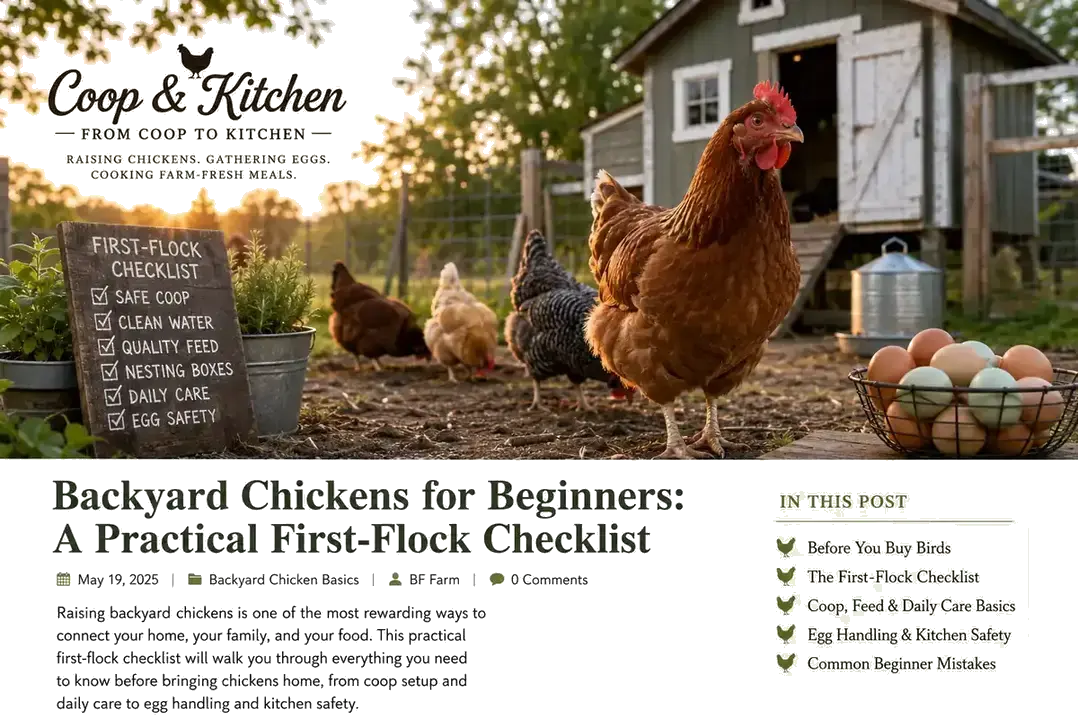
Raising backyard chickens sounds simple from the outside: build a coop, buy a few hens, collect fresh eggs, and enjoy a little farm life right outside the back door. In real life, chickens are still livestock. They need safe housing, steady feed and water, clean handling, predator protection, and someone willing to check on them every day. The good news is that a small flock can be very manageable when you start with a practical plan instead of learning every lesson the hard way.
Why Start with Chickens?
Chickens are often the first livestock many families try because they fit into a smaller space than larger animals, they have a clear daily purpose, and they give something useful back to the household. Fresh eggs are the obvious reward, but the routine itself is part of the value.
A flock teaches observation. You learn what normal sounds like, what healthy movement looks like, how weather affects animals, and how quickly small chores pile up when they are skipped. Chickens also connect the yard to the kitchen in a way that is easy to understand. Feed, water, bedding, sunshine, shade, and cleanliness all show up later in the egg basket.
That is the heart of Coop & Kitchen: good food starts before the recipe. It starts in the coop, with practical care.
Before You Buy Birds, Decide What You Want from the Flock
The first beginner mistake is buying chicks before answering a few plain questions.
- Do we mainly want eggs?
- Do we want chickens as part of a family homestead project?
- Do we want friendly birds that are easy for children to observe?
- Do we have room for a secure coop and run?
- Are roosters allowed where we live?
- Who will feed, water, collect eggs, and close the coop every day?
- What will we do when hens slow down laying?
- Who can help if a bird gets sick or injured?
Those questions matter because a chicken setup should match the household. A family that wants a few breakfast eggs does not need the same plan as someone building a larger homestead flock. A beginner does not need the fanciest coop on the internet, but they do need a safe, dry, ventilated place for birds to sleep, lay, and get out of weather.
The First-Flock Checklist
Before bringing chickens home, have these basics ready:
- A predator-resistant coop
- A secure run or safe daytime ranging plan
- Roost space
- Nesting boxes
- Chicken feed appropriate for the bird's age and purpose
- A clean waterer
- A feeder that limits waste
- Bedding for the coop
- A way to store feed away from rodents and moisture
- A plan for manure and used bedding
- A separate area for new or sick birds if needed
- A handwashing routine after handling birds, eggs, equipment, or bedding
That last point is not just tidy advice. Backyard poultry can carry germs such as Salmonella even when birds look healthy, so handwashing after poultry contact is one of the most important habits for a family flock. Children, older adults, and people with weakened immune systems need extra caution around poultry and poultry equipment.
Coop Basics: Dry, Safe, Ventilated, and Easy to Clean
A good beginner coop does not have to be fancy. It needs to do four jobs well.
First, it must keep birds dry. Wet bedding and damp corners create trouble fast. Rain should not blow straight into the sleeping area, and the roof should shed water well.
Second, it must protect from predators. Chickens are low on the food chain, and almost everything seems to know it. Raccoons, foxes, coyotes, stray dogs, snakes, hawks, owls, and even rodents can become a problem depending on your area. Weak latches, loose wire, gaps under doors, and flimsy runs are invitations.
Third, it must have ventilation without drafts blowing directly across roosting birds. Chickens give off moisture when they breathe, and manure adds moisture too. A closed-up coop can feel protected but become stale and damp. Ventilation near the top of the coop helps air move without chilling birds on the roost.
Fourth, it must be easy enough to clean that you will actually clean it. If the door is awkward, the bedding is hard to reach, or the nest boxes are a pain to check, chores become harder than they need to be.
Roosts and Nesting Boxes
Chickens like to sleep up off the ground. A sturdy roost gives them a place to settle at night and helps keep them out of bedding and manure. Make sure roosts are stable, wide enough for comfortable footing, and positioned so birds are not sleeping directly over feed or water.
Nesting boxes are for eggs, not sleeping. If hens sleep in the nest boxes, the eggs are more likely to be dirty. A simple box with clean bedding, a little privacy, and easy access for egg collecting is usually enough. Beginners sometimes overbuild nest boxes, but hens are not reading design magazines. They want quiet, safe, and comfortable.
Feed and Water: Keep It Simple and Consistent
Feed should match the bird. Chicks, growing pullets, laying hens, and meat birds have different needs. For a first egg-laying flock, most beginners will eventually use a complete layer feed once hens are old enough and close to laying. Chicks need chick starter, not layer feed.
Fresh water matters every day. Chickens drink more than many new keepers expect, especially during hot weather. A tipped-over waterer on a summer day is not a small problem. Check water at least daily, and more often in heat, freezing weather, or with young birds.
Keep feed dry and stored securely. Damp feed can spoil, and spilled feed invites rodents. A metal trash can with a tight lid works well for many small flocks.
Treats should stay treats. Chickens will happily act like every kitchen scrap is a major emergency that only they can solve. Scratch grains, fruit, vegetable scraps, and garden extras can be fun, but they should not replace balanced feed. Too many treats can lead to poor nutrition and fewer eggs.
Grit, Calcium, and the Small Details Beginners Miss
Chickens do not chew food like we do. They use grit in the gizzard to help grind feed. Birds that have access to soil may pick up some grit naturally, but many keepers still provide poultry grit, especially if birds eat anything beyond commercial feed.
Laying hens also need calcium for eggshells. Many keepers provide oyster shell separately so hens can take what they need. Soft or thin shells can happen for several reasons, including age, heat stress, diet, or health issues, but calcium access is one basic piece of the puzzle.
The practical rule is this: make the right thing easy. Balanced feed, clean water, grit, and calcium should be easier for the flock to access than spilled scratch, compost scraps, or muddy puddles.
Daily Chicken Chores
A beginner flock does best with a simple routine.
- Let birds out safely if they are closed in at night.
- Check feed.
- Check water.
- Look over the flock for unusual behavior.
- Collect eggs.
- Check nest boxes.
- Close the coop before dark if the birds are not on an automatic door.
- Wash hands after chores.
Observation is one of the most important chores. A chicken that stands off by itself, looks puffed up, limps, breathes oddly, has a dirty backside, or stops acting like herself may need attention. Not every odd moment is an emergency, but beginners should learn what normal looks like so abnormal stands out.
Weekly and Seasonal Chores
Weekly chores may include stirring or replacing bedding, scraping droppings boards, cleaning waterers, checking feed storage, and inspecting for signs of rodents or predators.
Seasonal chores change with the weather. In summer, the flock needs shade, airflow, and plenty of cool water. Heat can stress chickens quickly, especially heavier breeds or older hens. In winter, the focus shifts to dry bedding, good ventilation, unfrozen water, and protection from drafts. A dry chicken can handle cold much better than a damp chicken. Beginners sometimes want to close every gap in winter, but stale humid air can be worse than cold air.
Spring and early summer often bring new chicks, more predators raising young of their own, and more people handling poultry. That is a good time to tighten up biosecurity and handwashing habits. USDA's Defend the Flock program explains biosecurity as the daily habits that reduce the risk of diseases being carried onto property by people, animals, equipment, or vehicles.
Egg Expectations: What Beginners Should Know
Fresh eggs are one of the joys of keeping chickens, but hens are not vending machines with feathers.
Egg production depends on breed, age, daylight, nutrition, stress, weather, molting, and health. Young hens often lay well once they begin, but production naturally changes over time. Many hens slow down in winter when daylight is shorter. Some breeds are steady layers; others are more seasonal.
Beginners should also expect a few odd eggs now and then. Small eggs, double yolks, thin shells, wrinkled shells, or missed days can happen. Patterns matter more than one weird egg. If several hens suddenly stop laying, or if you see other signs of illness or stress, look deeper.
Collect eggs often, especially in hot or cold weather. Clean nest boxes help keep eggs cleaner from the start.
Egg Handling and Kitchen Safety
The kitchen part of Coop & Kitchen begins with how eggs are collected and handled.
Start with clean nest boxes. The cleaner the nest, the cleaner the egg. Collect eggs with clean hands or a clean basket, and avoid stacking cracked or dirty eggs with clean ones.
Food safety guidance for eggs is clear on several basics: keep eggs refrigerated, cook eggs until the yolk and white are firm, and cook foods containing eggs thoroughly. FDA guidance recommends storing eggs in a clean refrigerator at 40°F or below, washing hands and surfaces before and after contact with raw eggs, cooking egg dishes such as casseroles to 160°F, and using pasteurized eggs or egg products for recipes served raw or undercooked.
For a family flock, build habits that separate coop chores from kitchen work. Do not set egg baskets on food-prep surfaces until they are clean. Do not wash feeders or waterers in the kitchen sink. Keep coop shoes out of the kitchen. Wash hands after collecting eggs and again before cooking.
It may feel like common sense, but common sense gets busy. A simple routine keeps the farm side and food side from crossing in messy ways.
Children and Chickens
Chickens can be wonderful for children to watch and learn from, but adults need to set the rules.
- Chickens are livestock, not toys.
- Move slowly around birds.
- Do not chase, squeeze, kiss, or carry birds without help.
- Wash hands after being near the coop.
- Keep fingers away from beaks when feeding treats.
- Do not eat snacks in the coop or run.
CDC guidance around backyard poultry warns against kissing or snuggling birds and stresses handwashing after handling poultry or anything in their environment. Very young children need extra caution around chicks, ducklings, and poultry supplies.
That does not mean children cannot be involved. It means the adults need to make the routine clear and consistent.
Choosing Beginner-Friendly Birds
There are many good chicken breeds, and every breed has fans. For beginners, the best bird is not always the rarest, prettiest, or most unusual. A good beginner flock should be manageable, hardy for the local climate, steady enough around people, and suited to the goal.
For eggs, many families choose breeds known for laying well and handling backyard life. For a friendly family flock, temperament matters. For hot or cold climates, weather tolerance matters. For a mixed flock, size and personality matter because not all breeds blend equally well.
Beginners often do well starting with pullets instead of straight-run chicks if the goal is eggs without surprise roosters. Chicks are fun, but they need heat, protection, and careful brooder management. Pullets cost more, but they are closer to laying and easier for many first-time keepers.
Check local rules before buying birds. Some towns allow hens but not roosters. Some have limits on flock size or coop placement.
Common Beginner Mistakes
Buying birds before the coop is ready
Chicks grow fast. Temporary setups become stressful when the permanent coop is not finished.
Underestimating predators
Chicken wire keeps chickens in, but it does not reliably keep predators out. Hardware cloth, secure latches, buried barriers, and strong framing are often better investments.
Skipping ventilation
A tight coop can become damp and unhealthy. Ventilation is not the same as a draft.
Letting feed get wet or scattered
Wet feed spoils. Scattered feed attracts rodents. Rodents attract more trouble.
Using the kitchen like a wash station
Feeders, waterers, muddy eggs, and coop shoes do not belong where food is prepared.
Adding new birds too casually
New birds can bring disease or upset the flock. Quarantine and careful introduction are boring until they save you a mess.
Ignoring the quiet bird
A sick chicken often hides weakness. A bird standing alone and acting off deserves attention.
When to Ask for Help
A beginner does not need to panic over every odd feather or strange egg, but there are times to ask for experienced help.
- Sudden unexplained deaths
- Multiple birds acting sick
- Trouble breathing
- Swollen eyes or face
- Severe injuries
- Bloody droppings
- A bird unable to stand
- A major drop in eating or drinking
- Signs of disease after bringing in new birds
Ask a poultry-savvy veterinarian, extension office, experienced keeper, or appropriate state poultry resource when something seems beyond ordinary first-flock management.
From Coop to Kitchen
The best part of chickens is not just the egg basket. It is the connection between daily care and daily meals.
Fresh eggs can become breakfast casseroles, custards, deviled eggs, noodles, cornbread, pound cake, quiche, fried rice, egg salad, and simple skillet suppers. Older hens or extra birds may become broth, soup, chicken and dumplings, pot pie, or freezer meals, depending on the flock's purpose and the family's comfort level.
That is where chicken keeping becomes more than a backyard hobby. It becomes a rhythm: care for the birds, gather the eggs, cook with what the flock provides, and waste less because you understand what went into producing it.
BF Farm's Coop & Kitchen section is built around that kind of practical homestead thinking. Good kitchen results begin with good animal care: safe housing, clean water, steady feed, health observation, and realistic daily chores.
A Simple First-Flock Plan
For a first flock, start smaller than your excitement tells you to.
- Check local rules.
- Decide whether you want chicks, pullets, or adult hens.
- Build or buy the coop before birds arrive.
- Predator-proof the coop and run.
- Set up feed and water systems.
- Store feed in a rodent-resistant container.
- Choose beginner-friendly breeds suited to your climate.
- Learn basic biosecurity and handwashing routines.
- Keep a small notebook for egg counts, feed changes, and health notes.
- Build your kitchen habits around clean egg handling and safe cooking.
That little notebook may sound old-fashioned, but it helps. Write down when birds arrive, what feed you use, when they start laying, how many eggs you collect, when production changes, and anything unusual. Over time, patterns become easier to see.
Final Thoughts
Backyard chickens can be a good fit for families who want useful livestock, fresh eggs, and a closer connection between the yard and the kitchen. They are not difficult animals, but they do require daily care and honest planning.
Start with a safe coop, clean water, proper feed, good handwashing habits, and a flock size you can manage. Learn what normal looks like. Keep the nest boxes clean. Collect eggs often. Cook and store eggs safely. Pay attention to small problems before they become big ones.
A good first flock does not have to be perfect. It just needs to be cared for well, one ordinary chore at a time.