Coop & Kitchen at BF Farm Kunekune Pigs
Chickens in the Garden: Using Your Flock for Cleanup, Compost, and Better Homestead Soil
May 31, 2026 · Feeding & Daily Care
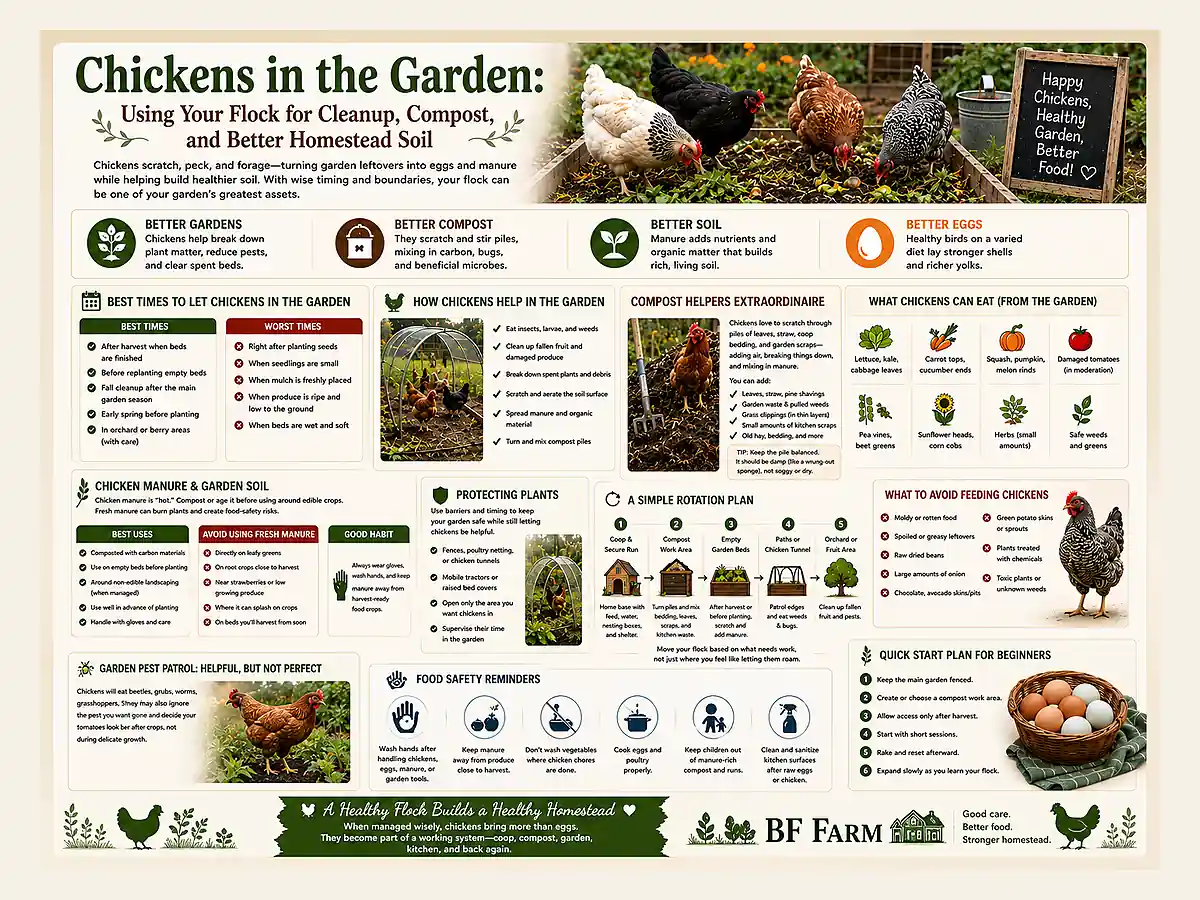
Chickens in the Garden: Using Your Flock for Cleanup, Compost, and Better Homestead Soil
Chickens can be one of the most useful helpers on a small homestead, but only when they are managed with a plan. A flock can scratch through old garden beds, break down plant debris, stir compost, eat insects, spread bedding, and turn leftover garden matter into eggs and manure. Left loose at the wrong time, though, those same birds can pull up seedlings, shred mulch, dust-bathe in fresh beds, eat ripe produce, and make a mess where you were hoping for a harvest.
Why Chickens and Gardens Work So Well Together
Chickens fit naturally into a homestead system because they are always looking for something to do. They scratch, peck, shuffle, dig, dust, chase bugs, and investigate every bit of loose soil. In the right place, that behavior is a gift. In the wrong place, it is chaos with feathers.
The trick is not asking chickens to “be good” in the garden. Chickens are going to act like chickens. The goal is to put their normal habits to work where those habits are helpful.
A well-managed flock can help with:
- breaking down spent garden plants,
- cleaning up fallen fruit or damaged vegetables,
- stirring leaves and bedding into compost,
- reducing some insects and larvae,
- spreading manure and organic material,
- preparing empty beds between plantings,
- turning kitchen scraps into eggs and fertilizer value.
This is the heart of good coop-to-kitchen thinking. Better food does not start in the kitchen. It starts with the care of the animals, the health of the soil, the cleanliness of the coop, and the daily decisions made around chores.
Chickens Are Helpers, Not Gardeners
It helps to be honest from the beginning: chickens do not understand your garden plan.
They do not know the difference between a weed seedling and a tomato seedling. They do not know which bed you just planted. They do not know that the ripe strawberry was supposed to be for supper. They do not know that the soft little patch of loose soil was freshly raked for carrots and not, in fact, created as a luxury dust bath.
That means chicken garden use should be managed with fences, timing, and supervision.
Think of chickens as seasonal cleanup workers, compost assistants, and pest patrol — not as polite garden employees who can be trusted with the whole operation.
The Best Times to Let Chickens Into the Garden
Timing is everything. Chickens are most helpful when the garden is between active growing stages or when plants are mature enough to tolerate a little scratching nearby.
Best times for chicken garden access
After harvest
Once a bed is finished producing, chickens can help clean up leftover leaves, damaged fruits, old stems, weeds, bugs, and spilled seeds.
Before replanting
If a bed is empty and you plan to refresh it, chickens can scratch through the top layer, stir in leaves or old bedding, and expose insects.
In fall cleanup
After the main garden season, chickens can help clear spent plants, scratch through mulch, and work over beds before winter.
In early spring before planting
Before tender seedlings go in, chickens can scratch through garden paths, compost areas, and empty beds.
Around established perennial areas with care
Some mature fruit trees, berry rows, or orchard-style spaces can benefit from short, supervised chicken visits, especially for fallen fruit cleanup. Young plants still need protection.
Worst times for chicken garden access
Right after planting seeds
Freshly seeded beds are chicken magnets. Loose soil plus hidden seeds equals a chicken treasure hunt.
When seedlings are small
Young plants are easy to uproot, trample, or nibble.
When mulch is newly placed
Chickens love to scatter mulch. They may spread it beautifully, or they may throw it into every place except where you wanted it.
When produce is ripe and low to the ground
Tomatoes, strawberries, squash, melons, cucumbers, greens, and fallen fruit can all become chicken snacks.
When beds are wet and soft
Chickens can compact muddy areas, make holes, and create a mess that is harder to repair.
How Chickens Help With Garden Cleanup
Garden cleanup is one of the safest and most useful jobs for a flock.
At the end of a crop’s life, there is usually plenty of material left behind: yellowing leaves, bug-chewed greens, dropped fruit, split tomatoes, old vines, seed heads, weeds, and bits of mulch. Instead of hauling everything straight away, you can let the chickens work through the area first.
They will often:
- peck at tender leaves,
- eat some insect pests,
- break apart soft plant material,
- scratch through loose soil,
- expose grubs or larvae,
- spread debris into a thinner layer,
- add manure as they go.
This does not replace real garden cleanup. You still need to remove diseased plant material, pull tough stems, manage weeds, and reset the bed. But chickens can make the first pass easier.
A simple cleanup routine
- Remove anything unsafe or diseased first.
Do not give chickens moldy, rotten, heavily diseased, or questionable plant material. If a plant looks diseased, remove it yourself and dispose of it appropriately. - Fence the flock into the finished bed.
Use temporary poultry netting, garden panels, cattle panels, or a small mobile run. - Let them work for a short period.
Start with 30 minutes to a few hours, depending on flock size and bed condition. - Watch what they do.
If they are eating useful debris and scratching lightly, great. If they are digging deep holes or moving into nearby crops, end the session. - Rake and reset afterward.
Once the chickens are done, rake the bed, remove woody stems, add compost if needed, and protect the soil.
The goal is controlled cleanup, not turning the flock loose until the garden looks like it hosted a tiny feathered rodeo.
Using Chickens for Compost Help
Chickens are excellent compost stirrers because scratching is one of their favorite hobbies. Give them a pile with leaves, straw, spent bedding, garden scraps, and safe kitchen scraps, and they will dig through it looking for seeds, bugs, and tender bits.
That scratching adds air, breaks larger material into smaller pieces, and mixes manure into carbon-rich bedding.
What chickens can do in a compost system
Chickens can help:
- turn loose compost material,
- shred leaves,
- spread old coop bedding,
- mix garden waste,
- eat some seeds and bugs,
- add manure,
- keep a compost area active.
They are especially useful in a rough compost area where the pile is still in the early breakdown stage.
What chickens cannot do
Chickens cannot make unsafe compost safe overnight. They also cannot replace proper compost aging, turning, moisture control, or food-safety judgment.
Chicken manure is “hot” compared with many other manure sources. It is valuable, but it should be composted or aged before being used around food crops. Fresh manure should not be tossed directly onto harvest-ready vegetable beds.
A practical chicken compost setup
A simple setup can be as basic as a fenced compost corner near the coop or garden.
You can layer:
- dry leaves,
- straw,
- pine shavings from the coop,
- garden debris,
- pulled weeds without mature seed heads,
- small amounts of safe kitchen scraps,
- grass clippings in thin layers,
- old hay or bedding,
- finished garden plants.
Then let the flock scratch through it during supervised or scheduled access.
Keep the pile balanced. Too much wet material can turn slimy and sour. Too much dry material can stall breakdown. A useful homestead compost pile should feel active but not rotten, damp but not soggy, earthy rather than foul.
Chicken Manure and Garden Soil
Chicken manure is one of the main reasons gardeners like having a flock, but it needs respect.
Fresh chicken manure can be strong. It can burn plants, smell unpleasant, attract flies, and create food-safety concerns if used carelessly around edible crops. That does not make it bad. It means it needs to be handled as a resource, not scattered everywhere without a plan.
Best uses for chicken manure
Chicken manure is best used when it has been:
- composted with bedding and carbon material,
- aged before garden use,
- mixed into compost piles,
- applied to empty beds well before planting,
- used around non-edible landscaping only when managed properly,
- handled with gloves and basic sanitation.
Avoid using fresh manure
Avoid putting fresh chicken manure:
- directly on leafy greens,
- around root crops close to harvest,
- near strawberries or low-growing produce,
- on beds you plan to harvest from soon,
- where rain can splash it onto edible plant parts,
- in areas children frequently play.
A good rule of thumb for homestead use is simple: if the edible part of the plant may touch the soil, be extra careful. Compost and time are your friends.
Garden Pest Patrol: What Chickens Can and Cannot Control
Chickens love bugs. They will chase grasshoppers, scratch for beetles, peck at larvae, and investigate anything that moves. This makes them helpful around some garden and orchard areas.
But chickens are not a complete pest-control plan.
They may eat:
- beetles,
- grubs,
- worms,
- larvae,
- grasshoppers,
- crickets,
- some flies,
- dropped fruit with insect damage,
- weed seeds,
- small slugs or snails depending on the flock.
They may also ignore the pest you were hoping they would eat and instead destroy your mulch, sample your tomatoes, and dig a crater next to the peppers.
Very chicken of them.
Use chickens before or after crops, not during delicate growth
For pest patrol, chickens are most useful:
- before planting,
- after harvest,
- around orchard areas after fruit drop,
- in garden paths,
- around compost piles,
- in empty beds,
- in cover-crop areas before reworking.
They are riskier in planted vegetable beds, especially when crops are small.
Protecting Plants While Using Chickens
The easiest way to use chickens in the garden is not to trust them with full access. Use barriers.
Good barrier options
Temporary poultry netting
Useful for rotating chickens through sections of the garden.
Chicken tunnels
A wire tunnel along garden edges or between rows lets chickens patrol paths without reaching crops.
Mobile chicken tractor
Works well over finished beds, cover crops, or future garden areas.
Raised-bed hoops with netting
Protects seedlings and greens from scratching.
Garden fencing
Permanent fencing helps keep the main garden off-limits except when you intentionally open an area.
Hardware cloth around young plants
Useful for protecting small perennials, young shrubs, and tender starts.
The “open only what you mean” rule
Do not open the whole garden if you only want chickens in one bed. Chickens spread out fast, especially if they spot something interesting.
Open one controlled area. Close everything else.
Chicken Tunnels: A Smart Option for Small Homesteads
Chicken tunnels are narrow fenced pathways that let chickens move around the garden edge or between sections without giving them full access to planted beds.
They can be made with wire fencing, small panels, or arched hardware cloth. The idea is simple: chickens get access to weeds, bugs, and dropped scraps along the edges, while your crops stay protected.
Chicken tunnels can work well:
- around the outside of a vegetable garden,
- between orchard rows,
- along compost areas,
- beside raised beds,
- from the coop to a rotating run,
- around a perimeter where weeds grow.
They are not necessary for every homestead, but they are a useful idea for people who want chickens close to the garden without constant supervision.
What Garden Scraps Chickens Can Usually Use
Chickens can enjoy many garden leftovers, especially when scraps are fresh, clean, and offered in reasonable amounts.
Useful garden extras may include:
- overgrown lettuce,
- kale leaves,
- cabbage leaves,
- carrot tops in moderation,
- cucumber ends,
- squash pieces,
- pumpkin,
- melon rinds with flesh attached,
- damaged tomatoes in small amounts,
- bolted greens,
- corn cobs with kernels left,
- sunflower heads,
- herbs in small amounts,
- beet greens in moderation,
- pea vines after harvest,
- weeds known to be safe.
Scraps should be a supplement, not the main diet. Laying hens still need a balanced ration, clean water, grit if they are eating whole foods or forage, and calcium support if appropriate for their stage of life.
Scraps and Plants to Be Careful With
A safe garden-and-flock system means knowing what not to feed or where not to let chickens browse.
Avoid giving chickens:
- moldy or rotten food,
- spoiled produce,
- heavily salted foods,
- greasy leftovers,
- raw dried beans,
- green potato skins or sprouts,
- large amounts of onion,
- chocolate,
- avocado pits and skins,
- anything treated with herbicide or pesticide,
- unknown weeds,
- toxic ornamental plants,
- plants you cannot confidently identify.
Some common garden plants have parts that are not suitable as chicken feed, especially leaves from nightshade-family crops such as tomatoes, potatoes, eggplants, and peppers. Chickens may ignore many things that are bad for them, but relying on that is not a care plan.
When in doubt, keep it out.
Feeding Balance Still Matters
One common mistake is thinking a garden can feed the flock by itself. It usually cannot.
Garden scraps and foraging are useful, but laying hens need steady nutrition. Egg production, feather quality, immune resilience, body condition, and overall flock health depend on more than whatever they find in the garden.
A sensible feeding plan includes:
- a quality complete feed appropriate for the birds’ age and purpose,
- constant clean water,
- grit when birds eat forage, scraps, or whole grains,
- calcium support for laying hens, often offered separately,
- treats in moderation,
- observation of body condition and flock behavior.
Too many scraps can dilute nutrition. A flock that fills up on watery produce, scratch grains, or random leftovers may not eat enough balanced feed. That can affect laying, shell quality, and general health.
The garden should support the flock. It should not replace proper feeding.
Using Chickens With Cover Crops
Cover crops can be a smart way to feed the soil, protect bare ground, and give chickens something useful to work through at certain times of year.
Depending on your region and season, cover crops might include things like clover, oats, rye, peas, buckwheat, or other soil-building plants. The right choice depends on climate, timing, and your garden goals.
Chickens can help terminate or thin a cover crop by scratching, grazing, and trampling it. They may not finish the job perfectly, but they can start the breakdown process.
How to use chickens with cover crops
- Plant the cover crop after a garden bed is finished.
- Let it grow enough to protect and improve the soil.
- Before you need the bed again, fence chickens onto the area.
- Let them graze and scratch for a limited time.
- Remove the chickens before the bed is bare and damaged.
- Rake, mulch, compost, or prepare the bed for the next planting.
This works best when you watch the soil. If chickens are exposing too much bare dirt or digging deeply, move them.
Seasonal Chicken Garden Jobs
Different seasons call for different chicken jobs.
Spring
In spring, chickens are useful before the garden is planted. They can scratch through paths, compost, and empty beds, but they should be kept away from newly seeded areas and young transplants.
Spring jobs:
- clean garden paths,
- turn compost,
- scratch empty beds before planting,
- eat early weeds,
- work through old mulch,
- help prepare future beds.
Spring caution: seedlings are fragile. Protect them like they are the last biscuits at breakfast.
Summer
In summer, chickens need more careful management. Heat, shade, water, and plant protection matter. They may enjoy garden scraps, but they should not be trapped in hot, exposed garden areas.
Summer jobs:
- eat safe garden surplus,
- patrol shaded orchard areas,
- clean up damaged produce,
- work compost in the morning or evening,
- scratch in controlled runs near the garden.
Summer caution: avoid overheating the flock. Provide shade, water, airflow, and escape from direct sun.
Fall
Fall may be the best season for chicken garden work. Many beds are finished, weeds are still present, bugs are active, and the flock can help clean up before winter.
Fall jobs:
- clean spent beds,
- scratch through old vines,
- eat fallen fruit,
- work compost piles,
- spread leaves,
- help mix bedding and garden debris,
- prepare beds for winter mulch.
Fall caution: remove diseased plants yourself. Do not let chickens spread questionable plant material everywhere.
Winter
In colder areas, garden access may be limited, but chickens can still help with compost and bedding systems. Deep bedding from the coop can become valuable compost material when managed well.
Winter jobs:
- scratch through compost when weather allows,
- work through leaves and bedding,
- use covered runs with carbon material,
- help break down kitchen scraps in moderation.
Winter caution: do not rely on frozen garden scraps or snow for hydration. Chickens need clean liquid water.
Daily Management When Chickens Are Near the Garden
When chickens and gardens overlap, daily observation matters.
Check:
- water availability,
- shade and shelter,
- fencing gaps,
- predator risk,
- whether birds are damaging beds,
- whether birds are eating something unsafe,
- muddy or compacted areas,
- manure buildup near harvest areas,
- signs of illness or stress.
A flock working near the garden should still be managed like livestock, not decorations. Count your birds, watch their behavior, and know what is normal for them.
If a bird is acting unusually tired, not eating, isolating, limping, breathing oddly, or showing signs of injury or illness, remove it from the garden work area and seek guidance from a poultry-savvy professional when needed.
Food Safety in a Coop-to-Kitchen System
Chickens, compost, eggs, vegetables, and kitchens can work together beautifully, but cleanliness matters.
A few practical habits go a long way:
- Wash hands after handling chickens, eggs, bedding, manure, or garden tools.
- Keep chicken manure away from produce close to harvest.
- Do not wash vegetables in areas used for chicken chores.
- Keep harvest baskets separate from egg baskets and manure buckets.
- Do not place eggs on dirty garden surfaces.
- Clean and sanitize kitchen surfaces after handling raw eggs, raw chicken, or dirty produce.
- Cook eggs and poultry properly.
- Keep children from playing in manure-rich compost or chicken runs.
- Use separate shoes or clean footwear when moving between coop, garden, and house.
The goal is not to be fearful. It is to build habits that make the whole system safer and easier to maintain.
Designing a Garden With Chickens in Mind
If you are still planning your setup, design the garden and coop so the flock can help without taking over.
Helpful layout ideas
Put the compost between the coop and garden
This makes it easier to move bedding, scraps, and finished compost.
Use gates generously
Multiple gates let you rotate chickens into specific zones.
Create a sacrifice or working area
A dedicated chicken work zone can hold leaves, bedding, compost, and garden debris.
Protect the main growing beds
Raised beds, fencing, hoops, and covers make chicken damage less likely.
Keep water accessible
If chickens are working away from the coop, they still need clean water.
Plan shade
A garden edge with shade is safer for supervised chicken work than a hot open area.
Think about wheelbarrow paths
If moving bedding, compost, feed, or mulch is awkward, the system becomes harder to maintain.
A useful homestead layout should make the right chores easier. If you have to fight the setup every day, you will eventually stop using it.
A Simple Rotational System
You do not need a complicated permaculture diagram to use chickens well. A simple rotation can work.
Example rotation
Zone 1: Coop and secure run
Daily home base with feed, water, shelter, nesting boxes, roosts, and predator protection.
Zone 2: Compost work area
Chickens get scheduled access to bedding, leaves, scraps, and garden debris.
Zone 3: Empty garden beds
Chickens enter only after harvest or before planting.
Zone 4: Garden paths or chicken tunnel
Chickens patrol edges without entering growing beds.
Zone 5: Orchard or fruit area
Short visits for fallen fruit cleanup and bug patrol.
Move the flock based on what needs work, not just where you feel like letting them roam. Controlled access is what keeps the system useful.
Common Mistakes to Avoid
Letting chickens into the garden too early
Small seedlings cannot defend themselves from scratching feet and curious beaks. Wait until plants are established or keep chickens out completely until after harvest.
Leaving chickens too long in one area
A short visit can clean a bed. A long visit can strip it bare, dig holes, and compact soil.
Using fresh manure too close to harvest
Chicken manure needs time and composting before it belongs near food crops. Be especially careful with leafy greens, herbs, strawberries, and root vegetables.
Feeding too many scraps
Scraps are not a balanced diet. Too much garden surplus can reduce feed intake and affect health or laying.
Assuming chickens know what is safe
They do not. Remove unsafe plants, spoiled food, and treated materials before giving access.
Forgetting predators
Garden access can put chickens farther from their secure coop or run. Hawks, dogs, raccoons, foxes, and other predators may notice. Supervise and fence accordingly.
Ignoring neighbors
Chickens scratching near property lines, compost areas, or loose mulch can become a nuisance if not managed. Keep the flock contained and clean.
Troubleshooting Chicken Garden Problems
Problem: Chickens are digging holes in the beds
They may be dust bathing or searching for bugs. Remove them from planted beds and give them a dedicated dust bath area with dry soil, sand, or appropriate loose material.
Problem: Chickens are eating vegetables
They probably will. Fence off ripe produce and only give access after harvest or through protected tunnels.
Problem: Chickens scatter mulch everywhere
Use heavier mulch, fence off delicate areas, or only allow chickens into beds before you apply final mulch.
Problem: The compost smells bad
The pile may be too wet or too heavy with food scraps/manure. Add dry carbon material such as leaves, straw, or bedding. Turn it and reduce wet scraps.
Problem: The chickens ignore pests
They may be full, the pests may not interest them, or the birds may prefer something easier. Use chickens as one part of pest management, not the whole plan.
Problem: The garden looks worse after chicken access
Shorten the access time, reduce flock size in that area, use smaller zones, and move them before the soil is bare or damaged.
A Beginner-Friendly Chicken Garden Plan
For someone just starting out, here is a simple plan that works better than turning the whole flock loose.
Step 1: Keep the main garden fenced
Start with protection. It is easier to let chickens in on purpose than to chase them out after damage is done.
Step 2: Build or choose one compost work area
Place it where coop bedding and garden waste are easy to move.
Step 3: Give chickens garden access only after harvest
Use finished beds for their first garden jobs.
Step 4: Start with short sessions
Try 30 to 60 minutes and watch closely.
Step 5: Rake afterward
Do not leave the bed rough unless that is part of your plan. Smooth it, add compost or mulch, and prepare for the next step.
Step 6: Expand slowly
Once you know how your flock behaves, try controlled access to paths, orchard areas, cover crops, or compost zones.
This approach keeps beginners from learning the hard way that chickens can undo a lot of garden work in a hurry.
How This Connects Back to the Kitchen
The Coop & Kitchen mindset is about more than collecting eggs or cooking supper. It is about building a useful loop.
The garden feeds the flock with safe scraps and forage.
The flock helps clean the garden and stir compost.
The compost feeds the soil.
The soil grows better food.
The chickens provide eggs, manure, pest patrol, and daily lessons in animal care.
The kitchen benefits from all of it.
That loop is not automatic. It depends on good management. Clean water, proper feed, safe housing, healthy birds, careful manure handling, and thoughtful garden timing all matter.
At BF Farm, that is the kind of practical homestead thinking worth sharing: not fancy, not wasteful, and not built on shortcuts. Just useful daily care that connects the animals, the land, and the food on the table.
Final Thoughts
Chickens can be wonderful garden partners, but they need boundaries. Give them the right job at the right time, and they can help clean beds, stir compost, reduce some pests, and build better soil. Give them full access at the wrong time, and they can turn a carefully planted garden into a scratched-up buffet.
Start small. Fence well. Watch your flock. Protect young plants. Compost manure before using it around food crops. Keep balanced feed as the foundation of chicken care, and use the garden as a helpful supplement rather than the whole diet.
When managed wisely, chickens bring more to the homestead than eggs. They become part of a working system — coop, compost, garden, kitchen, and back again.