Coop & Kitchen at BF Farm Kunekune Pigs
Fresh Egg Handling: Collecting, Cleaning, Storing, and Cooking Backyard Eggs Safely
May 27, 2026 · Eggs & Egg Handling
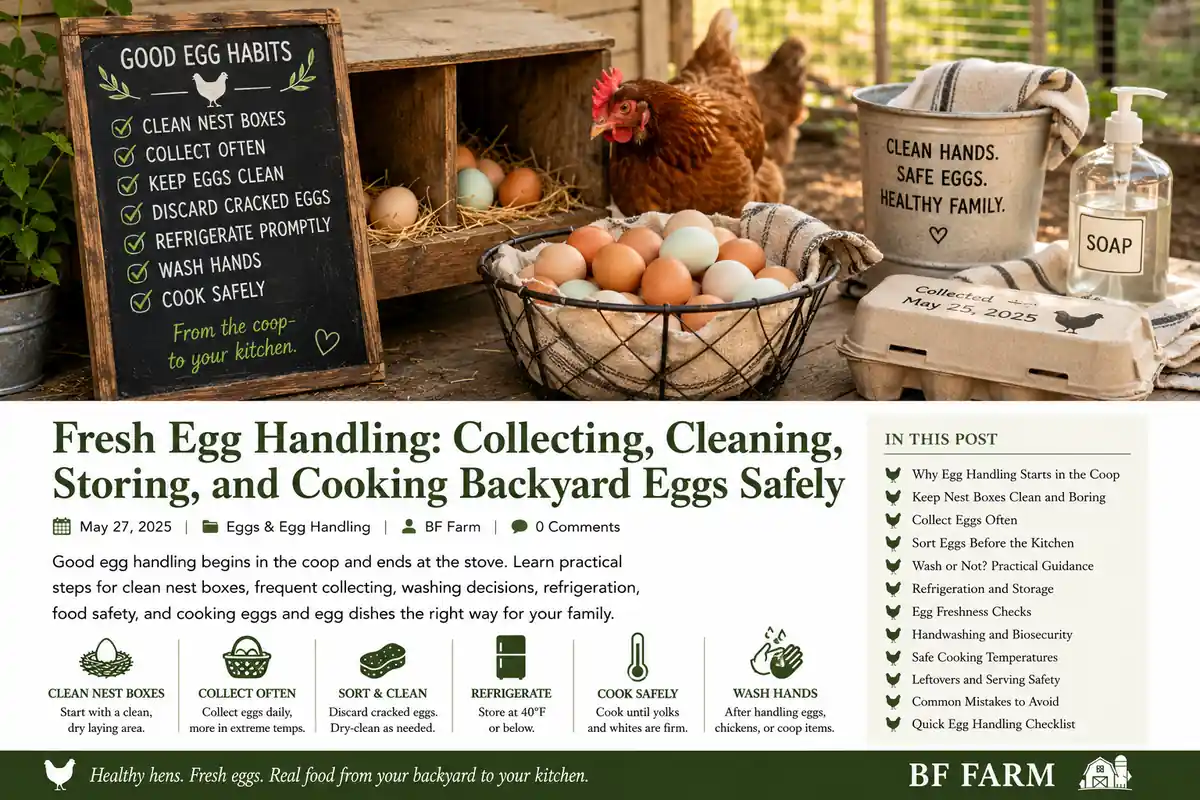
Fresh eggs are one of the best rewards of keeping backyard chickens. They turn ordinary breakfasts, casseroles, custards, deviled eggs, noodles, cornbread, and skillet meals into something that feels connected to the work outside. But good egg handling does not begin at the kitchen counter. It starts in the coop, with clean nest boxes, frequent collecting, careful sorting, clean hands, and a routine that keeps the farm side and the food side from getting tangled together.
Why Egg Handling Starts in the Coop
The cleanest egg is usually the one that never had a chance to get dirty. That means egg handling begins before the egg is laid.
Clean nest boxes matter. Dry bedding matters. Hens sleeping on roosts instead of in nest boxes matters. Collecting eggs often matters. A muddy run, dirty bedding, broken eggs, and hens sleeping in nest boxes can all make eggs harder to handle safely later.
CDC guidance notes that eggshells can become contaminated with Salmonella and other germs from poultry droppings or from the area where eggs are laid. CDC recommends keeping hands and the coop clean, washing hands after handling eggs or chickens, collecting eggs often, throwing away cracked eggs, and refrigerating eggs after collection.
That may sound like a lot, but the daily routine is simple: keep the laying area clean, collect eggs regularly, sort them carefully, and wash your hands.
Keep Nest Boxes Clean and Boring
Nest boxes do not need to be fancy. They need to be clean, dry, comfortable, and easy to check.
Good nest-box habits include:
- Use clean, dry bedding.
- Replace dirty bedding often.
- Remove broken eggs right away.
- Discourage hens from sleeping in nest boxes.
- Keep nest boxes shaded and reasonably private.
- Check for mites, pests, and damp corners.
- Collect eggs before they sit too long.
If hens are sleeping in the nest boxes, the eggs are more likely to be dirty. Look at roost placement, flock crowding, lighting, and whether younger birds understand where to sleep. Sometimes a hen sleeps in a box because she is low in the pecking order and getting bullied off the roost. Sometimes the roost is uncomfortable. Sometimes she is broody. The egg tells part of the story, but the hen’s behavior tells the rest.
Collect Eggs Often
Frequent collecting is one of the easiest ways to improve egg quality. Eggs that sit in the nest can get dirty, cracked, chilled, overheated, stepped on, or discovered by egg-eating hens.
A practical collecting rhythm:
- Collect once daily at minimum.
- Collect more often in hot weather.
- Collect more often in freezing weather.
- Collect more often if you have broody hens or crowded nest boxes.
- Collect promptly if eggs are getting dirty or broken.
- Use a clean basket, bowl, or egg flat.
Summer and winter both deserve extra attention. In hot weather, eggs can sit in warm nest boxes too long. In freezing weather, eggs can crack. If an egg freezes and cracks, treat it as unsafe for normal kitchen use and discard it.
Sort Eggs Before They Reach the Kitchen Counter
Do not bring every egg inside and immediately set the whole basket on a food-prep surface. Sort eggs first.
A simple sorting system:
Clean and sound eggs
These are eggs with intact shells and little to no visible dirt.
Lightly dirty eggs
These may have a small amount of dry bedding, dust, or debris.
Very dirty eggs
These have manure, mud, broken egg mess, or heavy contamination.
Cracked eggs
These should be discarded.
CDC specifically recommends throwing away cracked eggs because bacteria on the shell can more easily enter through the crack.
That last point is worth taking seriously. A cracked egg is not a “just rinse it real good” situation. When the shell is broken, the barrier is compromised.
Should Backyard Eggs Be Washed?
This is where backyard chicken people love to argue. Some keepers wash every egg. Some never wash clean eggs. Some dry-clean first and only wash when needed. The safest practical answer is to understand what you are trying to prevent.
CDC says eggs with dirt and debris can be cleaned carefully with fine sandpaper, a brush, or a cloth, and warns not to wash warm, fresh eggs with colder water because colder water can pull bacteria into the egg. CDC also recommends refrigerating eggs after collection.
For a small homestead flock, a practical approach is:
- Keep nest boxes clean so washing is rarely needed.
- Dry-clean lightly dirty eggs with a clean cloth, brush, or fine sandpaper.
- Discard cracked eggs.
- Avoid using cold water on warm fresh eggs.
- Refrigerate eggs after collection.
- Wash hands after handling eggs.
If an egg is heavily soiled, it is worth asking why. One dirty egg happens. A whole basket of dirty eggs means the nest boxes, roosting habits, bedding, or coop conditions need attention.
Refrigeration: Keep the Routine Simple
For BF Farm-style household use, the simplest recommendation is to refrigerate backyard eggs after collection. That keeps the advice clear, safe, and aligned with CDC and FDA guidance.
FDA recommends storing eggs promptly in a clean refrigerator at 40°F or below, keeping them in the original carton for best quality, using hard-cooked eggs within one week, and using refrigerated leftover cooked egg dishes within three to four days.
Backyard keepers sometimes ask whether unwashed eggs can sit on the counter because they still have their natural bloom. Practices vary by country and by household, but for this blog’s purpose, the most practical public advice is: collect, clean as needed, refrigerate, and use good kitchen habits.
That keeps the article useful for families, guests, children, older adults, and anyone with a higher food-safety risk in the home.
Use a Carton, Date, and Rotation System
Fresh eggs can pile up fast once hens are laying well. A simple rotation system saves confusion.
Try this:
- Store eggs in cartons.
- Mark the collection date.
- Use the oldest eggs first.
- Keep clean eggs separate from questionable eggs.
- Do not mix cracked or very dirty eggs into the regular carton.
- Keep a small “use first” carton if you bake often.
A pencil mark on the carton is enough. You do not need a complicated spreadsheet unless you enjoy that sort of thing — and if you do, this is a very acceptable chicken-person quirk.
Egg Freshness Checks
The best freshness system is dating eggs and rotating them properly. Still, many keepers like having a backup check.
Common signs of concern include:
- Bad smell after cracking
- Unusual appearance
- Cracked shell
- Leaking egg
- Heavy contamination
- Egg left too long in heat
- Egg of unknown age
Crack eggs into a small separate bowl before adding them to a recipe, especially when baking or using several eggs. That way, one bad egg does not ruin a whole bowl of batter.
The float test is often mentioned by backyard keepers, but it should not replace good collecting and storage habits. If an egg is cracked, smells bad, looks wrong, or has been mishandled, do not try to argue it into being food.
Keep Coop Equipment Out of the Kitchen
The path from coop to kitchen should have a boundary.
CDC recommends keeping backyard poultry out of the house, especially areas where food or drinks are prepared, served, or stored. CDC also says equipment used to care for poultry, including cages and food or water containers, should be cleaned outdoors rather than inside the house.
That means:
- Do not wash chicken waterers in the kitchen sink.
- Do not set egg baskets covered in dust or bedding on the counter.
- Do not store poultry supplies beside pantry food.
- Do not wear coop shoes through the kitchen.
- Do not let chicks or chickens visit the kitchen “just for a minute.”
- Do not eat snacks in the coop or run.
This is not about being fussy. It is about keeping manure, bedding dust, and poultry germs away from food-prep spaces.
Wash Hands Like It Is Part of the Chore
Handwashing is one of the simplest and most important habits in backyard poultry keeping.
CDC recommends washing hands with soap and running water after touching backyard poultry or anything in the area where they live and roam, including after collecting eggs and handling poultry food, water containers, or equipment.
A good setup makes handwashing easier:
- Keep hand sanitizer near the coop for backup.
- Wash with soap and water as soon as practical.
- Teach children to wash after collecting eggs.
- Keep a separate scrub brush or cleaning station for egg baskets if needed.
- Do not touch your mouth, face, phone, refrigerator handle, or food before washing.
The tiny habits matter because eggs move from the coop to the kitchen. Clean hands help that transition happen safely.
Children and Egg Collecting
Egg collecting is a wonderful chore for children, but it needs structure.
Teach children:
- Walk calmly around hens.
- Do not chase chickens off nests.
- Use two hands or a basket.
- Do not carry eggs in pockets.
- Tell an adult about cracked or very dirty eggs.
- Do not kiss chickens.
- Do not eat or drink in the coop.
- Wash hands after collecting eggs.
CDC says young children, older adults, and people with weakened immune systems are more likely to get sick from germs carried by backyard poultry. CDC also says children younger than five should not handle or touch chicks, ducklings, or other poultry.
A child can still learn responsibility from the flock. Adults just need to set the routine and supervise.
Cooking Eggs Safely
Fresh eggs are beautiful, but they are still eggs. They need the same careful handling as any other egg.
FDA safe-handling guidance says to keep eggs refrigerated, cook eggs until yolks are firm, and cook foods containing eggs thoroughly. FDA also says casseroles and other dishes containing eggs should be cooked to 160°F, and raw or undercooked recipes such as Caesar dressing or homemade ice cream should use pasteurized shell eggs or pasteurized egg products.
That matters for:
- Breakfast casseroles
- Quiche
- Custards
- Bread pudding
- French toast bakes
- Egg noodles
- Deviled eggs
- Egg salad
- Homemade mayonnaise
- Ice cream
- Caesar dressing
If the recipe leaves eggs raw or runny, think carefully about who is eating it. For children, older adults, pregnant people, or anyone with a weakened immune system, pasteurized egg products are the safer choice for recipes that are not fully cooked.
Serving and Leftovers
Egg dishes can move from safe to questionable when they sit out too long, especially in warm weather.
FDA says cooked eggs and egg-containing foods should not be left out of the refrigerator for more than two hours, or for more than one hour when temperatures are above 90°F. FDA also recommends reheating cooked egg dishes to 165°F before serving later.
This matters for church dinners, family reunions, summer cookouts, breakfast buffets, and “we’ll just leave the deviled eggs out a little longer” moments. Deviled eggs are innocent-looking little chaos boats if nobody is watching the clock.
A practical rule: keep cold egg dishes cold, keep hot egg dishes hot, and put leftovers away sooner than you think you need to.
Best Uses for Fresh Backyard Eggs
Fresh eggs shine in simple food. You do not need to fuss them up too much.
Good uses include:
- Scrambled eggs
- Fried eggs
- Omelets
- Breakfast casserole
- Quiche
- Egg salad
- Deviled eggs
- Custard pie
- Pound cake
- Cornbread
- Homemade noodles
- French toast
- Fried rice
- Frittatas
- Breakfast burritos
- Freezer breakfast sandwiches
Older eggs can be useful too. Many cooks find slightly older eggs easier to peel when hard-boiled. That makes your dated cartons helpful: use the freshest eggs for frying and baking, and older refrigerated eggs for boiling.
What to Do with Extra Eggs
When hens are laying well, extra eggs can sneak up on you.
Useful options:
- Make breakfast casseroles for the freezer.
- Bake pound cakes or quick breads.
- Make egg noodles.
- Prepare breakfast burritos.
- Make quiche or frittatas.
- Share with family or neighbors if local rules allow.
- Keep a “use first” carton.
- Freeze beaten eggs for later cooking.
If selling eggs, check local regulations first. CDC reminds backyard flock owners to know local licensing requirements if they sell eggs.
Even gifting eggs deserves care. Use clean cartons, label dates, keep eggs refrigerated, and do not pass along cracked or questionable eggs.
Troubleshooting Dirty Eggs
If eggs are often dirty, fix the coop routine before blaming the hens.
Common causes:
- Dirty nest-box bedding
- Hens sleeping in nest boxes
- Muddy run conditions
- Crowded coop
- Broken eggs in the nest
- Too few nesting boxes
- Poor roost setup
- Ventilation or moisture problems
- Egg collection happening too late in the day
Start with bedding and roost habits. Clean the nest boxes. Make sure roosts are more appealing than nest boxes for sleeping. Collect eggs earlier and more often. Watch whether a particular hen is breaking eggs or dragging mess into the box.
Clean eggs are not just prettier. They are easier to handle safely.
A Practical Coop-to-Kitchen Egg Routine
Here is a simple routine that works for many small flocks.
Morning or early day:
- Check nest boxes.
- Collect eggs in a clean basket.
- Remove broken eggs.
- Replace dirty nest bedding.
- Wash hands after coop chores.
After collecting:
- Sort eggs before they reach food-prep surfaces.
- Discard cracked eggs.
- Dry-clean lightly dirty eggs as needed.
- Keep heavily dirty eggs out of the regular carton.
- Refrigerate eggs after collection.
- Mark the carton with the date.
Before cooking:
- Wash hands.
- Crack eggs into a separate bowl.
- Cook eggs until yolks and whites are firm unless using a pasteurized option for a specific recipe.
- Cook egg dishes to 160°F.
- Refrigerate leftovers promptly.
That routine is not fancy. It is repeatable, and repeatable wins.
Common Egg-Handling Mistakes
Letting eggs sit in the nest too long
They can get dirty, cracked, or too warm.
Keeping dirty bedding in nest boxes
Dirty bedding leads to dirty eggs.
Saving cracked eggs
Cracks let bacteria enter more easily. Discard them.
Washing warm fresh eggs with cold water
CDC warns that colder water can pull bacteria into the egg.
Putting dirty egg baskets on kitchen counters
Keep coop items away from food-prep spaces.
Forgetting to date cartons
Eggs become a guessing game.
Leaving deviled eggs out too long
Summer gatherings and egg dishes need time and temperature attention.
Using raw eggs in uncooked recipes without pasteurized eggs
FDA recommends pasteurized shell eggs or pasteurized egg products for recipes served raw or undercooked.
From Coop to Kitchen
Eggs are the perfect symbol of Coop & Kitchen because they pass through both worlds. They start with animal care and end as food for the family.
A clean egg basket is not an accident. It reflects clean nest boxes, frequent collecting, healthy routines, careful sorting, refrigeration, and kitchen habits that respect the work behind the food.
BF Farm’s Coop & Kitchen section is built around that practical connection. Good food does not begin when the pan gets hot. It begins when the chickens have clean bedding, safe housing, fresh water, steady feed, and a keeper who pays attention.
Quick Fresh Egg Handling Checklist
Use this as a simple review:
- Are nest boxes clean and dry?
- Are hens sleeping on roosts instead of in boxes?
- Are eggs collected often?
- Are cracked eggs discarded?
- Are dirty eggs kept separate from clean eggs?
- Are eggs dry-cleaned carefully when needed?
- Are eggs refrigerated after collection?
- Are cartons dated?
- Are older eggs used first?
- Are hands washed after egg handling?
- Are poultry supplies cleaned outside the kitchen?
- Are egg dishes cooked thoroughly?
- Are casseroles cooked to 160°F?
- Are raw or undercooked egg recipes made with pasteurized eggs?
- Are leftovers refrigerated promptly?
If those habits are in place, the path from nest box to table is much smoother.
Final Thoughts
Fresh backyard eggs are one of the best parts of keeping chickens, but they deserve careful handling. Keep the nest boxes clean. Collect eggs often. Discard cracked eggs. Refrigerate eggs after collection. Keep coop equipment out of the kitchen. Wash hands. Cook eggs and egg dishes safely.
None of this takes the joy out of fresh eggs. It protects the joy. A clean, steady egg routine means you can enjoy the basket, the breakfast, and the connection between the coop and kitchen with more confidence.