Coop & Kitchen at BF Farm Kunekune Pigs
Summer Feeding & Water Routine: What Backyard Chickens Need Every Day in Hot Weather
May 27, 2026 · Feeding & Daily Care
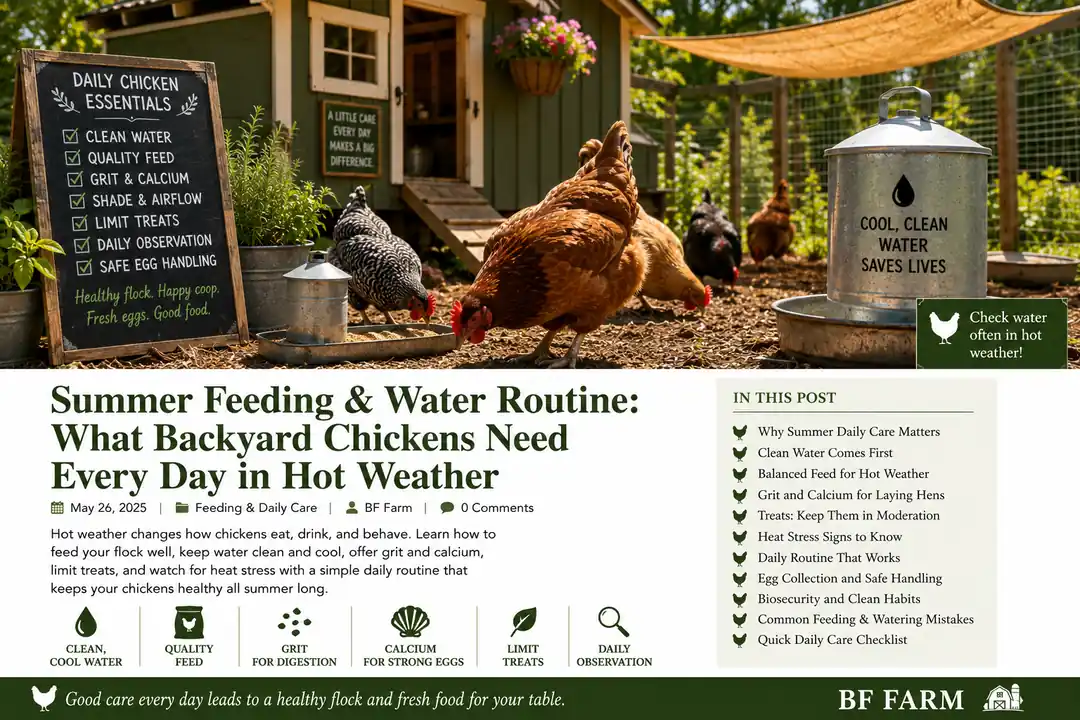
Hot weather changes the rhythm of chicken care. A flock that seemed easy in spring may suddenly need more water checks, cleaner feeders, better shade, fewer heavy treats, and closer observation during the hottest part of the day. Summer feeding and watering is not complicated, but it does need to be steady. Chickens do best when the basics are predictable: clean water, balanced feed, grit, calcium for laying hens, shade, and a keeper who notices when something looks off.
Why Summer Daily Care Matters
Summer is when small chores show their importance. A waterer that tips over in mild weather is annoying. A waterer that tips over on a hot afternoon can become dangerous. Feed that gets damp in spring may be wasteful. Feed that sours in summer can attract flies, rodents, and trouble.
Chickens cannot sweat like people do. They manage heat through behavior: drinking more, seeking shade, holding wings away from the body, panting, dust bathing, and slowing down during the hottest hours. That means the daily routine needs to support those natural coping tools.
A good summer routine does three things:
- Keeps water clean, cool, and available
- Keeps feed fresh, dry, and balanced
- Helps the keeper spot heat stress, illness, or flock changes early
This is where Coop & Kitchen starts before the recipe. Healthy eggs and useful homestead meals begin with daily care outside.
Clean Water Comes First
In summer, water is the first chore, not the last one. Chickens drink more in hot weather, and they may drink less if the water is dirty, warm, algae-filled, or hard to reach.
A practical summer water setup should include:
- At least one reliable waterer that cannot tip easily
- A shaded location for the waterer
- Extra water capacity for hot days
- More than one water station for larger flocks
- Daily rinsing when dirt, feathers, bedding, or droppings build up
- A plan for extreme heat or days away from home
The best water system is one you can keep clean. Some keepers love nipple waterers, some use hanging waterers, and some prefer heavy rubber pans. Each style has pros and cons. What matters most is that the flock always has access to clean water and that the keeper can check it easily.
On very hot days, check water more than once. Look at the water level, but also look at the water quality. A full waterer that is slimy or sitting in full sun may not help as much as you think.
Where to Put the Waterer
Water placement matters. If the waterer sits in full sun, the water heats up. If it sits where birds scratch bedding into it all day, it gets dirty fast. If it sits too close to roosts, droppings may land in or near it. If it sits in a muddy spot, every drink becomes part of a bigger mess.
A good summer water spot is:
- Shaded
- Easy for all birds to access
- Away from heavy manure areas
- Stable and level
- Easy for the keeper to refill
- Not creating a muddy pit around the feeder
If one dominant hen guards the waterer, add another water station. If young birds, smaller birds, or timid hens have trouble getting access, spacing out water stations can help.
Balanced Feed Still Matters in Summer
Heat may reduce appetite, especially during the hottest part of the day. That does not mean chickens should live on scraps and treats until fall. Balanced feed is still the foundation of the flock's diet.
For laying hens, a complete layer feed is usually the simplest base once birds are old enough and laying or close to laying. Younger chicks and growing pullets need feed made for their stage, not layer feed. Meat birds, if you raise them, have different needs again.
Summer feeding works best when the main feed is:
- Kept dry
- Stored away from rodents
- Protected from rain
- Offered in a feeder that limits waste
- Refilled before it goes stale or gets packed with dust
- Matched to the age and purpose of the birds
If feed smells sour, looks moldy, clumps strangely, or has been wet, do not treat it like normal feed. Spoiled feed is not worth gambling with.
Morning and Evening Feeding Rhythm
Many flocks eat more in the cooler parts of the day. In summer, mornings and evenings may be the best times to see normal feeding behavior.
A simple rhythm:
Morning:
- Check water first.
- Check feed level.
- Watch whether birds come to eat normally.
- Remove wet or spoiled feed.
- Make sure shade is available for later.
Evening:
- Check feed again.
- Look for birds that seem weak, slow, or off by themselves.
- Remove old scraps or treats.
- Secure feed storage.
- Close the coop safely for the night.
This rhythm lets the flock eat when it is cooler and lets the keeper notice problems before the heat of the next day.
Grit: Small Detail, Big Job
Chickens use grit in the gizzard to grind food. If birds eat only commercial crumble or pellets, grit may not seem urgent, but most backyard chickens get more than that. They scratch, peck greens, eat treats, chase bugs, and sample whatever the run provides.
That is where grit helps.
Offer poultry grit separately so birds can take what they need. Do not mix a large amount into feed unless the product label specifically says to do that. A small separate container keeps the choice available without forcing it.
Birds on pasture or soil may find some grit naturally, but a separate source is simple insurance, especially for confined flocks, young birds transitioning outside, or birds getting garden scraps and whole grains.
Calcium for Laying Hens
Laying hens need calcium to build eggshells. A complete layer feed usually contains calcium, but many keepers also offer oyster shell separately. That lets hens take extra calcium when they need it without forcing it on birds that do not.
Offer calcium separately if you have laying hens. Do not give layer feed or extra calcium as the main diet for young chicks. Their needs are different.
Thin shells, soft shells, or shell problems can happen for many reasons: heat stress, age, diet, illness, stress, or simply the odd glitch. One strange egg does not always mean something is wrong. A repeated pattern deserves attention.
In hot weather, shell quality may wobble because heat affects feed intake and general stress. That makes steady feed, water, shade, and calcium access even more important.
Treats: Keep Them Useful, Not Excessive
Chickens are theatrical little beggars. They can make a handful of scraps look like the most important event in farm history. Treats are fun, but they should not crowd out balanced feed.
Good summer treat habits:
- Offer treats in small amounts
- Give treats during cooler parts of the day
- Remove leftovers before they rot
- Avoid salty, moldy, spoiled, or greasy foods
- Do not use scratch grain as the main diet
- Keep treats from creating feed fights or bullying
Cool produce can be helpful in moderation. Watermelon rinds, cucumber ends, leafy greens, or garden extras may be enjoyed by the flock, but they are not a replacement for balanced feed. Scratch grains should stay limited, especially in heat.
The test is simple: if treats are causing waste, flies, loose droppings, or birds ignoring their regular feed, cut back.
Watch the Flock While They Eat and Drink
Daily feeding is also daily observation. You can learn a lot by watching how birds act around feed and water.
Look for:
- A bird that does not come to eat
- A hen standing apart from the flock
- Drooping wings
- Panting that seems severe
- Pale comb or wattles
- Limping
- A dirty backside
- Labored breathing
- Bullying around feed or water
- A sudden drop in feed or water use
- Birds crowding one waterer because another is empty or dirty
Chickens often hide weakness. A quiet bird is easy to miss if chores are rushed. Summer is not the season to eyeball it from the porch and assume everything is fine.
If multiple birds look sick, if birds are dying, or if symptoms are severe, contact a poultry-savvy veterinarian, local extension office, or state poultry resource. Poultry biosecurity guidance also encourages keepers to watch for signs of illness and seek help promptly when birds are sick or dying.
Heat Stress Signs to Know
Hot birds may pant, hold wings away from the body, seek shade, drink more, and move less. Those signs can be part of normal heat coping. The concern grows when birds seem weak, confused, unable to stand, uninterested in water, or separated from the flock.
Pay close attention if you see:
- Heavy panting
- Wings held away from the body for long periods
- Lethargy
- Stumbling
- Pale combs
- Collapse
- Refusal to drink
- Several birds affected at once
Respond by reducing stress, offering shade, checking water immediately, and cooling the environment. Do not dunk an overheated bird into icy water and shock her system. Gentle cooling, airflow, shade, and access to water are safer starting points while you seek experienced help if the bird is in serious distress.
Keep Feed Storage Rodent-Resistant
Summer feed storage can make or break the whole coop routine. Feed attracts rodents, and rodents invite more problems. They can chew bags, contaminate feed, damage structures, and draw predators closer to the coop.
Store feed in a dry, secure container. A metal trash can with a tight lid works well for many small flocks. Keep the storage area swept. Do not leave torn bags sitting open. Do not let spilled feed become a nightly buffet.
Also check the feeder itself. If birds bill out feed and scatter it everywhere, adjust the feeder height or style. Feed waste is expensive, messy, and attractive to pests.
Wet Feed and Mold Are Not Worth It
Rain blowing into a feeder, a leaking roof, a tipped waterer, or humid storage can all create wet feed. In summer, wet feed can sour quickly.
When in doubt, throw questionable feed out. That feels wasteful, but it is better than letting the flock eat spoiled feed.
Prevent wet feed by:
- Keeping feeders under cover
- Fixing leaks near feed areas
- Using feeders that limit scratching
- Storing feed off the ground
- Keeping feed containers sealed
- Cleaning feeder corners where old feed packs in
The nose knows. If feed smells off, treat it as a warning.
Clean Waterers Without Turning the Kitchen Into a Coop
Waterers need cleaning, but they should not be cleaned in the kitchen sink. Keep poultry equipment separate from food-prep spaces.
Backyard poultry can carry Salmonella even when they look healthy and clean, and those germs can spread to areas where birds live and roam. A practical family routine should include washing hands after touching poultry, eggs, or anything in their environment, keeping poultry supplies outside the house, and not eating, drinking, kissing, or snuggling around backyard birds.
A simple setup helps:
- Keep a scrub brush for poultry equipment only
- Wash waterers outside
- Store the brush away from kitchen tools
- Wash hands after coop chores
- Keep coop shoes out of the kitchen
- Do not set dirty egg baskets or waterers on food counters
This is not about being fussy. It is about keeping the coop side and kitchen side from crossing in ways that can make people sick.
Daily Biosecurity Habits
Biosecurity sounds like a big word, but at the backyard level it mostly means building clean habits that reduce disease risk.
Poultry biosecurity is the everyday set of practices that helps keep disease-causing organisms away from birds, property, and people. Good habits include limiting unnecessary visitors, washing hands before and after poultry contact, cleaning tools or equipment, using dedicated footwear or boot covers, and watching for signs of illness.
For a small flock, daily biosecurity can be simple:
- Wear coop shoes or boots
- Keep those shoes out of the house
- Wash hands after chores
- Do not share dirty equipment between flocks
- Quarantine new birds before introducing them
- Keep wild birds away from feed and water where possible
- Clean tools before using them in another animal area
The best biosecurity plan is the one you will actually follow every day.
Egg Collection Is Part of Daily Care
Even though this article is about feed and water, egg collection belongs in the same routine. In hot weather, eggs should not sit in the nest all day if you can help it.
Collect eggs often, throw away cracked eggs, keep nest boxes clean, refrigerate eggs, and cook eggs and egg dishes thoroughly. For a family flock, those habits matter just as much as the feed scoop and water check.
That makes egg handling part of the whole coop-to-kitchen rhythm:
- Feed and water the flock
- Collect eggs with clean hands or a clean basket
- Keep dirty baskets off kitchen counters
- Refrigerate eggs
- Wash hands before cooking
- Cook and store egg dishes safely
The kitchen reward starts with clean habits outside.
A Simple Hot-Weather Daily Routine
A summer routine does not need to be fancy. It just needs to be steady.
Morning:
- Check water first.
- Rinse or refill waterers.
- Make sure water is shaded.
- Check feed and remove anything wet or spoiled.
- Watch birds as they eat and drink.
- Check grit and oyster shell.
- Collect eggs.
- Look for signs of heat stress or illness.
Midday or afternoon, especially during heat:
- Check water again.
- Make sure no waterer has tipped over.
- Look for birds panting heavily or acting weak.
- Remove leftover treats.
- Check shade.
- Collect eggs again if the weather is hot.
Evening:
- Check feed level.
- Secure feed storage.
- Refresh water if needed.
- Look over the flock before roosting.
- Close and latch the coop.
- Note anything unusual.
Weekly:
- Wash waterers thoroughly.
- Clean feeders.
- Check feed storage for rodents or dampness.
- Refresh grit and calcium containers.
- Review whether the flock is eating and laying normally.
- Clean up spilled feed.
The routine is not glamorous, but neither is a tipped waterer at 3 p.m. on a 95-degree day. Boring chores save birds.
What to Feed During Extreme Heat
During extreme heat, the goal is to avoid adding stress. Keep the basic diet steady. Do not suddenly change feeds unless there is a clear reason. Avoid heavy scratch feeding during hot parts of the day. Offer any treats in small amounts and remove leftovers.
Helpful summer feeding choices may include:
- Feeding during cooler morning or evening hours
- Keeping the main ration available and dry
- Offering small amounts of cool produce
- Making sure water is always available
- Avoiding excessive scratch grains
- Watching whether birds are actually eating
Some keepers add electrolytes during heat events. Use poultry-specific products and follow the label. Do not make random strong mixes because more is not always better. Fresh plain water should always be available.
Common Feeding and Watering Mistakes
The same mistakes show up in many beginner flocks.
One waterer for too many birds
If the flock crowds the waterer, add another.
Water sitting in full sun
Warm water is less helpful. Move it to shade.
Treats replacing feed
Treats should not become the main diet.
Wet feed left in the feeder
Wet feed can sour and attract pests.
No grit available
Birds eating scraps, greens, bugs, or whole grains need grit access.
No separate calcium for layers
Laying hens may benefit from free-choice oyster shell.
Kitchen scraps left to rot
If the flock does not finish treats, remove them.
Dirty equipment washed indoors
Keep poultry equipment out of the kitchen.
Not watching the quiet bird
A bird that separates herself may be telling you something.
How Daily Care Supports Better Eggs
Egg quality is not just about breed. It is tied to care. Clean water, balanced feed, calcium, shade, and low stress all support better laying conditions.
Good daily care can help with:
- Cleaner eggs
- Stronger shells
- More predictable laying
- Less feed waste
- Fewer pest problems
- Better flock observation
- Safer egg handling
It will not make hens lay like machines, and it will not prevent every odd egg. But it gives the flock the best ordinary foundation.
From Coop to Kitchen
A summer feeding and water routine may not sound like kitchen work, but it is. Fresh eggs do not begin in a mixing bowl. They begin with birds that have clean water, steady feed, shade, grit, calcium, and a keeper paying attention.
That is the heart of BF Farm's Coop & Kitchen section: practical animal care connected to useful food. A family that gathers eggs from its own flock understands the work behind breakfast in a different way. The chores give the food context.
When the flock is cared for well, the kitchen has more to work with: eggs for breakfast casseroles, deviled eggs, custards, noodles, cornbread, egg salad, quiche, and simple skillet meals. The path from coop to table is built one water check and one feed scoop at a time.
Quick Summer Feeding and Water Checklist
Use this as a simple daily review:
- Is the water clean?
- Is the water shaded?
- Is there enough water for the day's heat?
- Is feed dry and fresh?
- Is feed stored away from rodents?
- Are treats limited?
- Are leftovers removed?
- Is grit available?
- Is oyster shell available for laying hens?
- Are birds eating and drinking normally?
- Are any birds standing apart?
- Are there signs of heat stress?
- Are egg baskets kept off food-prep counters until clean?
- Are hands washed after coop chores?
- Are poultry tools cleaned outside the kitchen?
If you can answer yes to most of those, the flock is getting a strong daily foundation.
Final Thoughts
Summer chicken care does not have to be complicated, but it does need consistency. Start with clean water, dry feed, shade, grit, calcium, and observation. Keep treats modest. Keep poultry equipment out of the kitchen. Wash hands after chores. Collect eggs often and handle them safely.
The flock does not need perfection. It needs a keeper who notices the ordinary things: the empty waterer, the damp feed, the hen standing alone, the feeder attracting mice, the eggs sitting too long in a hot nest box.
Good daily care is quiet work. But in summer, quiet work matters. It keeps the birds more comfortable, keeps chores manageable, and keeps the whole homestead rhythm moving from coop to kitchen.