FarmLife at BF Farm Kunekune Pigs
Best Chicken Breeds for the Midwest: Hardy Birds for Real Four-Season Farms
May 18, 2026 · Farm Life
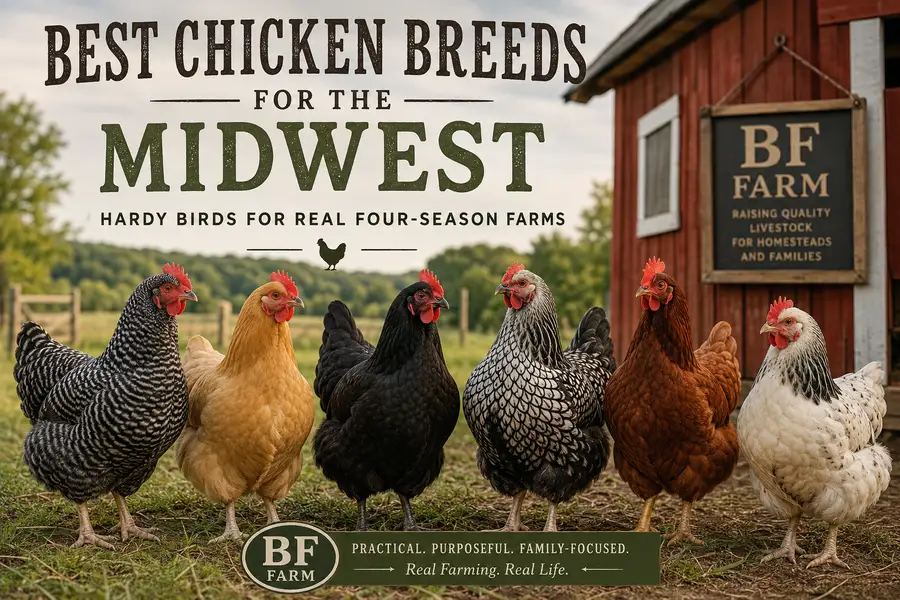
The Midwest is not gentle on livestock, and around BF Farm, that matters. Any animal we keep has to handle real weather: January wind, spring mud, summer humidity, and those wild temperature swings that show up right when chores need done. Chickens are no different. A breed can look perfect in a catalog, but the real test is whether it stays healthy, steady, and useful through all four seasons.
For families, homesteaders, and small farms in Missouri and across the Midwest, the best chickens are not just the prettiest birds or the heaviest layers. They are practical birds: cold-hardy, manageable, good-tempered, productive, and tough enough for everyday farm life.
What Makes a Chicken Breed Good for the Midwest?
A good Midwest chicken needs balance. Some breeds lay heavily but struggle with cold. Some handle winter well but slow down badly in summer heat. Some are beautiful but flighty, nervous, or poor choices for families with children.
For most small farms and homesteads in the Midwest, the best chicken breeds should have:
- Good cold tolerance
- Decent heat tolerance
- Reliable egg production
- Calm temperament
- Strong foraging ability
- Good body size
- Manageable comb type
- Resistance to stress
- Practical usefulness beyond appearance
The Midwest asks chickens to be tough without being wild. A bird that can calmly walk out into a chilly morning, scratch through damp bedding, tolerate summer humidity, and still give a steady supply of eggs is worth keeping.
Cold Winters, Hot Summers, and Real Farm Chores
Many new chicken keepers focus only on winter, but Midwest summers can be just as hard on birds. Chickens do not sweat. They cool themselves by panting, holding their wings away from the body, resting in shade, dust bathing, and drinking plenty of water.
Winter brings another set of problems: frostbite, frozen water, drafts, poor ventilation, damp bedding, and reduced daylight. The best breed will not fix poor management, but the right breed gives you a better starting point.
In cold weather, chickens with large single combs can be more prone to frostbite. Birds with smaller combs, rose combs, pea combs, or thick feathering often handle winter better. In hot weather, extremely heavy feathering can become a disadvantage, so the ideal Midwest flock usually includes breeds that are sturdy but not overly delicate.
On a working farm, the pretty ideas have to survive mud, heat, frozen buckets, feed bills, predators, and real animals. That is why breed choice should always be practical.
1. Plymouth Rock
Plymouth Rocks, especially Barred Rocks, are one of the best all-around chicken breeds for Midwest farms. They are calm, hardy, dependable, and practical. They are not usually the flashiest bird in the flock, but they earn their keep.
Plymouth Rocks are good brown egg layers and often continue laying through cooler weather better than some lighter breeds. They have a sturdy body, decent foraging instincts, and a temperament that works well for families, beginners, and mixed flocks.
Why they work well in the Midwest:
- Good cold hardiness
- Reliable brown egg production
- Calm, friendly temperament
- Good dual-purpose body size
- Generally easy for beginners
- Handles confinement or free-ranging reasonably well
A Barred Rock is the kind of chicken that fits a practical homestead. It can be a family egg bird, a beginner’s first breed, or part of a larger working flock.
2. Rhode Island Red
Rhode Island Reds are famous for a reason. They are productive, tough, efficient, and widely available. For Midwest farms that want eggs, Rhode Island Reds deserve serious consideration.
They lay large brown eggs and are known for being hardy in different climates. They can handle cold weather well with proper coop management, though their single combs may need extra attention during extreme cold.
Why they work well in the Midwest:
- Excellent egg production
- Hardy and adaptable
- Good for beginners
- Efficient feed-to-egg conversion
- Strong foragers
- Useful in small or larger flocks
The main caution is temperament. Many Rhode Island Reds are steady and useful, but some lines can be bossier than others. If you are raising chickens around young children or want a very gentle flock, buy from a source that selects for temperament.
3. Buff Orpington
Buff Orpingtons are favorites for family farms. They are large, fluffy, calm chickens with a gentle nature and good cold tolerance. They are not always the highest-producing egg breed, but they are dependable and easy to like.
Orpingtons lay brown eggs and are often good choices for people who want a friendly backyard or homestead flock. They are also more likely to go broody than some production breeds, which can be helpful if you want hens that may hatch chicks naturally.
Why they work well in the Midwest:
- Excellent cold hardiness
- Very calm temperament
- Good family-friendly breed
- Solid brown egg production
- Heavy body size
- Good winter presence in the flock
The tradeoff is summer heat. Because Orpingtons are large and heavily feathered, they need shade, ventilation, cool water, and relief from extreme humidity. They can absolutely work in the Midwest, but they should not be kept in a stuffy coop or exposed run during hot spells.
4. Wyandotte
Wyandottes are one of the strongest cold-weather choices for the Midwest. Their rose comb gives them an advantage in winter because it is less exposed than a large single comb. They are attractive, sturdy birds that lay brown eggs and handle cold conditions well.
Popular varieties include Silver Laced, Golden Laced, Blue Laced Red, and Columbian. They are beautiful chickens, but they are also practical.
Why they work well in the Midwest:
- Very good cold hardiness
- Rose comb helps reduce frostbite risk
- Good brown egg production
- Dual-purpose body type
- Attractive flock appearance
- Generally steady and hardy
Wyandottes can sometimes be assertive in a mixed flock. They are not usually fragile birds, and that confidence can show up in pecking order behavior. Still, for cold-climate egg production, they are hard to ignore.
5. Australorp
Australorps are excellent layers with calm temperaments and good overall hardiness. They are often overlooked because they are not as trendy as some colorful breeds, but they are one of the most useful chickens for a productive homestead flock.
They lay brown eggs, are generally gentle, and tend to be good for beginners. Their dark feathering can absorb heat, so they need proper summer management, but they are strong performers in many Midwest settings.
Why they work well in the Midwest:
- Very good egg production
- Calm and manageable
- Good cold tolerance
- Beginner-friendly
- Good flock manners
- Practical for eggs and homestead use
Australorps are a strong choice when you want a reliable egg bird that does not bring a lot of drama to the coop.
6. Sussex
Sussex chickens are useful, friendly, and well-suited to mixed-purpose flocks. Speckled Sussex are especially popular because they are attractive, curious, and personable. They are good layers of light brown to tinted eggs and tend to forage well.
For Midwest farms, Sussex birds offer a nice mix of egg production, temperament, and hardiness.
Why they work well in the Midwest:
- Friendly and curious
- Good foragers
- Decent cold tolerance
- Good egg production
- Dual-purpose size
- Works well in family flocks
Sussex chickens are often a good fit for people who want birds with personality. They are active without usually being too flighty.
7. Brahma
Brahmas are big, calm, cold-hardy chickens. They are one of the best breeds for winter tolerance, thanks to their size, feathering, and small pea comb. They are gentle giants and can be excellent for families who want calm birds.
They are not the fastest-maturing chickens and are not always the most efficient egg layers, but they are steady, impressive, and well-suited to cold weather.
Why they work well in the Midwest:
- Excellent cold hardiness
- Small pea comb
- Calm temperament
- Large body size
- Good winter bird
- Gentle flock presence
The caution with Brahmas is mud. Their feathered feet can collect moisture, manure, ice, and mud if the run is poorly drained. In a dry, well-managed setup, they can do beautifully. In a sloppy pen, feathered feet become more work.
8. Buckeye
Buckeyes are one of the most underrated breeds for the Midwest. Developed in Ohio, they are well adapted to cold weather and practical farm conditions. They have a pea comb, good body size, and a reputation for being active, hardy birds.
For people who want a heritage breed with real Midwest roots, Buckeyes are worth considering.
Why they work well in the Midwest:
- Developed in the Midwest
- Excellent cold hardiness
- Pea comb helps in winter
- Good foragers
- Dual-purpose usefulness
- Strong heritage breed value
Buckeyes can be active and confident. They often do best with room to move and scratch rather than being kept in cramped conditions.
9. Chantecler
Chanteclers were developed in Canada, which tells you a lot about their winter ability. They are cold-hardy, practical birds with small cushion combs, making them well-suited for freezing conditions.
They are not as common as Rhode Island Reds or Plymouth Rocks, but they can be an excellent choice for serious cold-weather chicken keepers.
Why they work well in the Midwest:
- Excellent winter hardiness
- Small comb
- Good body size
- Practical dual-purpose bird
- Good choice for harsh winters
Because they are less common, finding quality Chanteclers may take more effort. But for cold-climate flocks, they are a breed worth knowing.
10. Easter Egger
Easter Eggers are not a true standardized breed, but they are extremely popular because they often lay blue, green, or tinted eggs. For many families, that colorful egg basket is part of the fun.
They can do well in the Midwest, especially if they inherit pea combs and hardy genetics. Since Easter Eggers vary widely, quality depends heavily on the source.
Why they can work well in the Midwest:
- Often have pea combs
- Fun egg colors
- Usually decent layers
- Good variety in appearance
- Popular with families
- Often hardy when well bred
The key is not to assume all Easter Eggers are the same. Some are hardy, productive birds. Others may be less consistent. Buy from someone who can tell you how their birds perform in your climate.
Best Egg-Laying Breeds for Midwest Farms
If your main goal is eggs, choose breeds known for steady production. A beautiful bird that lays poorly may still be enjoyable, but it will not fill an egg basket.
Strong egg choices for the Midwest include:
- Rhode Island Red
- Plymouth Rock
- Australorp
- Wyandotte
- Sussex
- Easter Egger
- ISA Brown or other production hybrids
Production hybrids such as ISA Browns, Red Stars, Golden Comets, and similar sex-link birds can lay extremely well. They are often some of the best egg producers available. The tradeoff is that they may burn out faster than heritage breeds and may not have the same long-term usefulness in a sustainable breeding flock.
For a family that simply wants lots of eggs, production hybrids can make sense. For a homestead that values longevity, hardiness, and breeding potential, heritage breeds may be a better long-term fit.
Best Cold-Hardy Chicken Breeds for the Midwest
For the coldest parts of the Midwest, especially where winter wind and subzero temperatures are common, pay close attention to comb type and body condition.
Top cold-hardy choices include:
- Wyandotte
- Brahma
- Buckeye
- Chantecler
- Orpington
- Plymouth Rock
- Australorp
Smaller combs are helpful in winter. Rose combs, pea combs, and cushion combs are less likely to suffer frostbite than tall single combs. That does not mean single-comb breeds cannot work. Rhode Island Reds and Plymouth Rocks are used successfully in cold places all the time. It simply means you need good ventilation, dry bedding, and frostbite awareness.
Best Heat-Tolerant Options for Midwest Summers
Midwest summers can be sticky and heavy. Hot, humid air is hard on chickens, especially large fluffy breeds.
Better summer performers often include:
- Rhode Island Red
- Plymouth Rock
- Sussex
- Easter Egger
- Leghorn
- Welsummer
Leghorns are excellent layers and tolerate heat well, but they are more active and flighty than many calm homestead breeds. They can be a good choice if you want white eggs and high production, but they are not always the best fit for a quiet family flock.
In summer, breed choice matters less than management. Chickens need shade, fresh water, ventilation, dust bathing areas, and enough space to avoid stress.
Best Beginner Chicken Breeds for the Midwest
For beginners, temperament matters almost as much as egg production. A calm flock is easier to manage, easier to observe, and less stressful for children and new chicken keepers.
Best beginner-friendly Midwest breeds include:
- Buff Orpington
- Barred Plymouth Rock
- Australorp
- Speckled Sussex
- Wyandotte
- Easter Egger
A good beginner flock might include two or three breeds rather than one. That gives you variety in temperament, egg color, production, and appearance while still keeping management simple.
A practical starter flock might look like:
- 2 Barred Rocks
- 2 Buff Orpingtons
- 2 Australorps
- 2 Easter Eggers
- 2 Wyandottes
That kind of flock gives brown eggs, colored eggs, cold hardiness, gentle birds, and enough variety to learn what you like.
Best Dual-Purpose Chickens for Midwest Homesteads
Dual-purpose chickens are useful for both eggs and meat. They will not grow as fast as commercial meat birds, and they will not lay like top production hybrids, but they offer a balanced option for homesteads.
Good dual-purpose breeds include:
- Plymouth Rock
- Rhode Island Red
- Wyandotte
- Orpington
- Sussex
- Buckeye
- Brahma
- Chantecler
For families interested in long-term self-sufficiency, dual-purpose breeds make sense. They are usually sturdier, more adaptable, and more practical than birds selected for only one extreme trait.
BF Farm is best known for quality Kunekune breeder stock, but the same livestock principle applies here: choose animals for more than looks. Health, temperament, structure, usefulness, and long-term fit matter whether you are choosing pigs, chickens, or any other animal for a working homestead.
Best Chicken Breeds for Families with Children
If children will be helping with chores, choose calm breeds and avoid overly nervous lines. No breed guarantees a perfect bird, but some are known for being easier to handle.
Good family choices include:
- Buff Orpington
- Barred Rock
- Australorp
- Speckled Sussex
- Brahma
- Easter Egger
Roosters are a separate decision. Even in gentle breeds, roosters can become protective or aggressive. Families with children should be especially careful about keeping roosters, and should never tolerate dangerous behavior from a bird.
Breeds to Be Cautious With in the Midwest
Some breeds can still work in the Midwest, but they need more thought.
Silkies
Silkies are gentle and charming, but they are not the most practical Midwest production bird. Their feathering does not shed water well, and they can struggle in wet, muddy, or very cold conditions if not managed carefully. They are better as specialty birds than main egg producers.
Polish
Polish chickens are beautiful, but their head feathers can limit vision. This may make them more vulnerable to predators and flock bullying. They are not usually the first breed I would recommend for a practical Midwest homestead.
Leghorns
Leghorns are excellent layers and good in heat, but they are lighter, more active, and more flighty. They can work well, but they may not be ideal for people wanting calm, easygoing birds.
Very Large Feather-Footed Breeds
Brahmas and Cochins can be wonderful, but feathered feet need dry ground. In muddy Midwest spring weather, foot feathers can become messy. They are best kept in well-drained runs with clean bedding.
Coop Setup Matters More Than Breed Alone
Even the best chicken breed will struggle in a bad setup. Midwest chicken keeping depends on the right housing.
A good Midwest coop should have:
- Dry bedding
- Draft-free roosting area
- Good ventilation above bird level
- Predator-proof walls and doors
- Enough roost space
- Easy access for cleaning
- Winter water management
- Shade and airflow for summer
- A dry run or well-drained outdoor area
The biggest winter mistake is sealing a coop too tightly. Chickens need ventilation to remove moisture. Damp air causes more frostbite problems than cold air alone. The coop should block drafts at roost height while still allowing moist air to escape.
How Many Chickens Should a Midwest Beginner Start With?
For most beginners, 6 to 12 hens is a practical starting point. Fewer than that can make flock dynamics harder, and losing one bird in a tiny flock feels like a bigger setback. More than 12 can become overwhelming if you are still learning.
A small family that eats eggs regularly may do well with 6 to 8 hens. A larger family, or someone who bakes, sells eggs, or shares with relatives, may prefer 10 to 15 hens.
A realistic egg estimate is better than a perfect one. Egg production changes with breed, age, daylight, feed, stress, weather, and molting. Do not expect every hen to lay every day all year.
Heritage Breeds vs. Production Hybrids
This is one of the most important decisions for Midwest chicken keepers.
Production hybrids are built for egg numbers. They often start laying early and produce heavily. For people who want lots of eggs quickly, they are useful.
Heritage breeds are often better for long-term flock goals. They may live longer productive lives, handle varied conditions well, and offer more value for people interested in breeding, self-sufficiency, or maintaining traditional farm genetics.
Choose production hybrids if your main goal is:
- Maximum eggs
- Fast results
- Simple backyard production
- No breeding plans
Choose heritage breeds if your main goal is:
- Hardiness
- Longevity
- Dual-purpose use
- Natural flock replacement
- Breed preservation
- Homestead sustainability
There is nothing wrong with mixing both. A practical Midwest flock might include a few high-production hens and several hardy heritage birds.
What About Roosters?
You do not need a rooster for eggs. Hens lay eggs without a rooster. You only need a rooster if you want fertile eggs for hatching.
Roosters can help watch the flock, alert hens, and support natural breeding. They can also be noisy, aggressive, hard on hens, and illegal in some towns or neighborhoods.
Before keeping a rooster, ask:
- Are roosters allowed where I live?
- Do I want to hatch chicks?
- Do I have enough hens?
- Can I manage aggressive behavior?
- Will neighbors be affected?
- Do I have a plan if the rooster does not work out?
For most backyard egg flocks, hens alone are simpler.
Best Chicken Breed Combinations for the Midwest
A smart flock is often better than a single-breed flock. Mixing breeds gives you variety and balance.
Best Beginner Egg Flock
- Barred Rock
- Buff Orpington
- Australorp
- Easter Egger
- Wyandotte
This mix is friendly, hardy, colorful, and productive.
Best Cold-Weather Flock
- Wyandotte
- Buckeye
- Chantecler
- Brahma
- Plymouth Rock
This flock favors winter strength and body condition.
Best Family-Friendly Flock
- Buff Orpington
- Speckled Sussex
- Barred Rock
- Australorp
- Easter Egger
This mix gives calm birds, good egg variety, and manageable temperaments.
Best Homestead Dual-Purpose Flock
- Plymouth Rock
- Rhode Island Red
- Wyandotte
- Sussex
- Buckeye
This is a practical, useful flock for eggs, meat potential, and long-term farm function.
Buying Chicks: Hatchery, Farm Store, or Breeder?
Many Midwest chicken keepers start with farm store chicks. That can work fine, especially for common breeds. Hatcheries offer wider selection and planned shipping dates. Local breeders may offer better regional adaptation and more information about temperament, parent stock, and actual performance.
Each option has pros and cons.
Farm store chicks:
- Easy to find
- Good for beginners
- Usually affordable
- Limited breed certainty sometimes
- Less information about parent stock
Hatchery chicks:
- Wide breed selection
- Good for planning
- Can order pullets
- Shipping stress is possible
- Quality varies by hatchery and line
Local breeders:
- Birds may be better adapted locally
- More chance to ask questions
- May offer heritage quality
- Availability may be limited
- Prices may be higher
For a practical Midwest flock, the source matters. A “Buff Orpington” from one line may be very different from another. Temperament, size, laying ability, and hardiness are shaped by selection.
Common Mistakes When Choosing Chickens
Choosing Only by Egg Color
Colored eggs are fun, but egg color should not be the only reason you pick a breed. A balanced flock needs hardiness, temperament, and production.
Ignoring Comb Type
Large combs can be more vulnerable in winter. This does not rule out single-comb breeds, but it does mean coop management matters.
Buying Too Many Chicks
Chicks are small. Adult chickens are not. Start with a number you can house properly.
Forgetting About Summer Heat
A bird that handles January well still needs help in July. Shade and water are not optional.
Not Planning for Predators
The Midwest has raccoons, hawks, foxes, coyotes, dogs, snakes, opossums, and more. Breed choice will not protect chickens from poor fencing.
Assuming “Hardy” Means “No Care Needed”
Hardy breeds still need feed, water, shelter, clean bedding, parasite awareness, and daily observation.
Final Recommendation: The Best Midwest Chicken Breeds
If I had to narrow the list down for most Midwest small farms, I would start with these:
- Plymouth Rock for all-around usefulness
- Rhode Island Red for egg production
- Buff Orpington for family-friendly temperament
- Wyandotte for cold hardiness
- Australorp for calm productivity
- Sussex for personality and foraging
- Buckeye for Midwest heritage toughness
- Easter Egger for egg color and variety
For most beginners, the best first flock would be a mix of Barred Rocks, Buff Orpingtons, Australorps, Wyandottes, and Easter Eggers. That gives you a strong balance of eggs, temperament, winter hardiness, and learning experience.
Final Thoughts from BF Farm
After working with livestock through real Midwest seasons, one lesson becomes clear fast: good animals make farm life easier, and poor matches make everything harder. Chickens are no exception.
The best chicken breed for the Midwest is not just the one that lays the most eggs or looks the prettiest in a photo. It is the bird that fits your weather, your coop, your family, your goals, and your daily chore routine.
BF Farm’s focus is raising quality Kunekune breeder stock for families and homesteads that care about health, temperament, structure, and long-term usefulness. That same thinking belongs in every livestock decision. Whether you are choosing a breeding pig or your first laying hen, the goal is not just to bring home an animal. The goal is to choose well, prepare honestly, and build a setup that lets that animal thrive.
Start with hardy birds. Build a dry, secure coop. Give them shade in summer, protection in winter, and enough room to act like chickens. A good flock should serve your family, teach you something, and make the daily rhythm of farm life a little more rewarding.