FarmLife at BF Farm Kunekune Pigs
Best Chickens for Eggs: The Most Reliable Laying Hens for Homesteads and Backyard Flocks
May 18, 2026 · Farm Life
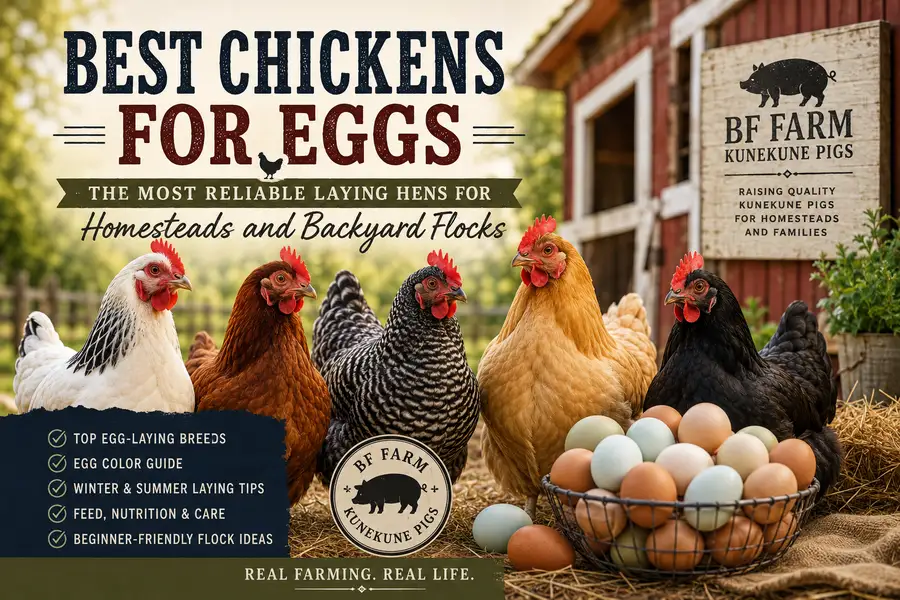
A good laying hen earns her place quietly. She does not need to be the flashiest bird in the yard or the biggest chicken in the flock. The real value shows up over time: steady eggs, a manageable temperament, good health, and the kind of daily usefulness that makes chores feel worthwhile instead of frustrating. For families, small farms, and homesteads, choosing the best chickens for eggs starts with one honest question: do you want the most eggs possible, or do you want the best long-term flock?
The Short Answer: Best Egg-Laying Chicken Breeds
For most people, the best chickens for eggs are:
- Leghorn
- ISA Brown
- Golden Comet
- Rhode Island Red
- Australorp
- Plymouth Rock
- Sussex
- Wyandotte
- Easter Egger
- Orpington
If you want maximum egg production, look at Leghorns, ISA Browns, Golden Comets, and other production hybrids. If you want a more balanced homestead flock, look at Rhode Island Reds, Australorps, Plymouth Rocks, Sussex, Wyandottes, and Orpingtons.
There is no single perfect laying hen for every family. The best choice depends on your climate, coop setup, egg goals, temperament needs, and whether you want long-term heritage birds or high-output production layers.
What Makes a Chicken Good for Eggs?
A good egg-laying chicken is not just a bird that lays heavily for a few months. A truly useful laying hen should be productive, healthy, efficient, and manageable.
When choosing chickens for eggs, consider:
- Annual egg production
- Egg size
- Egg color
- Winter laying ability
- Heat tolerance
- Cold hardiness
- Temperament
- Feed efficiency
- Longevity
- Availability
- Suitability for beginners
The highest-producing hens often lay so heavily that they may have shorter productive lives. Heritage breeds may lay fewer eggs per year, but they often bring better hardiness, stronger bodies, calmer temperaments, and more long-term usefulness.
That tradeoff matters. Around a working farm, animals need to fit the daily routine, not just look good on a chart.
Production Layers vs. Heritage Layers
Before choosing breeds, it helps to understand the difference between production layers and heritage breeds.
Production Layers
Production layers are chickens bred mainly for egg output. They usually start laying early and produce a lot of eggs in their first couple of years.
Examples include:
- ISA Brown
- Golden Comet
- Red Star
- Cinnamon Queen
- Production Red
- White Leghorn
These birds can be excellent if your main goal is lots of eggs quickly. Many families love them because they are dependable, easy to find, and productive.
The downside is that some production layers may slow down earlier than heritage breeds. Because their bodies are bred for heavy laying, they can be more prone to reproductive stress as they age.
Heritage Layers
Heritage breeds are traditional chicken breeds that were developed before modern industrial egg production. They are often more balanced birds, valued for eggs, meat, hardiness, temperament, and natural flock usefulness.
Examples include:
- Rhode Island Red
- Plymouth Rock
- Australorp
- Sussex
- Wyandotte
- Orpington
- Buckeye
- Delaware
Heritage breeds usually do not outlay the top production hybrids, but they often make excellent long-term homestead chickens.
For a self-sufficient flock, heritage breeds are usually the better foundation. For maximum grocery-store egg replacement, production layers may win.
1. White Leghorn
White Leghorns are among the best egg-laying chickens in the world. If your main goal is white eggs and high production, Leghorns are hard to beat.
A good Leghorn hen can lay around 250 to 320 white eggs per year, depending on the line, feed, age, daylight, and management. They are efficient birds that convert feed into eggs very well.
Why Leghorns are good for eggs:
- Excellent egg production
- Large white eggs
- Efficient feed use
- Heat tolerant
- Active foragers
- Early maturity
The main drawback is temperament. Leghorns are often flighty, alert, and active. They are not usually the calmest birds for children or small backyard flocks. They also have large combs, which can be more vulnerable to frostbite in cold climates.
Best for:
- Maximum white egg production
- Warm or moderate climates
- Experienced chicken keepers
- People who value production over cuddly temperament
2. ISA Brown
ISA Browns are one of the most popular brown egg production hens. They are known for laying large brown eggs at a very high rate.
Many ISA Browns can lay around 280 to 320 eggs per year when young and well managed. They are often friendly, practical, and easy for beginners to keep.
Why ISA Browns are good for eggs:
- Excellent brown egg production
- Often friendly and calm
- Good for beginners
- Early laying
- Large eggs
- Easy to find
The tradeoff is longevity. ISA Browns are bred for heavy production, and many do their best laying in the first two years. They can still be wonderful birds, but they are not usually the best choice for someone wanting a long-term heritage breeding flock.
Best for:
- Families wanting lots of brown eggs
- Backyard flocks
- Beginners
- Short-term high production
3. Golden Comet
Golden Comets are another excellent production hybrid. They are often calm, friendly, and very productive. Many people choose them because they lay well and are easy to manage.
Golden Comets usually lay large brown eggs and can produce around 250 to 320 eggs per year in their prime.
Why Golden Comets are good for eggs:
- Excellent egg production
- Large brown eggs
- Friendly temperament
- Beginner-friendly
- Easy to source
- Usually starts laying early
Golden Comets are not a true breed, so they do not breed true. If you hatch eggs from Golden Comets, the chicks will not reliably grow into the same kind of bird. That matters if your goal is a sustainable breeding flock.
Best for:
- Backyard egg production
- Families
- Beginners
- People who do not plan to breed replacement layers
4. Rhode Island Red
Rhode Island Reds are one of the most famous brown egg layers. They are hardy, productive, adaptable, and useful in many climates.
A good Rhode Island Red hen may lay around 200 to 280 brown eggs per year. Production strains may lay more, while heritage strains may lay a bit less but offer better body type and longevity.
Why Rhode Island Reds are good for eggs:
- Strong brown egg production
- Hardy and adaptable
- Good foragers
- Efficient layers
- Useful dual-purpose breed
- Widely available
Temperament can vary. Some Rhode Island Reds are calm and steady, while others can be bossy or assertive. For a family flock, source matters. Choose birds from a line known for good temperament.
Best for:
- Homesteads
- Brown egg production
- Mixed flocks
- People wanting hardy, practical chickens
5. Australorp
Australorps are one of the best choices for people who want eggs and calm birds. They are dependable brown egg layers with gentle temperaments and good homestead usefulness.
A good Australorp may lay around 200 to 280 brown eggs per year. They are often steady, friendly, and easier to manage than more nervous breeds.
Why Australorps are good for eggs:
- Very good egg production
- Calm temperament
- Beginner-friendly
- Good cold tolerance
- Good flock manners
- Useful for families
Australorps are not as flashy as some breeds, but they are practical. That counts for a lot. They are the kind of chicken that quietly does the job without much trouble.
Best for:
- Families
- Beginners
- Homesteads
- Calm backyard flocks
- Brown egg production
6. Plymouth Rock
Plymouth Rocks, especially Barred Rocks, are excellent all-around laying hens. They are hardy, calm, easy to recognize, and useful for both eggs and meat.
A good Plymouth Rock hen may lay around 200 to 280 brown eggs per year. They are not usually the highest-output birds, but they are dependable and practical.
Why Plymouth Rocks are good for eggs:
- Reliable brown egg production
- Calm temperament
- Good cold tolerance
- Beginner-friendly
- Dual-purpose body
- Good for mixed flocks
Barred Rocks are especially popular because they are steady birds that fit well into family farms and backyard coops.
Best for:
- Beginners
- Families
- Midwest and cooler climates
- Homestead flocks
- Balanced egg production
7. Sussex
Sussex chickens are friendly, curious, and useful layers. Speckled Sussex are especially popular because they are pretty birds with good personalities.
A Sussex hen may lay around 180 to 250 eggs per year, depending on the strain. They usually lay light brown or tinted eggs.
Why Sussex chickens are good for eggs:
- Good egg production
- Friendly personality
- Good foragers
- Dual-purpose size
- Good family bird
- Attractive appearance
Sussex chickens often do well in free-range or semi-free-range systems. They are active without usually being too nervous.
Best for:
- Family flocks
- Free-ranging
- Homesteads
- People who want personality and eggs
8. Wyandotte
Wyandottes are beautiful, hardy birds that lay brown eggs and handle cold weather well. They are especially useful in colder climates because of their rose combs, which are less exposed than large single combs.
A Wyandotte hen may lay around 180 to 240 brown eggs per year.
Why Wyandottes are good for eggs:
- Good brown egg production
- Excellent cold hardiness
- Rose comb helps in winter
- Dual-purpose body
- Attractive feather patterns
- Good for northern and Midwest flocks
Wyandottes can sometimes be assertive in the flock. They are not always as cuddly as Orpingtons or Australorps, but they are hardy and useful.
Best for:
- Cold climates
- Midwest farms
- Brown eggs
- Beautiful mixed flocks
- Homestead usefulness
9. Easter Egger
Easter Eggers are loved for colorful eggs. They may lay blue, green, olive, cream, or tinted eggs depending on genetics.
Easter Eggers are not a standardized breed, so production varies. Many lay around 180 to 250 eggs per year, though some lines may lay more or less.
Why Easter Eggers are good for eggs:
- Colorful egg baskets
- Often good layers
- Usually hardy
- Many have pea combs
- Fun variety in appearance
- Popular with families
The main thing to remember is that Easter Eggers vary widely. Some are excellent layers. Others are average. Buy from a source that can tell you what egg color and production to expect.
Best for:
- Colorful egg baskets
- Families
- Backyard flocks
- Beginner flocks with variety
10. Buff Orpington
Buff Orpingtons are gentle, fluffy, family-friendly chickens. They are not always the highest layers, but they are dependable and easy to like.
A Buff Orpington may lay around 180 to 240 brown eggs per year. They are also more likely to go broody than some production breeds, which can be helpful if you want hens that may hatch chicks.
Why Buff Orpingtons are good for eggs:
- Good brown egg production
- Excellent temperament
- Family-friendly
- Cold hardy
- Good broody potential
- Calm flock presence
The downside is heat. Orpingtons are large and heavily feathered, so they need shade, ventilation, and cool water in hot summers.
Best for:
- Families with children
- Calm flocks
- Cold climates
- Beginner homesteads
- People who want friendly hens
11. Delaware
Delawares are practical heritage birds that deserve more attention. They are good layers, have useful body size, and can work well in homestead flocks.
A Delaware hen may lay around 180 to 250 brown eggs per year.
Why Delawares are good for eggs:
- Good egg production
- Dual-purpose usefulness
- Hardy and practical
- Good body size
- Often curious and active
- Heritage value
Delawares can be a nice choice for people who want something less common than Rhode Island Reds or Barred Rocks but still useful.
Best for:
- Heritage flocks
- Homesteads
- Dual-purpose goals
- Brown egg production
12. Welsummer
Welsummers are known for their rich brown eggs, often with speckles. They are not always the most productive breed, but they are popular because of egg appearance and hardy temperament.
A Welsummer hen may lay around 160 to 220 eggs per year.
Why Welsummers are good for eggs:
- Beautiful dark brown eggs
- Good foragers
- Hardy birds
- Active and practical
- Good free-range potential
If you want the most eggs possible, Welsummers may not be your first choice. If you want a pretty egg basket with darker brown eggs, they are worth considering.
Best for:
- Colorful egg baskets
- Homesteads
- Free-range flocks
- People who value egg color
13. Marans
Marans are famous for dark chocolate-brown eggs. They are beautiful, useful birds, but they are not usually top-tier egg producers compared with Leghorns or production hybrids.
A Marans hen may lay around 150 to 220 eggs per year depending on the line.
Why Marans are good for eggs:
- Dark brown eggs
- Attractive birds
- Dual-purpose body
- Good homestead appeal
- Useful for egg basket variety
The darkest egg lines may not lay as heavily as lighter production breeds. If egg color is your goal, Marans are excellent. If egg count is your goal, choose something else as your main layer.
Best for:
- Dark egg color
- Specialty egg baskets
- Heritage flocks
- Mixed homestead flocks
14. Ameraucana
Ameraucanas are true blue-egg-laying chickens. They are different from Easter Eggers, though the names are often confused.
A good Ameraucana may lay around 150 to 220 blue eggs per year. They often have pea combs, beards, and muffs, and can handle cold climates fairly well.
Why Ameraucanas are good for eggs:
- True blue eggs
- Hardy birds
- Pea comb
- Unique appearance
- Good for colorful egg baskets
Ameraucanas are usually more expensive and harder to find than Easter Eggers. If you want true breed characteristics and blue eggs, buy from a reputable breeder.
Best for:
- Blue eggs
- Specialty flocks
- Breeders
- Cold-weather egg color variety
15. New Hampshire
New Hampshires are productive, practical brown egg layers related to Rhode Island Reds. They tend to mature quickly and have useful dual-purpose body size.
A New Hampshire hen may lay around 200 to 260 brown eggs per year.
Why New Hampshires are good for eggs:
- Good brown egg production
- Fast maturity
- Dual-purpose usefulness
- Hardy and practical
- Good for homesteads
They can be assertive, so flock balance matters. Still, they are useful birds for people who want eggs and meat potential.
Best for:
- Homesteads
- Brown eggs
- Dual-purpose flocks
- Practical farm production
Best Chickens for the Most Eggs
If your only goal is the highest number of eggs, choose production-focused birds.
Top choices for egg count:
- White Leghorn
- ISA Brown
- Golden Comet
- Red Star
- Cinnamon Queen
- Production Red
These birds are usually the best choice for replacing grocery-store eggs. They start laying early, produce heavily, and are easy to source.
A high-production flock might include:
- 4 ISA Browns
- 4 Golden Comets
- 2 White Leghorns
That kind of flock can produce a lot of eggs for a family, especially during the first couple of laying years.
Best Chickens for Brown Eggs
For dependable brown eggs, choose:
- ISA Brown
- Golden Comet
- Rhode Island Red
- Australorp
- Plymouth Rock
- Orpington
- Sussex
- Wyandotte
- New Hampshire
Brown eggs are not more nutritious than white eggs, but many farm customers and homestead families prefer the look of brown eggs.
Best Chickens for White Eggs
For white eggs, the top choice is usually:
- White Leghorn
Other white egg layers include:
- Ancona
- Minorca
- Hamburg
- California White
White egg layers are often lighter-bodied and active. They can be excellent producers, but they may not be as calm as heavier brown egg breeds.
Best Chickens for Blue and Green Eggs
For blue and green eggs, choose:
- Easter Egger
- Ameraucana
- Cream Legbar
- Olive Egger
Easter Eggers are the easiest option for most families. Ameraucanas are better if you want a true breed. Olive Eggers are popular for green and olive-colored eggs, but they are hybrids, so results vary.
A colorful egg basket might include:
- 3 brown egg layers
- 2 Easter Eggers
- 1 Ameraucana
- 1 Welsummer
- 1 Marans
That gives you brown, blue, green, speckled, and dark brown possibilities.
Best Chickens for Winter Eggs
Winter laying depends on breed, age, daylight, feed, and management. Some breeds naturally handle cold better and may continue laying more steadily in winter.
Good winter egg breeds include:
- Australorp
- Plymouth Rock
- Wyandotte
- Orpington
- Rhode Island Red
- Sussex
- Buckeye
- Chantecler
Cold-hardy birds usually have heavier bodies and better winter resilience. Smaller combs help reduce frostbite risk. Still, winter production often drops when daylight decreases.
To support winter eggs:
- Provide balanced layer feed
- Keep water thawed
- Keep bedding dry
- Provide good ventilation
- Avoid drafts at roost height
- Offer enough roost space
- Consider supplemental light if appropriate
Some chicken keepers use artificial light in winter to maintain egg production. Others allow hens to rest naturally. Both approaches can work, but heavy year-round laying can put more strain on the bird.
Best Chickens for Hot Weather Eggs
In hot climates or humid summers, lighter breeds often handle heat better than very fluffy birds.
Good hot-weather layers include:
- Leghorn
- Rhode Island Red
- Easter Egger
- Sussex
- Welsummer
- Ancona
- Minorca
Heat stress can reduce laying quickly. Chickens need shade, airflow, cool water, dust bathing areas, and enough space.
To support summer laying:
- Provide shade
- Keep water fresh and cool
- Improve coop ventilation
- Avoid overcrowding
- Offer electrolytes during extreme heat when needed
- Feed during cooler parts of the day
- Watch for panting and wing-spreading
A hen cannot lay well if she is fighting heat stress every afternoon.
Best Egg Layers for Beginners
Beginners usually need more than egg production. They need chickens that are easy to manage, calm, hardy, and forgiving.
Best beginner egg breeds include:
- Australorp
- Plymouth Rock
- Buff Orpington
- Rhode Island Red
- Sussex
- Easter Egger
- Golden Comet
- ISA Brown
A practical beginner egg flock might look like:
- 2 Australorps
- 2 Barred Rocks
- 2 Buff Orpingtons
- 2 Easter Eggers
- 2 Golden Comets
This gives you a mix of dependable eggs, friendly birds, colorful eggs, and practical hardiness.
Best Egg Layers for Families with Children
For families with children, temperament should be near the top of the list. The best egg layer is not much fun if everyone is nervous around the coop.
Good family egg breeds include:
- Buff Orpington
- Australorp
- Plymouth Rock
- Sussex
- Easter Egger
- Golden Comet
- ISA Brown
Roosters are a separate matter. Even gentle breeds can produce aggressive roosters. For most family egg flocks, hens alone are simpler and safer.
How Many Chickens Do You Need for Eggs?
A common mistake is either starting with too few hens or buying far too many chicks because they are cute.
A rough guide:
- 3 to 4 hens: enough for light egg use
- 5 to 6 hens: good for a small family
- 8 to 12 hens: better for regular egg use, baking, and sharing
- 15 or more hens: serious home egg production
Not every hen lays every day. Egg production changes with age, season, weather, molting, stress, nutrition, and breed.
For a family that uses a dozen eggs per week, 4 to 6 good layers may be enough. For a family that eats eggs daily and bakes often, 8 to 12 hens is more realistic.
When Do Chickens Start Laying Eggs?
Most pullets start laying around 18 to 24 weeks of age, but this varies by breed and season.
Production hybrids may start early, sometimes around 16 to 20 weeks. Heritage breeds may take longer, often 22 to 28 weeks. Large breeds such as Brahmas may mature even later.
Signs a pullet is getting close to laying include:
- Redder comb and wattles
- Squatting when approached
- Interest in nest boxes
- Louder vocalizing
- Pelvic widening
- More mature body shape
First eggs are often small and may be irregular. That is normal. Young hens usually become more consistent after their laying system settles in.
How Long Do Hens Lay Eggs?
Most hens lay best in their first two laying years. After that, production usually declines each year.
General pattern:
- Year 1: highest production after laying begins
- Year 2: strong production
- Year 3: noticeable decline
- Year 4 and beyond: lower but still possible production
Production hybrids often lay extremely well early, then drop faster. Heritage breeds may lay fewer eggs per year but continue at a steadier pace longer.
This is where flock planning matters. If you want steady eggs every year, add a few new pullets regularly instead of replacing the entire flock at once.
Why Hens Stop Laying
Even the best laying hens stop or slow down sometimes. This does not always mean something is wrong.
Common reasons hens stop laying include:
- Molting
- Short winter days
- Heat stress
- Cold stress
- Poor nutrition
- Lack of water
- Predator stress
- Moving to a new coop
- Broodiness
- Old age
- Parasites
- Illness
Water is especially important. A hen that runs out of water may stop laying quickly. Eggs are mostly water, and laying hens need constant access to clean drinking water.
Feed for Laying Hens
Good eggs start with good nutrition. Laying hens need balanced feed, calcium, protein, minerals, and clean water.
Most laying hens do well on a quality layer feed once they are old enough to lay. Chicks and young pullets should not be started on layer feed too early because the calcium level is too high for growing birds.
Basic feeding stages:
- Chicks: chick starter
- Growing pullets: grower feed
- Laying hens: layer feed
- Mixed ages: flock raiser with oyster shell offered separately
Laying hens also benefit from:
- Oyster shell for calcium
- Grit if eating anything besides commercial feed
- Clean water
- Occasional vegetable scraps in moderation
- Access to forage when safe
Treats should not replace balanced feed. Too many scratch grains or kitchen scraps can lower egg production and affect health.
Nest Boxes and Egg Cleanliness
Good layers need good nest boxes. If hens do not like the nest area, they may lay on the floor, in corners, under bushes, or anywhere except where you want them.
A good nest box should be:
- Quiet
- Dark or semi-private
- Clean
- Dry
- Easy to access
- Protected from roosting birds
- Filled with clean bedding
One nest box for every 4 to 5 hens is usually enough. Hens often choose the same favorite box anyway.
To keep eggs cleaner:
- Keep nest bedding fresh
- Prevent hens from sleeping in nest boxes
- Collect eggs daily
- Keep muddy feet out of nest areas
- Maintain dry coop bedding
Clean eggs are easier to store and sell, and they make the whole flock feel better managed.
Do You Need a Rooster for Eggs?
No. Hens lay eggs without a rooster.
You only need a rooster if you want fertile eggs for hatching. For most backyard egg flocks, hens alone are easier. Roosters can be useful, but they also bring noise, breeding wear on hens, aggression risk, and local ordinance issues.
Before keeping a rooster, ask:
- Are roosters allowed where I live?
- Do I want to hatch chicks?
- Do I have enough hens?
- Can I manage aggression?
- Do I have a plan if the rooster becomes a problem?
For egg production alone, skip the rooster.
Best Flock Plans for Egg Production
Maximum Egg Flock
Best for families who want lots of eggs:
- ISA Brown
- Golden Comet
- White Leghorn
- Production Red
This flock is built for output, not long-term breeding.
Calm Family Egg Flock
Best for families with children:
- Buff Orpington
- Australorp
- Barred Rock
- Easter Egger
- Sussex
This flock gives good eggs and easier handling.
Colorful Egg Basket Flock
Best for variety:
- Easter Egger
- Ameraucana
- Welsummer
- Marans
- Plymouth Rock
- Olive Egger
This flock may not produce the most eggs, but it gives a beautiful basket.
Homestead Heritage Egg Flock
Best for long-term practical use:
- Rhode Island Red
- Plymouth Rock
- Australorp
- Sussex
- Wyandotte
- Delaware
This flock gives eggs, hardiness, and dual-purpose usefulness.
Midwest Egg Flock
Best for cold winters and hot summers:
- Plymouth Rock
- Australorp
- Wyandotte
- Rhode Island Red
- Buff Orpington
- Easter Egger
This flock balances laying ability with four-season hardiness.
Common Mistakes When Choosing Egg-Laying Chickens
Choosing Only the Highest Egg Count
A high egg count is useful, but it is not everything. A nervous, fragile, short-lived bird may not be the best fit for your family.
Forgetting About Climate
Some breeds handle heat better. Others handle cold better. Choose birds that fit your weather.
Buying All One Age
If every hen is the same age, they may all slow down at the same time. Staggering ages helps keep egg production steady.
Feeding Too Many Treats
Treats are fun, but too many reduce nutrition. Laying hens need balanced feed first.
Ignoring Water
No water means fewer eggs fast. Water is one of the most important parts of egg production.
Keeping Too Many Roosters
Roosters do not improve egg production. Too many roosters stress hens and can cause injuries.
Not Planning for Older Hens
Every hen slows down eventually. Decide whether older hens will retire, remain as pets, or be replaced in the laying flock.
The Best Chicken for Eggs Depends on Your Goal
The best egg chicken depends on what you value most.
If you want the most eggs, choose:
- Leghorn
- ISA Brown
- Golden Comet
If you want brown eggs and hardiness, choose:
- Rhode Island Red
- Australorp
- Plymouth Rock
If you want calm family birds, choose:
- Buff Orpington
- Australorp
- Sussex
If you want colorful eggs, choose:
- Easter Egger
- Ameraucana
- Olive Egger
If you want a homestead flock, choose:
- Plymouth Rock
- Rhode Island Red
- Wyandotte
- Sussex
- Delaware
The smartest choice is often a mixed flock. That gives you egg production, temperament, hardiness, and variety.
Final Thoughts from BF Farm Kunekune Pigs
A good laying flock should make daily life better. It should give your family fresh eggs, teach responsibility, fit your setup, and hold up through real weather and real chores.
BF Farm Kunekune Pigs is focused on quality Kunekune breeder stock for families and homesteads that care about health, temperament, structure, and long-term usefulness. That same mindset applies to chickens. Do not choose laying hens by egg numbers alone. Choose birds that fit your climate, your family, your coop, and your long-term goals.
For most families, the best egg flock is not one breed. It is a balanced mix: a few high-output hens, a few calm heritage birds, and maybe a couple of colorful egg layers for fun. Build the flock around real life, not just a breed chart, and you will enjoy the eggs a whole lot more.