FarmLife at BF Farm Kunekune Pigs
Best Farm Animals for a Small Homestead
May 13, 2026 · Farm Life
The best farm animal for a small homestead is not always the cutest one, the cheapest one, or the one everybody online says you “have to get.” The best animal is the one that fits your land, your fencing, your time, your budget, and the actual job you need that animal to do.
Small farms can do a lot with a little, but only when the animals match the setup. A few acres can feel roomy until you add weak fencing, muddy pens, winter water chores, hay storage, predators, breeding plans, and animals that do not respect your schedule. That does not mean beginners should be scared off. It just means the right first animal matters.
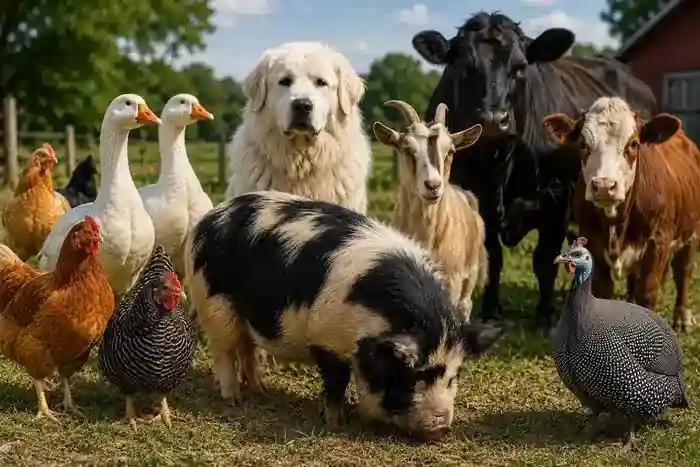
BF Farm Kunekune Pigs has worked with several kinds of livestock over the years, including Kunekune pigs, goats, cattle, poultry, guinea fowl, geese, and livestock guardian dogs. Each one brings something different to a farm. Each one also brings chores, costs, and lessons.
Start With the Job, Not the Animal
Before choosing animals, ask what you want your homestead to produce or support.
Are you hoping for eggs? Meat? Breeding stock? Brush control? Pasture improvement? Companionship? A more self-sufficient food supply? A learning project for the family?
Those goals matter because different animals solve different problems.
Chickens may be a good fit for eggs and a simple daily routine. Kunekune pigs may fit a family interested in manageable pigs, breeder stock, or small-scale meat production. Goats may help with brush and provide meat or breeding options, but they are famous for testing fences. Cattle need more land, more feed planning, and stronger infrastructure. Guardian dogs can be valuable, but they are working animals, not decorations.
A good homestead animal should fit the farm you actually have, not the farm you hope to build someday.
Chickens: Often the Best First Farm Animal
For many small homesteads, chickens are the easiest place to begin. They do not require as much space as larger livestock, they produce eggs, and their daily care routine is simple enough for most beginners to learn.
Chickens still need more than a cute coop. They need predator protection, clean water, proper feed, ventilation, shade, and a secure place to roost at night. The biggest mistake new chicken owners make is underestimating predators. Raccoons, hawks, dogs, coyotes, snakes, and even neighborhood animals can turn a weak setup into a hard lesson.
Chickens are a good first step if you want:
- Fresh eggs
- A manageable daily chore routine
- A lower-cost entry into livestock
- Manure for compost
- A way to learn predator protection before adding larger animals
They may not be the right first animal if you are not ready to secure a coop, handle feed costs, or deal with seasonal egg changes.
Kunekune Pigs: A Strong Fit for the Right Small Farm
Kunekune pigs can be a very good fit for small homesteads, especially for people who want pigs that are generally more manageable than larger commercial hogs. They are known for their calm personalities, grazing ability, and smaller size compared with many traditional meat hogs.
That said, Kunekunes are still pigs. They need strong fencing, shade, shelter, fresh water, proper feed, and a plan for mud. They also need companionship. A single pig is usually not the best plan.
Kunekunes may be a good fit if you are interested in:
- Small-scale pork production
- Breeder stock
- A manageable pig breed for a family farm
- Pasture-based or mixed-feed management
- Calm animals with strong personality
- A slower, more homestead-style approach to raising pigs
BF Farm Kunekune Pigs’ Kunekune program focuses on quality breeder stock, practical buyer education, temperament, structure, genetics, and long-term usefulness. For buyers who want pigs for meat production or a future breeding program, the quality of the animal matters. A cheap piglet is not always an inexpensive pig if it comes with poor structure, unclear genetics, or no guidance.
Goats: Useful, Entertaining, and Hard on Fences
Goats are popular on small farms for good reason. They are active, personable, useful, and can fit smaller acreage better than cattle in many situations. Depending on the breed and purpose, goats can be used for meat, milk, brush management, breeding, or simply as part of a working farm.
But goats are not “easy mode.”
They need serious fencing. They climb, push, squeeze, lean, and test weak spots. If a fence is almost good enough, goats will usually find the part that is not. They also need parasite management, hoof care, shelter, mineral support, and good pasture planning.
Goats may be a good fit if you want:
- Brush control
- Meat or dairy options
- Breeding stock
- Smaller livestock than cattle
- Active animals with a lot of personality
They may not be the best first animal if your fencing is weak or you are not ready to learn parasite control and hoof care.
Cattle: Rewarding, But Not Usually the First Step
Cattle can be a wonderful part of a farm, but they raise the bar on land, fencing, water, hay, equipment, and handling. Even calm cattle are large animals. They need respect, space, and infrastructure.
For a small homestead, cattle may make sense if you have enough pasture, a hay plan, strong fencing, good handling areas, and access to livestock support. They can provide beef, breeding opportunities, pasture use, and long-term farm value.
But cattle are rarely the simplest starting point. They are better suited for homesteaders who already understand basic livestock chores or have someone experienced helping them.
Cattle may be a good fit if you have:
- More acreage
- Strong perimeter fencing
- Reliable water
- Hay storage or hay access
- A trailer or hauling plan
- Safe handling facilities
- A clear meat or breeding goal
For many beginners, chickens or Kunekune pigs are a more realistic first step.
Guinea Fowl: Small Birds With a Big Voice
Guinea fowl can be useful on a farm, especially where bugs, ticks, alerts, and free-ranging birds are part of the plan. They are active, watchful, and not shy about sounding the alarm.
They are also loud. Very loud. That is not a small detail.
Guineas may be helpful if you want alert birds, insect pressure reduction, and hardy farmyard movement. They are not always a great fit for close neighbors or quiet backyard settings. They also need protection when young and may not always respect property lines once mature.
Guineas can be good farm birds, but they are not quiet pets.
Geese: Watchful, Seasonal, and Full of Opinion
Geese can be useful and enjoyable, but they are not for every farm. They graze, alert, move as a group, and bring a very different personality than chickens.
They also need water, space, protection, and management during breeding season. Some geese can become territorial, especially when nesting or protecting their group.
Geese may fit a small homestead if you have room, secure nighttime housing, and realistic expectations. They can be wonderful to watch and useful in the right setting, but they should not be added just because they look peaceful in pictures.
Farm animals have a habit of being much more complicated than their brochure version.
Livestock Guardian Dogs: Valuable, But Not Beginner-Proof
A good livestock guardian dog can be one of the most valuable animals on a farm. The right dog can help protect goats, poultry, pigs, and other animals from predators.
But a livestock guardian dog is not just a big white farm ornament. It is a working animal that needs training, maturity, boundaries, supervision, and the right match with the livestock. Young guardian dogs can make mistakes. New owners can make mistakes too.
LGDs may be worth considering if you have:
- Predator pressure
- Livestock that needs protection
- Secure fencing
- Time to train and supervise
- A realistic understanding of working-dog behavior
- Enough space for the dog to do its job
They are usually not the first animal I would recommend to a brand-new homesteader unless there is a real predator need and a serious plan for training.
Matching Animals to Acreage
There is no perfect animal-per-acre formula because land quality matters. Flat pasture, wooded brush, rocky ground, wet soil, and dry lots all behave differently. But the smaller the acreage, the more careful the planning needs to be.
For a very small homestead, chickens are usually the easiest starting point. Kunekunes may work well with good fencing, shelter, and rotation planning. Goats can fit smaller acreage but require stronger fencing and parasite awareness. Cattle need more space and infrastructure. Guardian dogs need enough room and a real job.
If land is limited, avoid collecting animals just because they are interesting. A small farm can become crowded quickly.
Best Beginner-Friendly Farm Animals
For many families, a practical progression looks something like this:
- Chickens for eggs and basic chore habits
- Kunekune pigs for a manageable livestock step with meat or breeding potential
- Goats once fencing and pasture management are better understood
- Guardian dogs when predator pressure and livestock needs justify them
- Cattle when land, fencing, hay, and handling systems are ready
That order is not a rule. Some farms start with goats. Some start with pigs. Some already have cattle experience. The point is to grow into the next animal instead of adding everything at once.
Questions to Ask Before Adding Any Animal
Before bringing home new livestock, ask:
- Do I have secure fencing for this animal?
- Do I have shelter ready now, not later?
- Do I know what it eats and how much it costs to feed?
- Do I have a water plan for winter and summer?
- Do I know what predators are common in my area?
- Do I have a quarantine or separation area?
- Do I know what routine health care this animal needs?
- Do I have a vet or experienced livestock person I can call?
- Do I understand whether this animal needs a companion?
- Do I have a clear purpose for keeping it?
That last question matters. Animals are easier to manage when they have a job on the farm.
The Best Animal Is the One You Are Ready For
A small homestead does not need every animal at once. In fact, it is usually better when it does not.
Start with the animal that fits your current setup, learn the daily rhythm, improve your fencing, build better shelter, and then decide what comes next. Good farms are built in layers. The strongest homesteads are not always the ones with the most animals. They are the ones where the animals are cared for well, matched to the land, and chosen with a real purpose.
For many families, chickens are the simplest beginning. For buyers interested in pigs, Kunekunes can be a practical and rewarding step when the setup is ready. Goats, cattle, geese, guinea fowl, and guardian dogs can all have a place, but each one deserves planning before purchase.
That prepare-first mindset is central to BF Farm Kunekune Pigs. Whether we are talking about pigs, poultry, goats, cattle, or the broader FarmLife story, the goal is the same: choose carefully, care honestly, and build a farm that works in real life.