FarmLife at BF Farm Kunekune Pigs
Food Preservation for the Homestead Pantry: Canning, Dehydrating, Freezing, Freeze-Drying, Root Cellaring, and Pantry Systems
May 29, 2026 · Homesteading
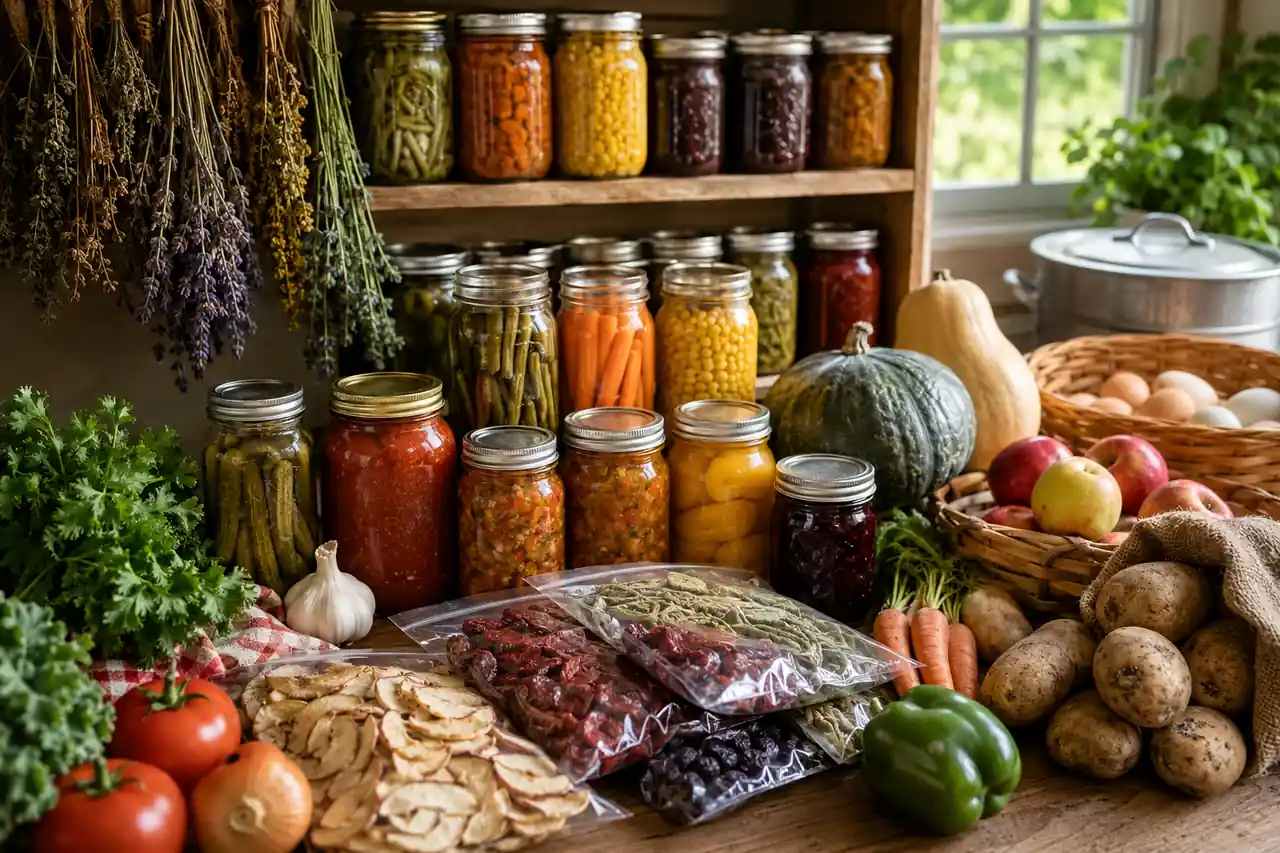
Food preservation starts with a simple problem: good food does not always show up when the household is ready to eat it. Gardens ripen all at once, hens lay heavier in one season than another, bulk meat comes home in large packages, farmers market deals disappear quickly, and leftovers only help if they are stored before they spoil.
Why Food Preservation Matters
Food preservation is one of the most practical homestead skills because it connects the garden, the kitchen, the pantry, and the grocery budget. It lets a household stretch seasonal abundance into future meals instead of watching good food go soft, moldy, freezer-burned, forgotten, or wasted.
It is not just about old-fashioned jars lined up on shelves, though that can be part of it. A useful preservation system may include canning, freezing, dehydrating, freeze-drying, root cellaring, refrigerator storage, pantry rotation, bulk cooking, meal planning, and a simple habit of labeling what goes into storage.
The goal is not to preserve everything in every possible way. The goal is to choose the right method for the right food and the right household.
A good preservation plan should answer practical questions:
- What food do we actually eat?
- What do we grow or buy in season?
- What spoils before we use it?
- What freezer space do we have?
- What pantry space do we have?
- What equipment do we already own?
- What methods are safe for this food?
- What meals will this preserved food become later?
That last question matters. Food preservation only helps if the food comes back out of storage and becomes breakfast, supper, soup, sauce, snacks, or side dishes.
Preservation Is a System, Not a Shelf
Many people think of preservation as one activity: canning tomatoes, freezing corn, dehydrating herbs, or storing potatoes. But the real strength comes when the methods work together.
A practical homestead pantry might include:
- canned tomato sauce for pasta, soup, chili, and casseroles
- frozen peppers and onions for skillet meals
- dehydrated herbs for winter cooking
- freeze-dried fruit for snacks, oatmeal, baking, and emergency meals
- root-cellared potatoes, onions, squash, carrots, or apples
- frozen broth made from bones and vegetable scraps
- pantry staples such as rice, beans, flour, oats, salt, and spices
- labeled freezer meals for busy nights
Each method has a job. Canning saves freezer space. Freezing protects texture and speed. Drying saves room. Freeze-drying stores lightweight food. Root cellaring keeps whole foods usable without much processing. Pantry systems keep everything visible, labeled, and rotated.
The best system is not the most impressive one. It is the one you will actually use.
How This Connects Back to BF Farm Kunekune Pigs
For BF Farm Kunekune Pigs, food preservation fits naturally into the bigger homestead picture. The farm’s focus is not just raising animals because they are enjoyable to have around. BF Farm works with families who are often thinking seriously about useful livestock, breeder stock, meat production, herd planning, and a more capable home food system.
That means the kitchen matters as much as the pasture. A good animal deserves good daily care, but the work does not stop at fencing, feed, water, shelter, and health observation. If a family is raising animals for future meat production or building a responsible breeding program, they also need a plan for the food side: freezer space, labels, broth, meal portions, pantry meals, and less waste.
On a working farm, food preservation is not just about pretty jars on a shelf. It is part of respecting the work that went into the food. Whether someone is storing garden tomatoes, freezing broth, organizing home-raised pork, drying herbs, or learning how to use preserved food in everyday meals, the lesson is the same: useful animals and useful gardens deserve useful planning.
Start With the Foods Your Family Already Eats
Before buying equipment, making a canning plan, or filling the freezer, start with your regular meals.
Write down the meals your household eats most often. They might include soup, chili, pasta, roasted meat, eggs and potatoes, tacos, casseroles, beans and rice, stir-fry, breakfast skillets, biscuits, pancakes, oatmeal, sandwiches, or simple meat-and-vegetable suppers.
Then ask what preserved foods would support those meals.
For example:
- Pasta meals need tomato sauce, dried herbs, frozen peppers, onions, garlic, and possibly ground meat.
- Soups need broth, carrots, onions, celery, potatoes, beans, greens, tomatoes, and leftover meat.
- Breakfast meals need eggs, potatoes, peppers, onions, sausage, fruit, oats, flour, and butter.
- Skillet meals need frozen vegetables, cooked rice, eggs, meat, herbs, and sauces.
- Baking needs flour, sugar, salt, yeast or baking powder, fruit, eggs, butter, and spices.
This is where a food preservation plan becomes useful instead of random. You are not preserving food just to say you did it. You are preserving ingredients that already have a job.
Canning: Shelf-Stable Food With Rules
Canning is one of the most recognized preservation methods, and for good reason. Properly canned foods can sit on the shelf without taking up freezer space. That makes canning valuable for tomatoes, fruit, jams, pickles, relishes, beans, vegetables, soups, broth, meat, and many other foods.
But canning is not a place for guessing.
Safe canning depends on the food’s acidity, the right equipment, the correct jar size, proper headspace, correct processing time, altitude adjustments, and tested recipes. A jar that seals is not automatically safe. The seal matters, but the processing method is what makes the food safe for storage.
There are two broad categories beginners need to understand:
- High-acid foods are usually processed in a boiling water bath or atmospheric steam canner when using tested recipes.
- Low-acid foods require pressure canning with tested recipes and proper pressure, time, and altitude adjustment.
High-acid foods commonly include many fruits, jams, jellies, pickles, and properly acidified tomatoes. Low-acid foods include vegetables, meats, poultry, seafood, beans, soups, and mixed foods that are not high-acid.
The important rule is simple: use a tested recipe from a reliable source and follow it exactly.
What Canning Does Well
Canning is excellent for foods you want ready to open and use.
Good canning projects may include:
- tomato sauce
- crushed tomatoes
- salsa made from tested recipes
- pickles
- relishes
- jams and jellies
- fruit preserves
- applesauce
- peaches or pears
- green beans
- carrots
- potatoes
- dried beans
- broth
- meat or poultry
- soups made from tested recipes
Canning works especially well when freezer space is limited. A shelf of tomato sauce, beans, broth, and fruit can support meals all winter without requiring electricity to stay frozen.
It also makes busy-night cooking easier. Opening a jar of home-canned broth, beans, or tomatoes can turn leftovers into soup quickly.
What Canning Does Not Do Well
Canning is not ideal for every food. Some foods become soft, lose texture, separate, or are not safe to can at home in the way people imagine.
Be careful with:
- thick purees not approved for canning
- dairy-based soups or sauces
- flour-thickened mixtures
- random leftovers
- untested salsa recipes
- low-acid vegetables in a water bath
- pumpkin or squash puree
- dense casseroles
- foods canned in oversized jars not approved by the recipe
- recipes from old books that do not match current guidance
Some foods are better frozen, dehydrated, refrigerated, or eaten fresh. That is not a failure. It is good judgment.
Pressure Canning vs. Water Bath Canning
A boiling water bath canner surrounds jars with boiling water. It is used for high-acid foods when the recipe is designed for that method.
A pressure canner raises the temperature above boiling water temperatures. That higher temperature is necessary for low-acid foods.
A pressure cooker is not automatically the same thing as a pressure canner. A pressure canner is designed and tested for canning. Beginners should learn the difference before preserving low-acid foods.
If you want to can vegetables, meat, poultry, broth, dried beans, or low-acid soups, a proper pressure canner is not optional. It is the tool required for the job.
Canning Equipment Worth Having
A basic canning setup may include:
- tested recipes from reliable sources
- canning jars in approved sizes
- new two-piece lids
- screw bands in good condition
- jar lifter
- bubble remover/headspace tool
- funnel
- clean towels
- boiling water bath canner for high-acid foods
- pressure canner for low-acid foods
- accurate timer
- labels
- permanent marker
- storage shelves
For pressure canning, also pay attention to the canner’s gauge type. Dial gauges may need testing. Weighted gauges behave differently. Follow the manufacturer’s instructions and reliable canning guidance.
Do not reuse single-use lids for canning. Bands can be reused if they are not rusted or bent, but flat lids are meant for one canning use.
A Beginner Canning Plan
If someone is new to canning, the best first projects are simple, high-acid foods from tested recipes.
Good beginner projects include:
- jam
- jelly
- pickles
- applesauce
- peaches
- pears
- acidified tomatoes
- tomato sauce from a tested recipe
After that, learn pressure canning with straightforward foods such as green beans, carrots, potatoes, broth, or dried beans using tested instructions.
Do not start with complicated mixed foods, old family recipes, or recipes copied from social media. Learn the safe structure first. Once you understand the rules, you will have a better sense of what can and cannot be adjusted.
Freezing: Easy, Flexible, and Fast
Freezing is one of the easiest preservation methods for most households. It is quick, familiar, and beginner-friendly. It works for vegetables, fruit, meat, poultry, broth, butter, bread, baked goods, herbs, sauces, and full meals.
Freezing does not sterilize food. It slows down spoilage and helps hold quality when food is packaged well and kept properly frozen.
That means freezing still requires good habits:
- start with fresh food
- cool cooked foods quickly
- package food tightly
- remove excess air
- label everything
- freeze in meal-sized portions
- rotate older food first
- avoid repeated thawing and refreezing
- keep the freezer organized
- thaw safely
Freezing is especially useful for busy families because it can turn one cooking session into several future meals.
Foods That Freeze Well
Freezing works well for many homestead staples:
- berries
- peaches
- chopped peppers
- onions
- tomatoes for sauce
- corn
- peas
- green beans
- greens after blanching
- herbs
- pesto
- broth
- soups
- chili
- cooked beans
- shredded meat
- casseroles
- bread
- muffins
- pancakes
- waffles
- butter
- meat and poultry
Some foods freeze better after blanching, cooking, or preparing properly. Vegetables often need blanching to protect flavor, color, and texture. Fruit may need sugar, syrup, ascorbic acid, or tray freezing depending on the use.
The main thing is to freeze food in the form you will want later. If you use chopped peppers in eggs and soup, freeze chopped peppers. If you use tomatoes mostly for sauce, freeze them in sauce-ready portions. If you make broth, freeze it in quart containers or cubes.
Foods That Do Not Freeze as Well
Some foods can be frozen but lose texture.
Be cautious with:
- lettuce
- cucumbers
- raw potatoes
- mayonnaise-based salads
- cream sauces
- sour cream
- some cooked pasta
- watery fruits eaten raw
- fried foods
- fully cooked eggs in certain forms
These foods may still have uses after freezing. For example, frozen tomatoes may not slice well for sandwiches, but they work beautifully for sauce or soup. Frozen herbs may not garnish like fresh herbs, but they can season cooked dishes.
Freezer success is often about expectations.
Freezer Organization Matters
A freezer can either be a food-saving tool or a cold hiding place where unlabeled containers disappear.
Good freezer systems include:
- labels with food name and date
- meal-sized packages
- flat-freezing bags when practical
- bins by category
- inventory sheets
- older food in front
- newer food in back
- regular freezer cleanouts
- a “use soon” section
Categories might include:
- meats
- vegetables
- fruit
- broth and soup
- breakfast foods
- freezer meals
- herbs and sauces
- baked goods
- scraps for stock
A chest freezer can hold a lot of food, but it needs bins or baskets. Otherwise, good food sinks to the bottom and becomes forgotten.
Planning for Home-Raised Meat
Families interested in Kunekune pigs for meat production need to think about preservation before the freezer is full. A pig is not just an animal in a pasture; it represents feed, fencing, shelter, water, time, stewardship, and daily observation. When that animal eventually becomes food for the household, storage and meal planning become part of responsible care.
That planning may include freezer space, package sizes, labels, inventory sheets, broth plans, fat rendering when appropriate, sausage or ground-meat portions, roasts for family meals, and a rotation system so older cuts are used before newer ones. A freezer full of unlabeled packages is not a pantry system. It is a future frustration.
This is one reason BF Farm talks about livestock as a long-term responsibility, not a novelty. Quality breeder stock, good temperament, sound structure, and practical herd goals matter in the pasture, but good use of the food matters in the kitchen too.
Dehydrating: Small Space, Big Flavor
Dehydrating removes moisture from food so it can store longer and take up less space. It is especially useful for herbs, fruit, vegetables, mushrooms, fruit leather, and some snack foods.
Dried foods are lightweight and compact. A big bunch of herbs becomes a small jar. A tray of apple slices becomes a bag of snacks. Vegetables can be dried for soups. Tomatoes can be dried for sauces, breads, pasta, or winter cooking.
Dehydrating is also a good method for households with limited freezer space.
Good dehydrating projects include:
- basil
- parsley
- thyme
- oregano
- rosemary
- chives
- mint
- apples
- bananas
- berries
- peaches
- tomatoes
- peppers
- onions
- mushrooms
- zucchini chips
- fruit leather
- soup vegetables
Dried foods need to be dried thoroughly, cooled, conditioned when appropriate, and stored in airtight containers away from light, heat, and moisture.
Equipment for Dehydrating
A good dehydrating setup may include:
- electric dehydrator
- sharp knife
- cutting board
- mandoline used carefully
- trays or liners
- clean jars
- airtight containers
- oxygen absorbers when appropriate
- labels
- dark storage space
An electric dehydrator gives more consistent results than air drying in many climates. Sun drying can work in some places, but humidity, insects, dust, and uneven temperatures can make it difficult.
Herbs are one of the easiest places to begin. They dry well, store easily, and get used often in everyday cooking.
How to Use Dehydrated Foods
Dehydrated food should have a plan.
Dried herbs season:
- soup
- eggs
- roasted meat
- potatoes
- sauces
- beans
- bread
- casseroles
Dried vegetables can go into:
- soups
- stews
- rice dishes
- pasta sauce
- skillet meals
- camping meals
Dried fruit can be used for:
- oatmeal
- snacks
- baking
- trail mix
- granola
- yogurt topping
Dried tomatoes can become:
- pasta additions
- soup flavor
- pizza topping
- bread mix-ins
- sauce booster
A small shelf of dried food can carry a lot of flavor through winter.
Freeze-Drying: Useful, Expensive, and Not Magic
Freeze-drying has become popular among homesteaders because it can produce lightweight, shelf-stable foods that rehydrate well and keep good color and texture. It can be excellent for fruit, cooked meals, vegetables, dairy-based foods, eggs, and emergency pantry items when done correctly.
But freeze-drying is not magic. The machines are expensive, the process takes time, and packaging matters. Food that is not fully dry, not packaged properly, or stored where moisture and oxygen can get in may not keep well.
Freeze-drying may be useful for:
- fruit
- vegetables
- cooked meals
- eggs
- dairy products prepared according to safe guidance
- backpacking meals
- emergency meals
- snacks
- herbs
- broths or sauces in appropriate forms
It is especially helpful when freezer space is limited but a household wants long-term storage for meals or ingredients.
Freeze-Drying Practical Notes
A freeze-drying system needs:
- a reliable freeze dryer
- food cut in even pieces
- proper pre-freezing when helpful
- time for full drying
- moisture checks
- mylar bags or jars
- oxygen absorbers when appropriate
- labels
- cool, dark, dry storage
The biggest mistake is treating freeze-dried food as safe forever no matter how it is handled. Moisture is the enemy. Packaging must protect against moisture and oxygen. Opened food should be used, resealed, or repackaged carefully.
Freeze-dried food also needs kitchen planning. If nobody uses it, it becomes expensive pantry decor.
Good uses include:
- adding freeze-dried vegetables to soups
- using fruit in oatmeal or baking
- packing lightweight snacks
- storing prepared meals for busy seasons
- keeping emergency meal ingredients
- preserving dairy or egg abundance when properly prepared
Root Cellaring: Storing Food Without Processing Everything
Root cellaring is the practice of storing certain fruits and vegetables in cool, humid, dark conditions so they last longer without canning, freezing, or drying. It is an old idea, but it still fits modern homesteads.
Root cellaring can be as simple as a cool basement corner, an insulated storage box, a buried container, a garage setup that stays above freezing, or a traditional cellar.
Good root-cellar crops may include:
- potatoes
- carrots
- beets
- turnips
- rutabagas
- parsnips
- cabbage
- apples
- winter squash
- pumpkins
- onions
- garlic
Not all of these want the same conditions. Some prefer cool and moist. Some prefer cool and dry. Some need curing first. Some should be stored apart from others.
Root cellaring is less about one perfect room and more about matching crops to conditions.
Root Cellar Basics
A root cellar or cold storage area should usually be:
- cool
- dark
- protected from freezing
- protected from rodents
- ventilated
- monitored with a thermometer
- checked regularly
- organized by crop
Many root crops like cold, humid storage. Onions, garlic, and winter squash usually prefer drier conditions. Apples can give off gases that may affect other produce, so many people store them separately when possible.
Do not wash root crops before storage unless reliable guidance for that crop says otherwise. Extra moisture can encourage rot. Brush off heavy soil gently and store only sound, undamaged produce. Use bruised or damaged food first.
Check stored produce regularly. One rotting potato can cause trouble for the rest of the bin.
Curing Before Storage
Some foods store better after curing.
Curing usually means holding the crop under warm, dry, ventilated conditions for a period of time so skins toughen, wounds heal, or outer layers dry.
Crops commonly cured before storage include:
- onions
- garlic
- potatoes
- sweet potatoes
- winter squash
- pumpkins
Each crop has different curing needs. Do not assume they all want the same temperature, humidity, or timing.
Curing is one reason harvest timing matters. Food preservation begins before the food ever reaches the shelf. A crop harvested at the right stage and handled gently will usually store better.
Pantry Systems: The Part People Forget
Preserved food needs a pantry system. Without a system, jars pile up, freezer bags get lost, dried herbs lose flavor, and nobody knows what needs used first.
A good pantry system should include:
- labels
- dates
- categories
- inventory
- rotation
- visible storage
- meal planning
- regular review
Every jar, bag, box, and container should answer three questions:
- What is it?
- When was it preserved or purchased?
- How should it be used?
If you cannot answer those questions, the food is more likely to sit forgotten.
Organizing a Preservation Pantry
A preservation pantry can be organized by food type or meal use.
Food-type sections might include:
- tomato products
- fruit
- pickles and relishes
- vegetables
- beans
- broth
- meat
- jams and jellies
- dried herbs
- dried fruit
- dried vegetables
- baking staples
- grains
- emergency meals
Meal-use sections might include:
- soup shelf
- breakfast shelf
- baking shelf
- pasta shelf
- quick supper shelf
- snacks
- lunch supplies
- preserved garden shelf
The best system is the one your family understands. If others in the house cook, they should be able to find and use the food.
First In, First Out
The basic pantry rule is first in, first out.
Older food should be used before newer food. That does not mean panic every time something gets older, but it does mean the pantry should move.
Practical rotation habits include:
- put new jars behind old jars
- keep older freezer food in a use-soon bin
- review pantry shelves monthly
- plan meals around older preserved food
- mark boxes clearly
- avoid preserving more than you can use
- keep an inventory sheet on the freezer or pantry door
A full pantry that never rotates is not security. It is clutter.
Building a Preservation Calendar
A homestead preservation system works better when it follows the seasons.
Spring:
- clean pantry shelves
- use last year’s older preserved food
- start herbs
- freeze early greens
- prepare jars, lids, freezer bags, and labels
- plan the garden around what you actually used
Summer:
- freeze berries
- can jam
- dry herbs
- make pickles
- can or freeze tomatoes
- freeze peppers
- dehydrate zucchini or tomatoes
- preserve small batches often
Fall:
- pressure can broth, beans, meat, or vegetables if desired
- can applesauce or fruit
- cure onions, garlic, squash, potatoes, or sweet potatoes
- fill root cellar storage
- make freezer meals
- dry late herbs
- organize pantry before winter
Winter:
- cook from storage
- inventory freezer and pantry
- use root-cellared crops
- make soup, bread, and pantry meals
- note what ran out early
- note what nobody ate
- plan next year better
Preservation gets easier when you stop treating it as one frantic weekend and start treating it as a year-round rhythm.
What to Preserve First
Beginners should start with food that is easy, useful, and likely to be eaten.
Good first preservation projects include:
- freezing berries
- freezing chopped peppers
- freezing herbs
- drying herbs
- making refrigerator pickles
- water bath canning jam from a tested recipe
- canning applesauce from a tested recipe
- freezing broth
- freezing tomato sauce
- dehydrating apple slices
- storing potatoes or onions properly
- organizing a pantry shelf
These projects teach the habits without overwhelming the household.
After that, move into pressure canning, root cellar systems, larger batches, freeze-drying, and more advanced preservation.
What Not to Do
Food preservation can go wrong when people get careless, rushed, or overconfident.
Avoid these mistakes:
- canning low-acid foods in a boiling water bath
- using untested canning recipes
- changing jar size without guidance
- guessing at processing time
- skipping altitude adjustments
- using old canning lids
- storing jars with failed seals
- putting hot food directly into deep containers to cool slowly
- freezing unlabeled food
- dehydrating food unevenly
- storing dried food before it is fully dry
- ignoring moisture in freeze-dried food
- root cellaring bruised or damaged produce
- letting pantry food sit for years without rotation
Preservation is practical, but it deserves respect. Safe food habits protect the household and preserve the value of all that work.
Food Safety Habits for Every Method
No matter which preservation method you use, the basics matter.
Use clean hands, clean tools, clean surfaces, and sound food. Preserve food while it is fresh, not after it is already declining. Keep raw meat separate from produce and ready-to-eat foods. Cool cooked foods safely. Label everything. Store food in the right conditions. Check for spoilage before eating.
If a jar seal fails, handle it according to safe guidance. If a preserved food smells wrong, looks wrong, leaks, spurts, molds, or seems suspicious, do not taste it to decide whether it is safe. When in doubt, throw it out.
That may feel wasteful, but unsafe food is not worth the risk.
Matching the Method to the Food
A smart preservation plan matches food to method.
Tomatoes:
Can sauce or crushed tomatoes using tested recipes, freeze whole or chopped tomatoes for later cooking, or dehydrate slices.
Peppers:
Freeze chopped peppers, dehydrate slices, or use in tested salsa recipes.
Herbs:
Dry, freeze, make pesto for the freezer, or use fresh.
Potatoes:
Root cellar, pressure can, freeze only after proper preparation, or cook into freezer meals.
Carrots:
Root cellar, pressure can, freeze after blanching, or dehydrate for soups.
Apples:
Root cellar suitable varieties, can applesauce, dehydrate slices, freeze pie filling, or make fruit leather.
Berries:
Freeze, dehydrate, make jam, or freeze puree.
Meat:
Freeze, pressure can, make broth, or freeze cooked meal portions.
Broth:
Freeze in meal-sized portions or pressure can using tested guidance.
Eggs:
Use fresh, freeze properly prepared eggs, or consider freeze-drying only with appropriate equipment and careful storage practices.
Each method changes texture, flavor, storage life, and how the food will be used later.
Preserving Meals vs. Preserving Ingredients
Both approaches are useful.
Preserved ingredients give flexibility. Frozen peppers, canned tomatoes, dried herbs, pressure-canned beans, and root-cellared potatoes can become many different meals.
Preserved meals save time. Soup, chili, broth, casseroles, cooked beans, shredded meat, and freezer breakfasts can rescue a busy day.
A balanced homestead pantry has both.
Ingredient preservation helps with creativity. Meal preservation helps with real life.
Small-Batch Preservation
Not everyone needs huge batches. Small-batch preservation is often more realistic for modern families.
Small-batch ideas include:
- two jars of refrigerator pickles
- one tray of dried herbs
- one freezer bag of chopped peppers
- three jars of jam
- one pot of broth
- one pan of freezer breakfast burritos
- a half-bushel of apples turned into sauce
- one basket of tomatoes frozen for sauce later
Small batches prevent burnout. They also let you test what your family likes before scaling up.
There is no shame in preserving a little. A little used well is better than a lot wasted.
Budgeting for Food Preservation
Preservation can save money, but it also requires supplies.
Possible costs include:
- jars
- lids
- canners
- dehydrator
- freezer bags
- vacuum sealer
- mylar bags
- oxygen absorbers
- shelves
- storage bins
- freezer
- freeze dryer
- labels
- fuel or electricity
- ingredients such as vinegar, sugar, salt, spices, and pectin
The trick is to build slowly.
Start with methods that match what you already have. If you own a freezer, learn freezing well. If you grow herbs, dry herbs. If you already have jars, try tested water bath canning recipes. If you later buy a pressure canner, learn it carefully. If freeze-drying fits the budget and lifestyle, treat it as a major tool, not an impulse buy.
A preservation setup should pay its way in usefulness, not just look good in a pantry photo.
Preservation for Gardeners
Gardeners need preservation because harvest rarely arrives politely.
Zucchini comes all at once. Tomatoes wait, then flood the counter. Basil bolts. Peppers ripen when the freezer is already crowded. Beans need picked again. Apples drop. Potatoes need curing. Squash needs space.
A gardener’s preservation plan should begin before planting.
Ask:
- How many tomato plants can we actually use?
- Do we want sauce tomatoes, slicers, cherry tomatoes, or all three?
- Will we freeze, can, dry, or share extras?
- Do we have enough freezer space?
- Do we have jars and lids ready?
- Do we have a place to cure squash or onions?
- Did we plant too much of something nobody eats?
The best preservation plan is often planted in spring.
Preservation for Livestock Households
Food preservation also matters for households raising animals.
A family that raises chickens, pigs, or meat animals may need freezer plans, bulk cooking plans, broth plans, lard or fat rendering knowledge, and careful storage systems.
If a household buys or raises meat in bulk, freezer organization becomes critical. Packages should be labeled clearly, dated, and grouped by type. Ground meat, roasts, chops, sausage, bones, and organ meats should each have a plan.
Bones can become broth. Fat can be rendered when appropriate. Scraps should be managed safely. Freezer rotation keeps older meat from being buried.
This is where BF Farm Kunekune Pigs’ practical farm philosophy shows up clearly. People who are considering quality Kunekune breeder stock are often thinking beyond one season. They may want to raise their own meat, build a small breeding program, improve a homestead herd, or teach their family where food comes from. Those goals deserve planning from pasture to plate.
A breeding prospect should be evaluated with future herd goals in mind, but a homestead food plan should be evaluated the same way. Do you have freezer space? Do you know how your family uses pork? Do you have a plan for roasts, ground meat, sausage, bones, broth, and leftovers? Can your pantry and freezer support the kind of self-sufficiency you are trying to build?
Good animal care and good kitchen care belong together. The work that starts in the pasture should not be wasted in the freezer.
A Simple Homestead Pantry Plan
A practical preserved pantry might include:
Canned shelf:
- tomato sauce
- diced or crushed tomatoes
- applesauce
- pickles
- jam
- broth
- beans
- green beans
- carrots
- meat or poultry if pressure canned safely
Freezer:
- meat
- broth
- chopped peppers
- berries
- freezer meals
- bread
- butter
- herbs
- cooked beans
- soups
Dried shelf:
- herbs
- dried fruit
- dried vegetables
- fruit leather
- soup mixes
Root cellar or cool storage:
- potatoes
- onions
- garlic
- winter squash
- apples if conditions are right
- carrots or beets in proper storage
Dry pantry:
- rice
- oats
- flour
- cornmeal
- beans
- pasta
- sugar
- salt
- vinegar
- oil
- spices
This kind of pantry supports real meals instead of random storage.
A Beginner’s First-Year Preservation Plan
If this is your first year, keep it manageable.
Month 1:
Organize the pantry and freezer. Label what you already have. Use older food first.
Month 2:
Learn freezing. Freeze broth, chopped peppers, berries, or freezer meals.
Month 3:
Dry herbs. Start with basil, parsley, thyme, oregano, mint, or chives.
Month 4:
Try one tested water bath canning recipe such as jam, pickles, or applesauce.
Month 5:
Build a pantry meal shelf with rice, beans, tomatoes, broth, spices, and basic baking supplies.
Month 6:
Try root storage for potatoes, onions, garlic, or winter squash.
Month 7:
If ready, learn pressure canning with a simple tested vegetable, bean, broth, or meat recipe.
Month 8:
Review what your family used. Do more of what worked and less of what sat untouched.
That is enough for a strong start.
The Emotional Side of a Full Pantry
There is something steadying about shelves that hold real food.
Not hoarding. Not panic. Just usefulness.
A pantry with tomato sauce, broth, beans, dried herbs, frozen meals, stored potatoes, and basic staples can make the household feel more capable. It can soften a tight week, reduce last-minute trips to town, and turn a small harvest into winter meals.
Around BF Farm, that kind of planning matters because animals, weather, chores, and seasons do not wait for perfect timing. A practical pantry gives the household some breathing room. It also helps honor the work behind the food, whether that food came from the garden, the farmers market, the freezer, or livestock raised with care.
Food preservation gives the kitchen a backup plan.
Final Thoughts
Food preservation is not one skill. It is a set of habits that help a household use food better.
Canning, freezing, dehydrating, freeze-drying, root cellaring, and pantry systems each have a place. Some foods belong in jars. Some belong in the freezer. Some dry beautifully. Some store whole in cool conditions. Some are best cooked into meals before preserving.
For families drawn to BF Farm Kunekune Pigs because they want practical breeder stock, future meat production, or a more responsible homestead lifestyle, preservation is part of the same conversation. Good livestock stewardship does not end when the gate closes. It continues in the kitchen, freezer, pantry, compost pile, and family meals.
Start with what your family eats. Learn the safest method for each food. Label everything. Rotate what you store. Preserve in amounts you can actually use. Let the pantry support real meals instead of becoming a collection of good intentions.
A strong homestead pantry is built one useful batch at a time.