FarmLife at BF Farm Kunekune Pigs
Grocery-Bill Homesteading: Chickens, Gardens, Bulk Cooking, Preserving, DIY Cleaners, and Reducing Waste
May 29, 2026 · Homesteading
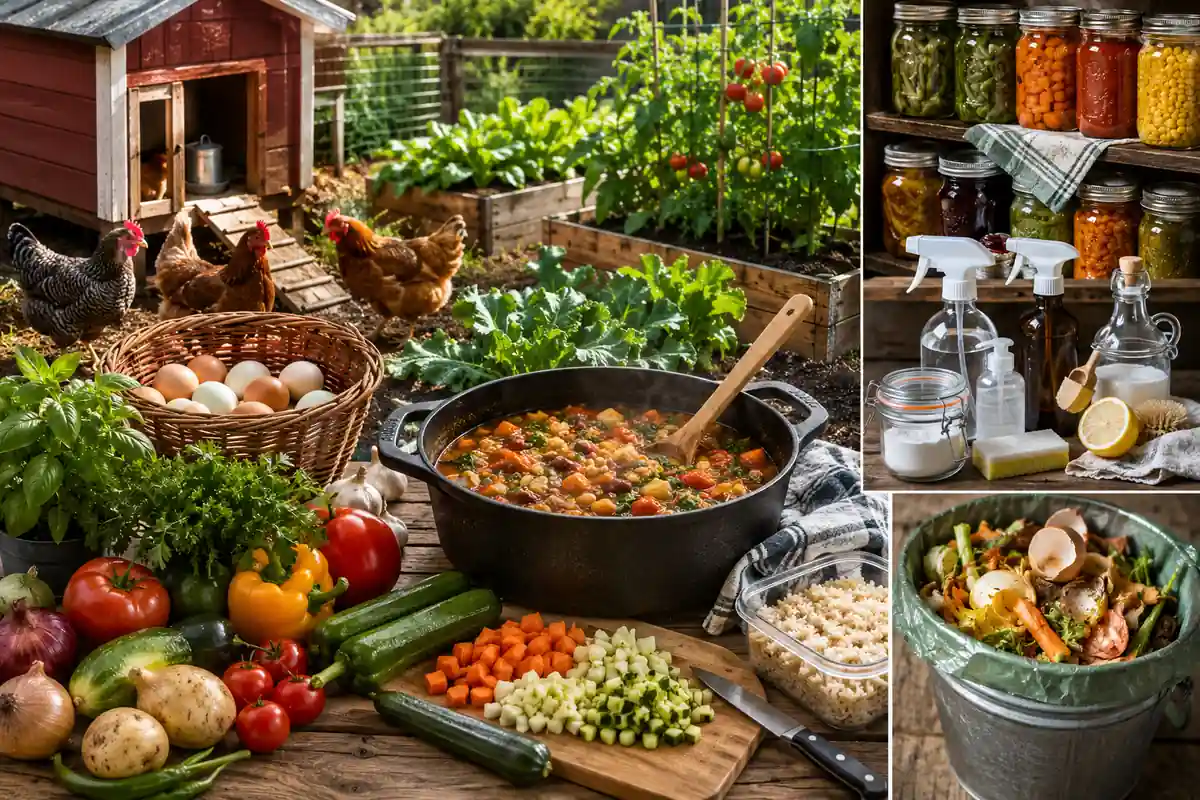
Most families do not need a perfect homestead to start lowering the grocery bill. They need practical systems that turn everyday chores into savings: a garden that grows food the household actually eats, chickens that are cared for well, meals cooked in batches, leftovers used on purpose, simple cleaners made safely, and less food going into the trash.
What Grocery-Bill Homesteading Really Means
Grocery-bill homesteading is not about pretending you will never step into a grocery store again. For most households, that is not realistic. Feed, flour, salt, coffee, oil, spices, sugar, paper goods, and plenty of other things still come from town.
The goal is different.
Grocery-bill homesteading means looking at the biggest leaks in the household food budget and asking, “What can we do ourselves, grow ourselves, cook smarter, preserve better, or stop wasting?”
That may include:
- growing herbs, greens, tomatoes, peppers, potatoes, squash, or beans
- keeping laying hens where allowed and practical
- buying ingredients in bulk when they will actually be used
- cooking larger batches instead of relying on last-minute meals
- preserving seasonal food
- using leftovers before they spoil
- making simple household cleaners safely
- learning pantry meals
- reducing snack, convenience, and takeout habits
- building routines that work on busy weeks, not just perfect ones
This is a practical kind of homesteading. It does not have to look fancy. In fact, the less fancy it is, the more likely it is to keep working.
Start With the Food You Already Buy
The best way to lower the grocery bill is not always to grow the rarest vegetable or buy the biggest freezer. Start by looking at what your family already buys over and over.
For one household, that may be eggs, chicken, potatoes, salad greens, onions, herbs, and bread. For another, it may be pasta sauce, rice, beans, breakfast foods, soups, and lunchbox snacks.
Before adding projects, ask:
- What do we buy every week?
- What spoils before we use it?
- What do we run out of constantly?
- What convenience foods are costing us the most?
- What meals do we already know how to cook?
- What could we grow, make, freeze, or preserve without turning life upside down?
A homestead habit only saves money if it fits the way the household actually eats. A shelf full of dry beans does not help if nobody knows how to cook them. A huge squash harvest becomes a burden if the family hates squash. A dozen hens may not save money if the coop is poorly planned, feed is wasted, and eggs go unused.
The practical test is simple: grow, cook, and store food you will truly use.
Chickens and the Grocery Bill
Chickens are often the first thing people think of when they imagine food-producing homesteading. Fresh eggs are useful, satisfying, and easy to build meals around. A small flock can also teach responsibility, reduce some kitchen waste when appropriate scraps are used carefully, and provide manure for compost systems.
But chickens are not free eggs.
A laying flock needs:
- secure housing
- predator protection
- feed
- clean water
- bedding
- nest boxes
- roosts
- grit
- calcium
- basic health observation
- daily chores
- occasional repairs
- winter and summer planning
The savings depend on how the flock is managed. A small, healthy, well-managed flock can be a wonderful part of grocery-bill homesteading. An oversized, poorly planned flock can become expensive quickly.
How Chickens Save Money Best
Chickens help the grocery budget most when eggs are used regularly and waste is controlled.
Eggs can become:
- breakfast
- egg salad
- breakfast casseroles
- quiche
- frittatas
- baked goods
- fried rice
- pancakes
- custards
- meatloaf binder
- homemade noodles
- quick protein for busy nights
If eggs sit unused, they are not saving much. A good egg routine matters.
Collect eggs often, especially in hot weather. Keep nest boxes clean. Store eggs according to your household food-safety routine and local guidance. Wash hands after handling birds, eggs, bedding, feeders, or waterers.
It also helps to plan “egg meals” into the week. A dozen eggs can stretch vegetables, leftovers, potatoes, rice, and bits of meat into full meals.
Keep Chicken Costs Under Control
The grocery bill does not improve if chicken expenses quietly run away.
Ways to manage flock costs include:
- keeping the flock size realistic
- buying quality feed and storing it properly
- preventing feed waste
- using treadle feeders or protected feeders when helpful
- keeping water clean so birds stay healthy
- rotating bedding wisely
- building predator-resistant housing before losses happen
- choosing breeds suited to your climate and egg goals
- using eggs intentionally in the kitchen
- composting manure and bedding when appropriate
Do not overcrowd birds just to get more eggs. Crowding can increase stress, mess, odor, pecking, and health issues. A smaller flock cared for well usually serves a household better than too many birds in a setup that is always behind.
Gardens That Actually Lower the Grocery Bill
A garden can save money, but only if it is planned around useful crops, realistic maintenance, and actual harvest.
Some crops are more practical than others for grocery savings. Herbs, for example, can be expensive to buy fresh and easy to waste when store bundles are too large. Growing herbs near the kitchen can save money and improve meals.
High-use garden crops may include:
- tomatoes
- peppers
- potatoes
- onions
- garlic
- lettuce
- spinach
- kale
- green beans
- cucumbers
- zucchini
- winter squash
- carrots
- herbs
- strawberries
The most valuable crop is not always the most expensive one at the store. It is the one your household will eat, preserve, and use before it spoils.
Grow the “Meal Builders”
A grocery-saving garden should include meal builders. These are foods that help create real meals, not just pretty harvest baskets.
Meal-building crops include:
- potatoes for breakfasts, soups, roasts, and casseroles
- onions and garlic for nearly everything
- tomatoes for sauce, soup, salsa, and fresh eating
- peppers for eggs, skillet meals, chili, and freezer bags
- beans for fresh eating or preserving
- greens for salads, soups, eggs, and stir-fries
- herbs for flavor without buying fresh bundles
- squash for baking, roasting, soups, and freezer puree
A garden full of novelty crops may be fun, but a garden full of meal builders changes the grocery list.
Start With a Small Garden That Works
A small garden that is weeded, watered, harvested, and used is worth more than a huge garden that becomes overwhelming by July.
A practical first grocery-saving garden might include:
- one or two tomato plants
- two pepper plants
- a row or container of green beans
- a few herbs
- lettuce or spinach in spring and fall
- zucchini or summer squash
- potatoes in grow bags or a small bed
- cucumbers if your family eats them
That is enough to teach watering, pests, harvest timing, storage, and kitchen use.
A good garden should also have a plan for abundance. If tomatoes ripen all at once, will you freeze them, make sauce, share them, dehydrate them, or let them rot? If zucchini gets ahead of you, will you shred and freeze it, bake with it, or feed appropriate portions to livestock?
The harvest is only savings when it gets used.
Container and Small-Space Grocery Gardening
Not every household has a large garden plot. Grocery-bill homesteading can still happen in containers, patios, porches, and small yards.
Good container crops include:
- herbs
- cherry tomatoes
- peppers
- lettuce
- spinach
- green onions
- strawberries
- bush beans
- compact cucumbers
- potatoes in grow bags
Containers need drainage, good potting mix, enough sun, and regular water. They dry out faster than in-ground gardens, especially in summer.
For renters or small-space households, containers and grow bags are useful because they are portable. You can grow food without digging permanent beds or altering the property.
Bulk Cooking: The Quiet Grocery Saver
Bulk cooking is one of the least glamorous and most effective grocery-bill homesteading habits.
It does not have to mean cooking for an entire month at once. It can be as simple as doubling soup, cooking extra rice, roasting two chickens instead of one, or making a large pot of beans that becomes several meals.
Bulk cooking saves money because it reduces:
- last-minute takeout
- wasted ingredients
- duplicate grocery trips
- expensive convenience foods
- lunch purchases
- forgotten leftovers
- “nothing to eat” nights
A good bulk cooking routine should fit your real schedule. Some families cook on Sunday. Some cook extra every time they make dinner. Some prepare ingredients rather than full meals.
Cook Ingredients, Not Just Recipes
One helpful approach is to batch-cook ingredients that can become several meals.
For example:
- cooked rice can become stir-fry, soup, burrito bowls, casseroles, or breakfast rice
- roasted chicken can become dinner, soup, salad, sandwiches, enchiladas, or broth
- cooked beans can become chili, tacos, soup, refried beans, or freezer portions
- roasted vegetables can become omelets, wraps, soup, or side dishes
- boiled eggs can become snacks, egg salad, breakfast, or salad topping
- browned ground meat can become tacos, pasta sauce, soup, or casseroles
This keeps meals flexible. You are not locked into eating the same casserole five nights in a row.
A Practical Bulk Cooking Day
A grocery-bill homesteading cooking day might look like this:
- roast a chicken or large cut of meat
- cook a pot of rice or potatoes
- make a pot of beans, soup, or chili
- chop vegetables for the week
- boil eggs
- bake muffins, bread, or biscuits
- freeze one meal for later
- start broth from bones or vegetable scraps
That one effort can create multiple meals and reduce the pressure on busy evenings.
The key is labeling. Freezer containers should say what they are and when they were made. Mystery containers are where good food goes to be forgotten.
Preserving Food Without Overcomplicating It
Food preservation is one of the strongest homestead skills for reducing grocery costs, but beginners often imagine it has to start with hundreds of jars.
It does not.
Preservation can begin with small, manageable habits:
- freezing chopped peppers
- freezing herbs in oil or water
- drying herbs
- making refrigerator pickles
- freezing berries on trays
- freezing tomato sauce
- shredding and freezing zucchini
- making freezer jam
- freezing soup or broth
- dehydrating small batches
- canning only with tested recipes and proper equipment
Freezing is often the easiest place to start. It is forgiving, fast, and good for small harvests.
Canning is useful, but it must be done safely. Use tested recipes and current food-safety guidance. Do not guess at processing times, acidity, or pressure canning rules.
Preserve What You Actually Eat
Preserving only saves money if the food comes back out of storage and gets used.
Before preserving a food, ask:
- Do we eat this regularly?
- How will I use it later?
- Do I have storage space?
- Do I have time to process it safely?
- Will this replace something I usually buy?
- Can I label and rotate it properly?
Tomato sauce, broth, soup, beans, peppers, berries, herbs, and freezer meals often fit real households well. Specialty preserves may be fun, but if they sit untouched for years, they are not helping the grocery bill.
Reducing Waste: The Fastest Savings
Reducing waste is often faster than growing more food.
Most households lose money through small leaks:
- leftovers forgotten in the fridge
- herbs spoiling in plastic bags
- produce bought without a plan
- bread going stale
- freezer food unlabeled
- pantry items expiring
- eggs piling up unused
- meat thawed without a meal plan
- buying duplicates because nobody checked the shelf
Waste reduction begins with visibility.
Create a “use first” area in the fridge. Put older leftovers, half-used vegetables, opened jars, and fragile produce where they can be seen. Plan one meal each week around that section.
A “use first” meal might be:
- soup
- stir-fry
- omelet
- frittata
- fried rice
- casserole
- tacos
- pasta
- hash
- pot pie
- grain bowl
These meals are forgiving. They turn odds and ends into dinner.
The Leftover Ladder
A useful way to think about leftovers is as a ladder.
Roast chicken can become:
- first meal with vegetables and potatoes
- chicken sandwiches or salad
- soup or casserole
- broth from bones
- compost for appropriate scraps
Vegetables can become:
- side dish
- omelet or frittata
- soup
- blended sauce
- compost if no longer usable
Bread can become:
- toast or sandwiches
- croutons
- bread crumbs
- breakfast casserole
- compost if appropriate
The goal is to move food down the ladder before it becomes waste.
Pantry Planning That Works
A pantry should support real meals. It should not be a museum of ingredients bought during good intentions.
Start with meals your household already eats. Then stock the basics for those meals.
A practical grocery-bill pantry may include:
- rice
- pasta
- oats
- flour
- cornmeal
- sugar
- salt
- baking powder
- yeast
- dry beans
- lentils
- canned tomatoes
- broth or bouillon
- cooking oil
- vinegar
- peanut butter
- basic spices
- canned tuna, chicken, or beans
- shelf-stable milk or evaporated milk
- onions and potatoes if you have proper storage
Then build meals from that pantry:
- beans and rice
- pasta with sauce
- soup and bread
- oatmeal
- pancakes
- chili
- casseroles
- fried rice
- potato hash
- skillet meals
A good pantry reduces panic shopping. It also makes it easier to use garden produce, eggs, and leftovers.
Buy Bulk Carefully
Bulk buying can save money, but only when it is used wisely.
Good bulk buys may include:
- rice
- oats
- flour
- sugar
- beans
- pasta
- salt
- spices you use often
- freezer meat
- butter when on sale and freezable
- seasonal produce for preserving
- chicken feed or livestock feed if storage is secure
Bad bulk buying happens when food spoils, pests get into it, or the household gets tired of it.
Bulk food needs:
- sealed containers
- cool, dry storage
- labels
- rotation
- meal plans
- pest prevention
- honest tracking
Do not buy fifty pounds of anything until you know your household will use it.
DIY Cleaners and Household Savings
Food is not the only grocery-store expense. Cleaning products, paper products, and convenience household items also add up.
Simple DIY cleaners can reduce costs, but safety matters.
Common household basics include:
- white vinegar
- baking soda
- dish soap
- washing soda
- rubbing alcohol
- hydrogen peroxide
- reusable cleaning cloths
- spray bottles
- labels
A basic vinegar-and-water spray can work for some general cleaning jobs, but vinegar is not right for every surface. It can damage natural stone and some finishes. Baking soda can help with scrubbing, but it can be abrasive.
Most importantly, never mix cleaners carelessly. Do not mix bleach with vinegar, ammonia, or other cleaners. Dangerous fumes can result. Label every homemade cleaner clearly and keep cleaners away from children, pets, and food-prep areas.
DIY cleaners should make life simpler, not risky.
Reduce Disposable Products
Another grocery-bill homesteading habit is reducing disposable items where it makes sense.
Ideas include:
- using washable cleaning cloths instead of paper towels for most messes
- saving jars for storage
- using freezer containers instead of single-use bags when practical
- packing lunches in reusable containers
- using cloth napkins
- making broth instead of buying cartons
- baking some snacks instead of buying packaged ones
- using refillable soap dispensers
Do not make this harder than it needs to be. Some disposable items are useful, especially during sickness, travel, heavy messes, or busy seasons. The goal is reduction, not perfection.
Compost: Turning Waste Into Soil
Composting helps close the loop between kitchen and garden. It turns appropriate scraps into material that can improve soil and support future food production.
Compostable household materials may include:
- vegetable scraps
- fruit scraps
- coffee grounds
- tea leaves
- crushed eggshells
- leaves
- untreated grass clippings
- garden waste
- chicken bedding and manure after proper composting
Avoid adding meat, grease, dairy, oily foods, and heavily salted foods to basic backyard compost piles. These can attract pests and cause odor problems.
Compost should be managed. A neglected pile can become smelly, wet, dry, or pest-prone. Balance green materials, brown materials, air, and moisture. Turn or manage the pile as needed.
Good compost does not happen because scraps were dumped somewhere. It happens because the system is cared for.
Chickens, Gardens, and Compost Together
One of the best parts of grocery-bill homesteading is how systems can support each other.
A simple loop might look like this:
- the kitchen creates vegetable scraps
- appropriate scraps go to compost or chickens
- chicken manure and bedding compost safely
- compost feeds the garden
- the garden produces vegetables and herbs
- the kitchen uses the harvest
- leftovers become soup, freezer meals, or compost
That loop is not automatic. It needs boundaries.
Chickens should not be fed moldy, spoiled, salty, greasy, or unsafe foods. Compost with manure needs time and proper handling before being used around food crops. Garden harvest needs to be washed and handled safely. The kitchen needs a plan for using what comes in.
When managed well, these small loops create real value.
Homemade Convenience Foods
One reason grocery bills climb is convenience. Packaged snacks, frozen meals, breakfast foods, bottled sauces, and lunch items are easy to buy when life is busy.
Homesteading does not remove busy days. It prepares for them.
Homemade convenience foods may include:
- breakfast burritos
- egg muffins
- pancakes or waffles for the freezer
- muffins
- soup portions
- chili
- cooked beans
- cooked rice
- shredded chicken
- meatballs
- pasta sauce
- broth
- granola
- snack boxes
- chopped vegetables
- freezer casseroles
The goal is to make the easy choice at home.
A freezer stocked with practical meals can prevent expensive last-minute decisions.
Meal Planning Without Being Rigid
Meal planning does not have to mean assigning every meal to a calendar.
A flexible homestead meal plan might include:
- one egg meal
- one soup meal
- one bean or rice meal
- one leftovers meal
- one garden-based meal
- one freezer meal
- one larger Sunday meal that creates leftovers
That structure gives the week direction without locking it down too tightly.
Shop from home first. Check the fridge, freezer, pantry, egg basket, garden, and preserved food before making the grocery list. Build meals around what is already there.
This habit alone can reduce waste and duplicate buying.
Grocery-Bill Homesteading With Kids
Children can be part of grocery-bill homesteading in simple ways.
They can help:
- collect eggs with supervision
- water herbs
- pick cherry tomatoes
- rinse vegetables
- stir batter
- label freezer bags
- sort pantry items
- feed chickens with guidance
- gather compost scraps
- help make broth
- choose a leftover meal
These chores teach that food has value. Eggs come from animals that need care. Vegetables take time. Leftovers are not trash. A pantry is not magic. Waste has a cost.
Children do not need a lecture every time. Repeated ordinary chores teach plenty.
Grocery-Bill Homesteading for Small Spaces
Not every household has land. A small-space version still works.
Apartment, rental, or small-yard ideas include:
- windowsill herbs
- microgreens
- container lettuce
- balcony tomatoes
- grow-bag potatoes
- freezer meals
- pantry planning
- compost drop-off
- worm composting if appropriate
- buying local eggs
- small-batch preserving
- DIY cleaners
- reducing disposable products
The same principles apply: grow what you can, cook what you have, waste less, and build practical skills.
What Not to Do
Grocery-bill homesteading can backfire when people take on too much too quickly.
Avoid:
- buying animals before housing is ready
- planting more garden than you can maintain
- preserving food without safe instructions
- buying bulk food without storage
- making DIY cleaners without labeling them
- growing food nobody eats
- keeping too many chickens
- ignoring predator protection
- letting freezers become unlabeled chaos
- buying homestead tools before building habits
The expensive version of homesteading usually starts with excitement and no system. The useful version starts smaller and keeps working.
A Practical First-Month Plan
If you want to begin grocery-bill homesteading, start with one month.
Week 1: Track and observe.
- Save grocery receipts.
- Notice what gets thrown away.
- Check pantry duplicates.
- List your seven most common meals.
- Identify one high-cost habit to reduce.
Week 2: Add one food-producing habit.
- plant herbs
- start lettuce
- begin microgreens
- plan a small garden bed
- improve chicken egg use
- buy local eggs or produce intentionally
Week 3: Add one cooking habit.
- cook a double batch
- freeze one meal
- make broth
- cook beans
- bake breakfast food
- prep lunches
Week 4: Add one waste-reduction habit.
- create a use-first fridge bin
- label freezer food
- start composting
- dry herbs
- make a leftover meal plan
- replace one disposable product
After a month, keep what worked and add the next piece slowly.
A Seasonal Grocery-Bill Homesteading Plan
Spring:
- plant herbs, greens, onions, potatoes, and early crops
- clean the coop and prepare for warmer weather
- start compost systems
- plan garden meals before planting too much
- organize pantry shelves
Summer:
- harvest often
- preserve small batches
- manage chicken water and shade
- freeze peppers, tomatoes, herbs, and berries
- make simple meals from garden produce
- watch for waste during busy harvest weeks
Fall:
- preserve larger harvests
- make broth and soups
- store potatoes, onions, garlic, or squash if grown
- clean garden beds
- compost leaves and bedding
- stock pantry staples before winter cooking
Winter:
- cook from pantry and freezer
- use preserved foods
- plan next year’s garden around what actually helped
- repair tools
- review flock costs
- simplify meal routines
Homesteading becomes more useful when it follows the seasons instead of fighting them.
The Real Savings Are in the System
A garden helps. Chickens help. Preserving helps. Bulk cooking helps. DIY cleaners help. But the real savings come when these habits connect.
Eggs become meals. Garden produce becomes sauce, soup, or freezer portions. Scraps become compost. Compost feeds soil. Bulk cooking prevents takeout. Pantry planning prevents duplicate buying. DIY cleaners reduce household expenses. Waste reduction keeps money from going into the trash.
No single habit has to carry the whole grocery bill. The system does the work.
Final Thoughts
Grocery-bill homesteading is not about doing everything from scratch or replacing every store-bought item. It is about becoming more capable one habit at a time.
Keep chickens if you can care for them well. Grow food your family will eat. Cook in batches. Preserve what you can use. Make simple cleaners safely. Reduce waste before adding more work. Build a pantry around real meals. Let each habit support the next.
A good homestead does not have to be big to be useful. Sometimes it starts with a few hens, a pot of soup, a row of beans, a freezer label, and the decision to stop letting good food go to waste.