FarmLife at BF Farm Kunekune Pigs
Guinea Fowl vs Chickens: Which Belongs on Your Farm?
May 13, 2026 · Farm Life
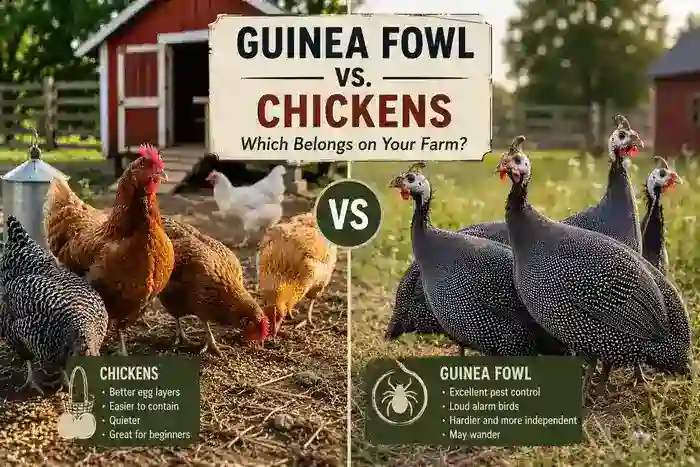
Chickens and guinea fowl can both earn a place on a farm, but they do not bring the same kind of energy to the yard. Chickens usually settle into a routine. Guinea fowl act like someone handed a flock of nervous watchdogs a megaphone and told them to patrol the property.
That does not make one better than the other. It just means they belong in different situations.
On a working farm like BF Farm Kunekune Pigs, poultry is not just decoration. Birds need to fit around chores, predators, gardens, livestock, fencing, and the daily rhythm of the place. Chickens and guineas can both be useful, but they ask different things from the people keeping them.
Quick Answer
For most beginners, chickens are the better first poultry choice because they are easier to house, easier to contain, better egg producers, and more predictable around a small homestead.
Guinea fowl are better for farms that want alert birds, insect pressure reduction, and a hardier, more independent farmyard bird — as long as the owner can handle noise, wandering, and less control.
A simple way to think about it:
- Choose chickens if you want eggs, routine, easier management, and beginner-friendly poultry.
- Choose guinea fowl if you want loud alarm birds, tick and insect patrol, and you have enough space for birds that may roam.
- Choose both only if you have the setup, patience, and predator plan to manage two very different poultry personalities.
Chickens Are Usually Easier for Beginners
Chickens are popular because they make sense for a lot of small farms. They teach daily animal care without requiring the space, fencing, or handling systems needed for larger livestock.
They need:
- A secure coop
- Nest boxes
- Roosting space
- Feed and water
- Predator protection
- Bedding and cleaning
- A safe run or managed free-range plan
That does not mean chickens are effortless. Predators, mud, heat, cold, illness, and weak coops can still cause problems. But compared with guinea fowl, chickens are usually easier to train to a coop, easier to feed, easier to contain, and easier to handle.
For a family just starting with poultry, chickens teach the basics without quite as much chaos. That kind of steady beginner lesson matters, especially if chickens are the first step before adding goats, pigs, cattle, or other livestock later.
Guinea Fowl Are Useful, But Not Quiet
Guinea fowl have a reputation for helping with ticks and bugs, and that reputation is a big reason people ask about them. They move across the farm in groups, watch everything, and sound off when something seems wrong.
The catch is that guineas do not save their opinions for emergencies.
They are loud. They call often. They may sound off at predators, visitors, vehicles, dogs, odd shadows, each other, and sometimes nothing obvious at all. On a larger rural place, that noise can be useful or at least tolerable. Near close neighbors, it can become a real problem.
Around BF Farm Kunekune Pigs, the usefulness of an animal always has to be weighed against the daily reality of keeping it. Guineas can be useful birds, but they are not peaceful background scenery. They are farmyard alarm systems with legs.
Eggs: Chickens Win for Most Families
If eggs are the main reason you want poultry, chickens are usually the better choice.
Laying hens are bred for egg production, and many breeds are dependable layers during their productive years. Chicken eggs are familiar, easy to collect from nest boxes, and easier to plan around.
Guinea hens do lay eggs, but they are more seasonal and less convenient for most families. They may hide nests, lay in odd places, or turn egg gathering into a scavenger hunt. Their eggs are smaller and have harder shells.
Guinea eggs are useful, but chickens are the more practical egg bird.
For a small farm family trying to make chores efficient, that difference matters. A bird that lays where you can find the eggs is already doing you a favor.
Pest Control: Guinea Fowl Have the Edge
This is where guineas shine.
Guinea fowl are active foragers. They move around the farm looking for bugs, ticks, grasshoppers, and other small pests. They can cover more ground than chickens and tend to range farther.
Chickens also eat bugs, but they usually stay closer to their coop, run, or familiar areas unless they are truly free-ranging. They scratch more heavily in certain spots and can tear up garden beds if allowed in the wrong place.
For pest patrol across a larger farmyard or pasture edge, guineas may be more useful. For controlled bug cleanup in a garden area, chicken tractor, compost space, or coop run, chickens may be easier to manage.
That is one of the big differences between the two birds: guineas are better at roaming, and chickens are better at staying useful inside a system you can control.
Noise and Neighbors
This may be the deciding factor.
Chickens make noise. Hens cackle, chatter, fuss after laying eggs, and roosters can crow all day. But guinea fowl are in a different category.
Guineas are loud enough that anyone with close neighbors should think very carefully before getting them. Their alarm calls can be useful on a farm, but that same trait can be frustrating in a neighborhood or small backyard setting.
BF Farm Kunekune Pigs has the space and rural setting for animals that would not fit every backyard. That is an important point for readers to understand. Just because an animal works on one farm does not mean it belongs in every setup.
If you have nearby houses, local rules, or family members who value quiet, chickens are probably the safer choice.
Predator Awareness
Both chickens and guinea fowl are vulnerable to predators, but they behave differently.
Chickens often rely on the coop, run, fence, or owner routine for safety. They can learn where home is and usually return to roost if trained well.
Guineas are more alert and more vocal. They may notice danger quickly and make a racket about it. That can help alert the farm, but noise is not the same as protection. Guineas can still be taken by predators, especially at night or when they roost in unsafe places.
Neither bird replaces predator-proof housing.
A secure nighttime setup still matters for:
- Raccoons
- Foxes
- Coyotes
- Owls
- Hawks
- Dogs
- Snakes
- Skunks
- Opossums
This is one of those lessons that applies across the whole farm. Whether you are talking about chickens, guineas, goats, pigs, or young animals in general, predators notice weak spots. Good routines and secure housing matter more than wishful thinking.
Housing Differences
Chickens are usually easier to house. Give them a good coop, nest boxes, roosts, feed, water, and a routine, and they can settle into that system.
Guinea fowl are more independent. If they are not trained carefully when young, they may decide that trees, barn rafters, fences, or rooftops are better sleeping places than the shelter you built.
That sounds charming until nighttime predators arrive.
If you want guineas to return to housing, start them young, keep them confined long enough to learn home base, and build a routine around feeding and nighttime safety. Even then, guineas can be stubborn.
Chickens tend to accept the coop more easily. That predictability is one reason they are often a better first poultry choice.
Containment and Wandering
Chickens can wander, especially when free-ranging, but many flocks stay fairly close to their coop, feed, and familiar territory.
Guineas often range farther. They may cross driveways, visit neighbors, explore fields, and generally act like the farm boundary map was never explained to them.
This can be useful if you have room and want wide pest patrol. It can be a problem if you have roads, close neighbors, gardens, dogs, or areas where birds should not go.
Before getting guineas, ask whether your property can handle birds that may not stay exactly where you want them.
That question fits BF Farm Kunekune Pigs’ broader approach to animals: do not choose the animal first and hope the land catches up. Look at the land, the fencing, the neighbors, the predators, and the daily chores, then decide which animal belongs there.
Gardens and Poultry Need Planning
Chickens and guinea fowl can both help and hurt gardens.
Chickens scratch aggressively. They can turn compost, clean up old beds, eat bugs, and spread manure. They can also destroy seedlings, uncover mulch, peck produce, and make a mess in fresh plantings.
Guineas usually scratch less destructively than chickens, but they still move through gardens, peck, dust bathe, and disturb things. They are not magic garden helpers that know which plants matter.
For active gardens, poultry works best with boundaries.
Good options include:
- Fenced garden beds
- Chicken tractors
- Seasonal garden cleanup after harvest
- Supervised range time
- Poultry excluded during seedling stages
- Compost areas designed for scratching
Birds do not read garden plans. If the tomatoes are important, fence accordingly.
Feed and Daily Chores
Chickens are simpler for most people to feed. A good layer feed, grit if needed, calcium support for laying hens, clean water, and reasonable treats cover most small-flock needs.
Guineas need good nutrition too, especially when young. Guinea keets are delicate and need a proper brooder setup. Adult guineas forage heavily, but they still benefit from feed, routine, and safe water.
The challenge with guineas is not just what they eat. It is whether they come back to eat where you want them to. A reliable feeding routine helps keep them connected to home base.
With chickens, chores tend to feel more predictable. With guineas, chores can involve more negotiation.
Anyone who has kept different kinds of farm animals knows that daily chores reveal the truth. Some animals fit your rhythm. Others make you redesign the rhythm.
Raising Chicks vs Guinea Keets
Baby chicks are fragile, but they are common enough that beginner information, supplies, and starter feeds are easy to find.
Guinea keets can be more delicate. They need warmth, dryness, proper feed, clean bedding, and close attention. Damp brooders and poor conditions can cause trouble fast.
If someone is brand new to poultry, starting with chicks is usually easier than starting with guinea keets. Guineas are not impossible, but they are less forgiving of a careless setup.
For a beginner, that matters. The goal is not just to get birds. The goal is to set them up well enough that they have a fair start.
Can Chickens and Guineas Live Together?
Chickens and guinea fowl can live on the same farm, and many people keep both. That does not mean they should always be managed exactly the same way.
Guineas may bully chickens, especially during certain seasons or if space is tight. Chickens may compete over feed. Roosters and male guineas can create issues. Mixed poultry also means paying attention to space, feed access, shelter, and stress.
A mixed flock works best when there is:
- Plenty of space
- Multiple feed and water areas
- Safe nighttime housing
- Room for birds to avoid each other
- Careful introduction of young birds
- A watchful owner who notices bullying
Do not assume birds will sort it out kindly. Sometimes they do. Sometimes they do not.
This is one of the reasons BF Farm Kunekune Pigs tends to talk so much about preparation before adding animals. Adding a species is easy. Making the whole setup work together is the real job.
Which Bird Is Better for a Small Homestead?
For most small homesteads, chickens are the more useful all-around bird.
They are better for eggs, easier for beginners, easier to contain, and easier to build routines around. A secure chicken coop and run can work on a wide range of properties.
Guinea fowl are better for farms with more room, higher tolerance for noise, and a real need for insect patrol and alarm birds. They fit better where wandering is less of a problem and where the owner understands they are not just odd-looking chickens.
A small homestead can use either one, but the land and neighbors matter.
A Practical Comparison
Choose chickens if you want:
- Dependable eggs
- Beginner-friendly poultry
- Easier coop training
- More predictable chores
- Better containment
- A quieter flock than guineas
- A good first step into livestock care
Choose guinea fowl if you want:
- Loud alarm birds
- Tick and insect patrol
- Wider ranging behavior
- Hardy farmyard birds
- Less focus on egg production
- A bird that acts more independent and wild
Be cautious with guineas if you have:
- Close neighbors
- Heavy traffic nearby
- Small acreage
- Strict local rules
- Low tolerance for noise
- No secure nighttime plan
- A need for calm, easy handling
What We Learned From Keeping Poultry
After enough poultry chores, one lesson shows up clearly: the bird you want and the bird your setup can handle are not always the same bird.
Chickens fit more beginner situations because they are easier to manage. Guineas can be useful and entertaining, but they ask more from the owner in terms of space, patience, and noise tolerance.
The practical question is not “Which bird is better?” It is “Which bird belongs on this farm, with this setup, these neighbors, these predators, and this daily routine?”
That question saves trouble.
It is the same kind of thinking we use across the broader BF Farm Kunekune Pigs Life story. Kunekune pigs, goats, cattle, guardian dogs, chickens, and guineas all have strengths. None of them are automatically right for every farm. The best animal is the one that fits the land, the purpose, and the people caring for it.
Final Thoughts
Guinea fowl and chickens can both belong on a small farm, but they serve different purposes.
Chickens are the better choice for most beginners, especially if eggs, routine, and manageable chores are the priority. Guineas are better for farms that need alert birds and insect patrol, and where noise and wandering will not create bigger problems than they solve.
Start with the bird that fits your real farm. If you are new to poultry, that usually means chickens first. If you already have a strong setup, more space, and a reason for louder, more independent birds, guinea fowl may earn their place too.
A good farm is not built by collecting every interesting animal. It is built by choosing animals that fit the land, the people, and the work.