FarmLife at BF Farm Kunekune Pigs
Homesteading for Beginners: A Practical Guide to Starting Small and Growing Wisely
May 19, 2026 · Homesteading
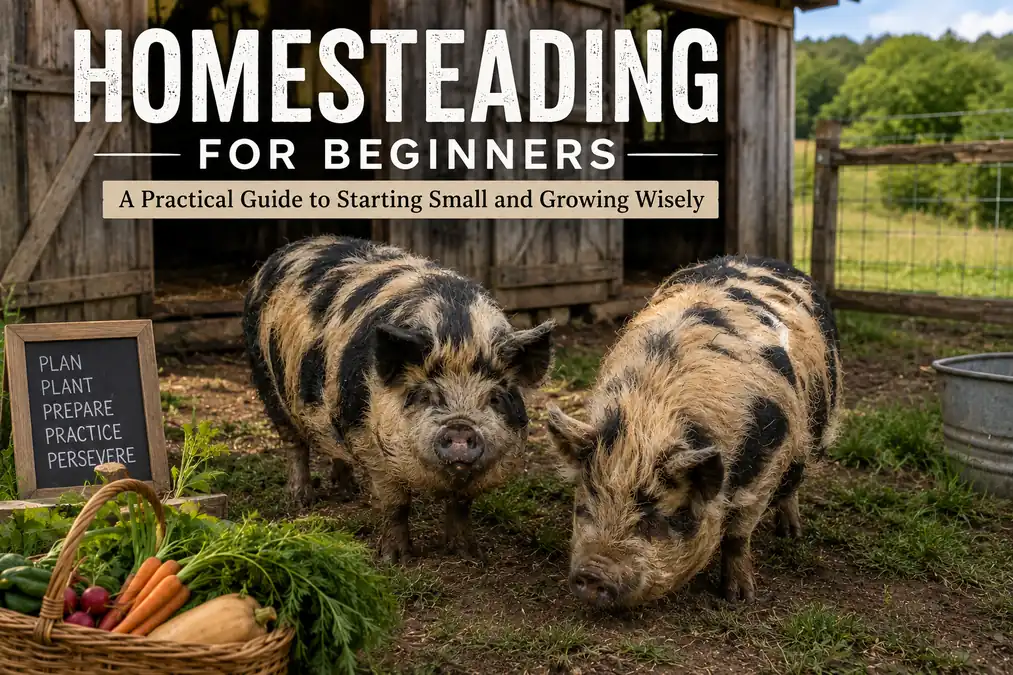
The idea of homesteading usually starts with a simple picture: good food, useful animals, more independence, and a slower life that feels closer to the land. The real work starts when that picture meets weather, fencing, feed bills, mud, water lines, garden failures, and animals that depend on you every single day.
Homesteading is not one single lifestyle. For one family, it may mean a large garden, a few hens, and learning to preserve food. For another, it may mean pasture, meat animals, breeding stock, firewood, dairy, fruit trees, and a long-term plan for food production. Some people start on acreage. Others begin in town with raised beds, herbs, compost, and a few practical skills.
The best beginner homestead is not the biggest one. It is the one you can actually manage well.
That matters. A homestead should reduce stress over time, not bury you under half-finished projects and animals you were not ready for. Starting small gives you room to learn. It lets you build systems that work before adding more responsibility. It also helps you make better decisions about livestock, fencing, gardens, shelter, and the kind of food independence you really want.
Start With the Reason, Not the Shopping List
A lot of new homesteaders begin by asking, "What should we get first?" Chickens? Pigs? Goats? A greenhouse? A tractor? A milk cow?
Those are good questions, but they are not the first question.
The first question is: What do you want your homestead to do for your family?
Your answer will shape every other decision. A homestead built for fresh eggs and summer vegetables looks different from one built for meat production. A homestead focused on breeding animals needs different planning than one focused on household food savings. A peaceful hobby farm has different demands than a working farm that needs to produce income.
Before buying animals or building permanent setups, write down your main goals.
Common beginner homestead goals include:
- Growing more of your own food
- Raising eggs
- Producing meat for your family
- Learning food preservation
- Reducing grocery dependence
- Starting a small breeding program
- Teaching children practical responsibility
- Building a more self-sufficient lifestyle
- Creating a small farm business over time
- Living closer to the land and seasons
There is nothing wrong with having several goals. Most homesteaders do. The key is ranking them.
If meat production matters most, you will need to think carefully about animal choice, processing plans, freezer space, feed costs, and breeding stock. If your main goal is fresh food and lower waste, your first investments may be garden soil, compost, fruit plants, and storage. If you want to raise breeding animals, your focus needs to shift toward genetics, structure, temperament, facilities, recordkeeping, and long-term herd management.
Homesteading works best when every project has a purpose.
Learn Your Land Before You Fill It
Land has a way of humbling people. A property that looks perfect in spring may flood in heavy rain, bake dry in July, or turn slick and miserable in winter. Before adding too many animals or permanent structures, spend time watching how the land behaves.
Pay attention to:
- Where water collects after rain
- Which areas stay wet too long
- Where the sun hits in summer and winter
- Where shade is available
- Which direction storms usually come from
- Where wind is strongest
- Where predators may travel
- Which areas are easiest to access for chores
- Where vehicles, trailers, and feed deliveries can reach
- How far water must be carried or piped
A pretty spot is not always a practical spot. The best place for a pen, garden, or shelter is usually the place that works during bad weather, not just on a nice day.
For gardens, sunlight and drainage matter. For livestock, fencing, shade, water, and safe footing matter. For daily chores, convenience matters more than beginners often realize. If animals are too far from water, feed storage, or your normal path, chores become harder than they need to be.
The practical test is simple: Will this setup still work when it is hot, cold, muddy, dark, and you are tired?
If the answer is no, keep planning.
Start With Skills Before Scale
A homestead is built from skills more than stuff. Equipment helps, but skill is what keeps the place running.
Beginner homesteaders often feel pressure to do everything at once. They want the garden, orchard, chickens, pigs, goats, bees, greenhouse, root cellar, sourdough, compost, canning shelves, and maybe a farm stand too.
That sounds wonderful until each one needs attention at the same time.
Start by learning a few basic skills well.
Good beginner skills include:
- Starting seeds
- Building healthy garden soil
- Composting
- Preserving food safely
- Cooking from basic ingredients
- Reading animal behavior
- Setting up clean water systems
- Repairing basic fencing
- Using hand tools confidently
- Storing feed properly
- Keeping simple records
- Budgeting farm expenses
- Planning seasonal chores
Skills stack. Once you learn to compost, your garden improves. Once your garden improves, preserving food makes more sense. Once you understand fencing and water, livestock becomes easier. Once you learn animal behavior, choosing breeding stock becomes more thoughtful.
A homestead grows stronger when each new project builds on something you already understand.
Plan Your Food First
Food production is one of the clearest reasons people begin homesteading. But "grow your own food" can mean many different things.
A beginner should think in layers.
Fresh Food
Fresh food is usually the easiest place to start. This includes vegetables, herbs, eggs, and seasonal fruit. Even a small garden can change how a family eats.
Good beginner crops often include:
- Tomatoes
- Peppers
- Green beans
- Lettuce
- Kale
- Cucumbers
- Zucchini
- Potatoes
- Onions
- Garlic
- Herbs
Choose foods your family already eats. A garden full of vegetables nobody wants at the table becomes a chore instead of a blessing.
Stored Food
Once you can grow fresh food, the next step is storage. This may include freezing, dehydrating, fermenting, root-cellaring, or canning.
Storage crops include:
- Potatoes
- Sweet potatoes
- Winter squash
- Onions
- Garlic
- Dry beans
- Corn
- Apples
- Pumpkins
Food preservation adds real value, but it also adds work. Do not plant a huge garden unless you have a plan for harvest season. A bumper crop can go from exciting to overwhelming fast.
Protein
Protein is where homesteading becomes more serious. Eggs are usually the easiest beginner protein. Meat animals require more planning, more emotional readiness, and often more infrastructure.
Protein sources may include:
- Chickens for eggs
- Meat chickens
- Rabbits
- Pigs
- Goats
- Sheep
- Cattle
- Ducks
- Turkeys
- Fish, in some systems
For families who want meaningful food independence, meat production often becomes part of the plan. That does not mean rushing into it. It means being honest about what your family eats, what your land can support, and what level of responsibility you are ready to handle.
Build Systems Before Buying Animals
Animals are often the most exciting part of homesteading. They are also where beginner mistakes can become expensive or stressful.
Before bringing home livestock, have the basics ready:
- Secure fencing
- Shelter
- Shade
- Clean water
- Feed storage
- A way to separate animals when needed
- A plan for sick or injured animals
- Transportation or trailer access
- Predator protection
- A daily chore routine
- A backup caretaker
Do not buy animals first and figure it out later. That puts pressure on you and risk on the animals.
Around here, a setup has to work on ordinary chore days and on the days when everything seems to happen at once. Animals need care whether you are busy, sick, tired, traveling, or dealing with bad weather. A good homestead system makes the right care easier to repeat.
Choosing Beginner Livestock
The best beginner livestock depends on your goals, land, budget, and confidence level. No animal is "zero work," but some fit beginner homesteads better than others.
Chickens
Chickens are common starter livestock because they provide eggs, teach daily chores, and do not require much land compared with larger animals.
They still need protection from predators, clean housing, dry bedding, good feed, and fresh water. A poorly built chicken setup can become frustrating quickly.
Good for:
- Eggs
- Garden compost material
- Teaching daily chores
- Small spaces
Watch for:
- Predator pressure
- Muddy runs
- Feed waste
- Overcrowding
- Summer heat and winter water issues
Rabbits
Rabbits can be useful for meat production in small spaces. They require clean housing, good airflow, shade, feed management, and careful handling.
Good for:
- Small-space meat production
- Quiet setups
- Manure for gardens
Watch for:
- Heat stress
- Sanitation
- Breeding management
- Processing readiness
Goats
Goats are charming and useful, but they are not always as beginner-simple as people expect. They need strong fencing, parasite management, hoof care, minerals, and good shelter.
Good for:
- Brush management in some settings
- Dairy, if managed seriously
- Breeding projects
Watch for:
- Escape behavior
- Parasites
- Fencing costs
- Milking schedule, if dairy
Pigs
Pigs can be excellent homestead animals when chosen and managed correctly. They can provide meat, help use certain farm resources wisely, and fit into a long-term food plan. But pigs are strong, smart, and require proper fencing, water, shade, and responsible handling.
Not all pigs fit the same purpose. Commercial-type hogs, heritage breeds, feeder pigs, breeding animals, and Kunekune pigs each bring different management needs.
Kunekune pigs are especially interesting for many small homesteads because they are generally known as a smaller, grazing-oriented heritage breed with a calmer reputation than many larger hog types. They still need real pig fencing, good care, and thoughtful selection. Cute does not replace structure, temperament, health, and long-term usefulness.
For homesteaders interested in raising their own meat or starting a breeding program, quality breeder stock matters. A good pig should be chosen for more than appearance. Structure, feet and legs, temperament, condition, genetics, and suitability for your goals all matter.
BF Farm Kunekune Pigs focuses heavily on quality Kunekune breeder stock for people who want pigs with a real purpose on the homestead, whether that purpose is producing meat, building a responsible breeding herd, or adding manageable livestock to a small farm plan.
Good for:
- Homestead meat planning
- Breeding programs
- Smaller farm setups when managed well
- Families wanting pigs selected for temperament and usefulness
Watch for:
- Fencing quality
- Shade and wallow needs
- Water access
- Breeding decisions
- Feed costs
- Processing plans
- Choosing stock carefully
Fencing Is Not the Place to Guess
Many homestead problems start with weak fencing. Animals learn fast. Once they discover a fence does not mean much, your job gets harder.
Good fencing depends on the species. Chickens, pigs, goats, sheep, cattle, and dogs all test fences differently. A fence that holds one animal may be useless for another.
For beginner homesteaders, fencing should be planned with these questions:
- What animal is this fence for?
- Will it keep that animal in?
- Will it help keep predators out?
- Can it handle pressure, rubbing, rooting, jumping, or climbing?
- Can I safely open and close gates while carrying feed or water?
- Can I move animals if needed?
- Can I separate males, females, young animals, or injured animals?
- Can emergency help access the area?
Temporary fencing can be useful, but it should still be safe and appropriate. Permanent fencing costs more upfront, but it often saves frustration later.
For pigs, fencing deserves special respect. Pigs are strong and smart. Kunekunes may be more manageable than many larger hogs, but they are still pigs. They need fencing that is built for pigs, not wishful thinking.
Water Is a Daily Chore, Not a Detail
Water is one of the most important parts of any homestead setup. It is also one of the easiest things to underestimate.
Before adding gardens or livestock, ask:
- Where will water come from?
- How far will it need to be carried?
- Will hoses reach?
- What happens during freezing weather?
- What happens during drought?
- Can animals spill or dirty the water?
- Is there backup water if something breaks?
- How much water will be needed in summer?
A homestead without convenient water becomes exhausting. Carrying buckets may work for a few animals or a small garden, but it gets old quickly as the homestead grows.
For livestock, clean water affects health, comfort, feed use, and daily behavior. For gardens, inconsistent watering can mean poor harvests. For pigs, water is especially important in hot weather because they need reliable drinking water and ways to cool themselves.
Plan water before you need it.
Shelter Should Fit the Animal and the Weather
Shelter does not have to be fancy, but it does need to work.
Good livestock shelter provides:
- Protection from wind
- Shade from sun
- Dry bedding or resting areas
- Good ventilation
- Enough space
- Safe entrances and exits
- Access for cleaning
- Practical placement near water and feed
Beginner homesteaders sometimes overbuild in one way and underbuild in another. A shelter may look sturdy but have poor airflow. Or it may be cute but impossible to clean. Or it may work in spring but fail in winter.
Think about your real climate. Heat, cold, rain, mud, snow, wind, and humidity all shape shelter needs. A good shelter works with your weather, not against it.
For pigs, shade and cooling matter in warm months. Dry bedding and wind protection matter in cold or wet conditions. Pens should be designed so animals can rest comfortably and so you can maintain the area without fighting the layout every day.
Do Not Ignore Feed Costs
Feed costs can surprise new homesteaders. Even animals that graze, forage, or receive garden extras usually still require purchased feed, minerals, hay, or supplements depending on species and season.
Before buying livestock, estimate:
- Daily feed needs
- Monthly feed costs
- Seasonal changes
- Hay needs, if any
- Mineral needs
- Storage requirements
- Waste prevention
- Cost to raise animals to butcher age
- Cost to maintain breeding animals year-round
Breeding animals are not just a one-time purchase. They eat all year. They need care whether they are producing at that moment or not. If you want breeder stock, plan for the full cost of responsible ownership.
That is one reason quality matters. Cheap animals can become expensive if they bring poor structure, poor temperament, health concerns, or poor suitability for your goals. Good stock is not just about the purchase price. It is about long-term value.
Keep Records From the Beginning
Recordkeeping does not need to be complicated. A notebook, binder, spreadsheet, or simple app can work.
Track things like:
- Planting dates
- Harvest amounts
- Feed purchases
- Animal birth dates
- Breeding dates
- Health observations
- Expenses
- Repairs
- Weather notes
- Processing dates
- Garden successes and failures
- Buyers or customer conversations, if selling animals or products
Records help you see patterns. They show what worked, what cost too much, which animals performed well, and which projects deserve more attention.
For breeding programs, records become even more important. You need to know lineage, breeding dates, farrowing history, piglet outcomes, temperament notes, and customer information. A responsible breeding program is built on more than owning a male and female.
Budget for the Boring Things
Homesteading dreams often focus on animals, gardens, barns, and harvest baskets. The budget, however, often goes toward less glamorous things.
Plan for:
- Fence posts
- Gates
- Wire
- Feeders
- Waterers
- Hoses
- Extension cords
- Bedding
- Buckets
- Minerals
- Tools
- Repairs
- Gravel
- Mulch
- Compost
- Seeds
- Fuel
- Freezer space
- Veterinary care
- Processing costs
- Replacement parts
The boring things are what keep the homestead functional. A good gate may not be exciting, but you will appreciate it every single day. A reliable water setup may not look like a dream-board photo, but it can save hours of work.
Beginner homesteaders should leave room in the budget for mistakes and adjustments. You will change things. Everyone does. The first version of a garden, pen, coop, or shelter is rarely the final version.
Grow in the Right Order
There is no single correct order for starting a homestead, but some paths are easier than others.
A practical beginner order may look like this:
- Learn the land
- Start a small garden
- Build compost systems
- Add food storage and preservation skills
- Add chickens or another manageable first livestock
- Improve fencing and water systems
- Expand garden production
- Add meat or breeding animals when prepared
- Build long-term infrastructure
- Consider income-producing projects only after the basics work
This order keeps the foundation ahead of the animals. That matters because animals magnify weak systems. If water, fencing, storage, and daily routines are already difficult, adding livestock will not make them easier.
Think Carefully Before Starting a Breeding Program
Breeding animals can be rewarding, but it is a serious step. It means taking responsibility not only for the animals you own, but also for the animals you produce and the people who buy them.
A beginner breeding program should not start with the question, "Can I make money?"
It should start with better questions:
- Do I understand the breed well enough?
- Do I have quality stock worth reproducing?
- Do I have proper facilities?
- Can I separate animals safely?
- Can I care for mothers and babies?
- Do I understand the market?
- Can I place animals responsibly?
- Do I have records?
- Do I have a plan for animals that do not sell quickly?
- Am I improving the breed or just making more animals?
For Kunekune pigs, breeding decisions should be made with structure, temperament, health, genetics, and long-term goals in mind. A piglet may be adorable, but not every piglet should become breeding stock. Some animals are better suited for meat, companionship, or non-breeding homestead roles.
That honesty is part of responsible stewardship.
Prepare Emotionally for Meat Production
Many homesteaders want to raise their own meat because they care deeply about food quality and animal welfare. That is a good and serious reason. But it requires emotional honesty.
Raising meat animals means giving animals a good life and also having a clear plan for their purpose. Avoiding the hard part until the last minute usually creates stress for both people and animals.
Before raising meat animals, decide:
- Who will process the animal?
- Where will processing happen?
- What age or size is the goal?
- How much freezer space is needed?
- What costs are involved?
- What cuts or products does your family actually use?
- Are all family members prepared for the reality?
Meat self-sufficiency is not just a slogan. It is a responsibility. When done thoughtfully, it can help families understand their food more honestly and treat animals with real care from beginning to end.
Avoid the Most Common Beginner Mistakes
Most beginner homestead mistakes are understandable. People get excited. They see what others are doing. They want progress. But some mistakes are worth avoiding if possible.
Mistake 1: Starting Too Big
Too many animals, too many gardens, and too many projects can turn a dream into burnout. Start smaller than your ambition. You can always grow.
Mistake 2: Buying Animals Before Infrastructure
Animals should come after fencing, water, shelter, and feed storage are ready.
Mistake 3: Choosing Cuteness Over Suitability
Cute animals are easy to love, but suitability matters more. Choose animals that fit your goals, land, and experience.
Mistake 4: Ignoring Daily Chore Flow
If chores are awkward, far away, or poorly designed, they become frustrating. Build systems that make daily care easier.
Mistake 5: Underestimating Feed and Repair Costs
Homesteading can save money in some areas, but it is not free. Budget realistically.
Mistake 6: Skipping Biosecurity and Quarantine
New animals should be introduced carefully. Do not mix animals casually without thinking about health risks.
Mistake 7: Not Having a Backup Plan
Everyone needs help sometimes. Have someone who can care for animals if you are away or unable to do chores.
Mistake 8: Copying Someone Else's Homestead Exactly
Your land, budget, climate, family, and goals are your own. Learn from others, but build what fits your place.
Small Homesteads Can Still Be Productive
You do not need huge acreage to begin homesteading. A small homestead can produce a surprising amount when planned carefully.
Small-space homestead ideas include:
- Raised bed vegetables
- Container herbs
- Berry bushes
- Fruit trees on dwarf rootstock
- Compost bins
- Backyard chickens where allowed
- Rainwater collection where legal and practical
- Small greenhouse or seed-starting area
- Pantry storage
- Freezer organization
- Food preservation
- Skills like baking, fermenting, and canning
For livestock, small acreage requires careful management. Stocking too many animals on too little land leads to mud, smell, parasite pressure, feed waste, and stress. Smaller land does not mean no livestock, but it does mean choosing carefully and managing well.
Kunekune pigs may interest small-farm homesteaders because of their size and temperament, but they still require appropriate space, fencing, rotation or pen management, shade, and feed planning. They are not an excuse to overcrowd a property.
Build a Homestead That Fits Your Real Life
A homestead has to fit the people running it.
Be honest about:
- Work schedules
- Physical ability
- Budget
- Travel
- Children's ages
- Family interest
- Available help
- Climate
- Local rules
- Processing options
- Time for daily chores
- Tolerance for mud, noise, smells, and setbacks
Some families love a busy livestock routine. Others are happier with gardens, chickens, and food preservation. Some want a breeding program. Others only want animals for their own freezer. A good homestead does not have to impress anyone online. It has to work for the people living there.
The best homesteaders are not the ones who do everything. They are the ones who pay attention, learn steadily, and build systems they can maintain.
A Simple First-Year Homestead Plan
A beginner's first year should focus on learning, not proving anything.
Here is a realistic first-year path.
Month 1-2: Observe and Plan
Walk the property after rain. Watch sunlight. Check drainage. Think about goals. Price fencing and feed. Learn local rules. Make a basic map.
Month 3-4: Start the Garden
Begin with a manageable garden. Add compost. Plant foods your family eats. Keep notes on what grows well.
Month 5-6: Improve Infrastructure
Build or repair fencing. Set up water access. Create feed and tool storage. Make chores easier before adding animals.
Month 7-8: Add One Manageable Livestock Project
For many beginners, this may be chickens. For others, it may be rabbits or preparing for pigs later. Keep the first animal project simple and well managed.
Month 9-10: Learn Preservation
Freeze, can, dehydrate, or ferment some of your harvest. Start small and learn safe methods.
Month 11-12: Review and Adjust
Look at records. What worked? What failed? What cost more than expected? What did your family enjoy? What felt like too much?
Then plan year two with more wisdom.
When You Are Ready for Pigs
Pigs should come after you have a real plan. That plan should include fencing, shelter, water, shade, feed, handling, and purpose.
Ask yourself:
- Do I want feeder pigs, breeding stock, or both?
- Am I raising pigs for meat, breeding, companionship, or land management?
- Do I understand the breed I am considering?
- Do I have enough space?
- Can I separate animals if needed?
- Do I have a boar plan if breeding?
- Do I have a processing plan if raising meat?
- Can I afford year-round care?
- Do I know what a quality pig looks like?
For Kunekune pigs, beginners should look for calm, healthy, well-structured animals from a breeder who is honest about suitability. Not every pig needs to be breeding stock. A responsible breeder should help you understand which animals fit your goals and which do not.
That kind of guidance matters, especially for homesteaders who are trying to build something that lasts.
The Long View
Homesteading is not built in a weekend. It is built in seasons.
The first season teaches you what your soil needs. The first winter teaches you whether your water setup works. The first livestock project teaches you how daily chores fit your life. The first harvest teaches you what your family actually eats. The first setback teaches you what needs to change.
That is not failure. That is the work.
A beginner homestead should be allowed to grow slowly. Start with food. Add skills. Build good systems. Choose animals carefully. Keep records. Learn your land. Make each project earn its place.
For families interested in Kunekune pigs, meat self-sufficiency, or a future breeding program, the same rule applies: start with preparation. Quality breeder stock can be a valuable part of a homestead, but only when the people, facilities, and goals are ready for it.
A homestead does not need to be perfect to be worthwhile. It needs to be honest, useful, and cared for well.
Final Thoughts
Homesteading for beginners is less about doing everything and more about doing the right first things. A small garden that gets tended well is better than a huge one that overwhelms you. A few animals with good fencing and clean water are better than a barnyard full of stress. One well-planned step at a time will take you farther than rushing into every dream at once.
Start where you are. Learn the land. Build the basics. Choose animals with purpose. Keep your expectations realistic. The good life people imagine when they think about homesteading is real, but it is made through steady chores, thoughtful choices, and responsibility carried out day after day.
For homesteaders who want to raise their own meat or build a responsible Kunekune breeding program, BF Farm Kunekune Pigs offers practical guidance and quality breeder stock selected with health, temperament, structure, and long-term usefulness in mind. The right pig should fit the farm, the family, and the future plan.