FarmLife at BF Farm Kunekune Pigs
Micro-Homesteading for Apartments, Rentals, and Small Spaces
May 29, 2026 · Homesteading
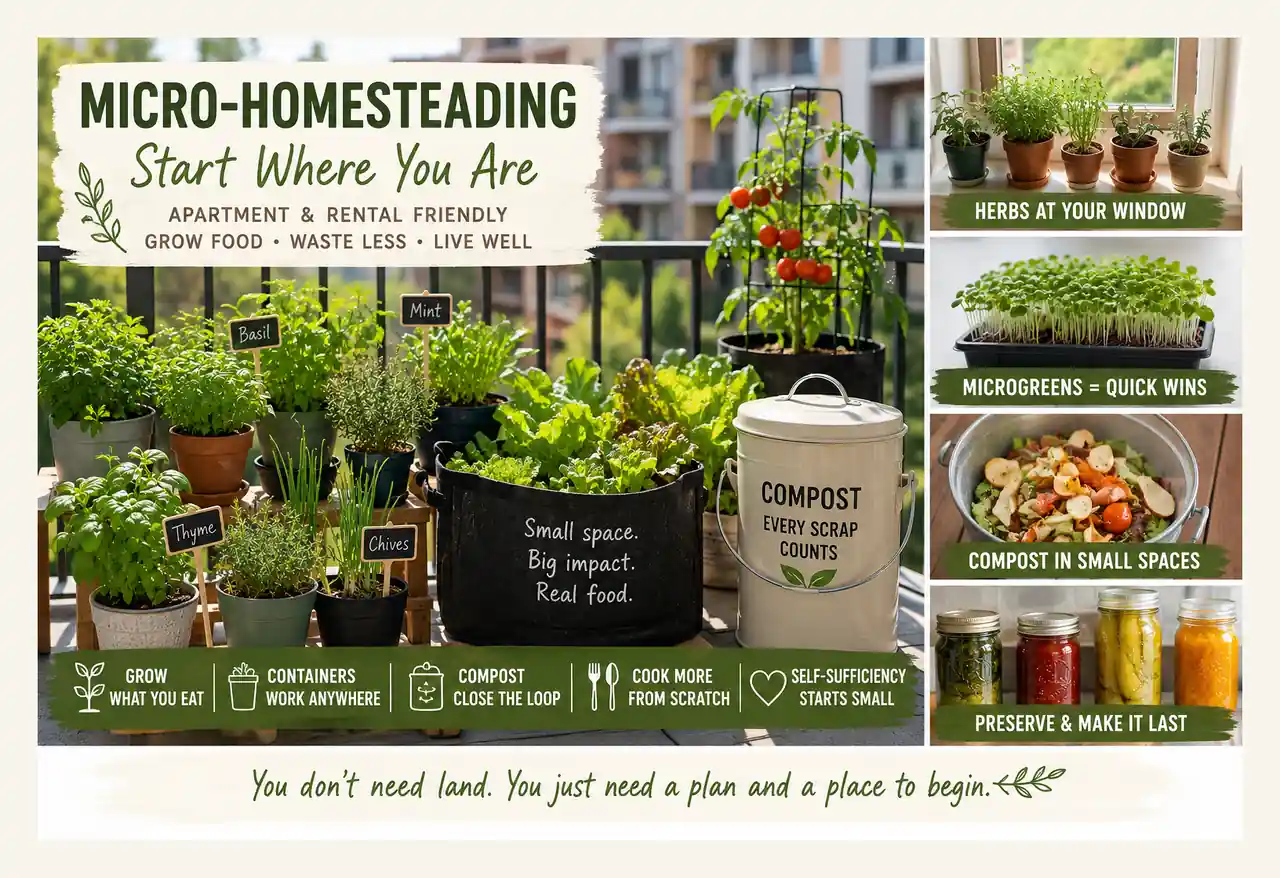
You do not need a pasture, barn, tractor, or big garden before you start living closer to your food. Micro-homesteading is the small-space version of homesteading: growing what you can, wasting less, cooking more from scratch, learning practical food skills, and building a household that feels a little more capable with every season.
What Micro-Homesteading Really Means
Micro-homesteading is not pretend farming. It is not a watered-down version of “real” homesteading either. It is homesteading scaled to the space, budget, lease, rules, and season of life you actually have.
For some people, that means a balcony full of herbs and tomatoes. For someone else, it means lettuce under a grow light, a countertop compost bin, a pantry shelf, and a freezer full of labeled leftovers. For a family in a rental house, it might mean portable raised beds, a few grow bags, a small worm bin, and a weekly rhythm of cooking from basic ingredients.
The heart of micro-homesteading is usefulness.
It asks simple questions:
- Can I grow even a small amount of food?
- Can I cook more from basic ingredients?
- Can I waste less?
- Can I learn a practical skill this season?
- Can I make my home a little less dependent on convenience?
- Can I connect my kitchen more closely to the work that produces food?
That mindset matters. A person with five pots of herbs who uses them every week may be living more practically than someone with a huge garden they cannot maintain. A small, steady system beats a big, abandoned plan every time.
Why Micro-Homesteading Fits Apartments and Rentals
A lot of people are interested in homesteading but do not own land. They may live in an apartment, duplex, rental house, townhouse, or neighborhood with strict rules. They may have a balcony, patio, porch, sunny window, or shared yard. They may not be allowed to dig beds, build structures, keep chickens, install permanent trellises, or compost outdoors.
That does not mean they are shut out.
It simply means the homestead has to be portable, clean, respectful, and realistic.
Apartment and rental-friendly micro-homesteading focuses on systems that can move with you:
- containers instead of permanent garden beds
- grow bags instead of dug potato rows
- freestanding trellises instead of hardware drilled into walls
- rolling carts instead of fixed shelves
- indoor herbs instead of a large outdoor garden
- countertop composting or worm composting where appropriate
- freezer preservation instead of large canning batches
- pantry planning instead of root cellar storage
- skill-building instead of buying every tool at once
That is good news for beginners. Small systems are easier to learn, easier to adjust, and easier to walk away from if something does not work.
Start Where You Are, Not Where You Wish You Were
The biggest trap in homesteading is waiting for the perfect setup.
People say, “I’ll start when we buy land,” or “I’ll garden once we have a bigger yard,” or “I’ll cook from scratch when life slows down.” But practical skills grow slowly. The sooner you begin, the more ready you are when more space or opportunity comes along.
Start with what is true right now.
If you have a sunny window, grow herbs.
If you have a balcony, use containers.
If you have no outdoor space, try microgreens or lettuce under a grow light.
If you cannot compost outdoors, learn better food storage and waste reduction first.
If you cannot keep chickens, buy local eggs and learn how to use them well.
If you cannot preserve a whole harvest, freeze a few chopped peppers or dry a small bundle of herbs.
The phrase “start where you are” can sound soft, but it is actually very practical. It keeps you from overspending, overbuilding, and overpromising. It turns homesteading into a habit instead of a fantasy.
The First Rule: Grow What You Will Actually Use
A micro-homestead should serve the household. That means your first growing choices should match the way you already cook.
If you make eggs, soups, potatoes, pasta, roasted vegetables, chicken dishes, or simple skillet meals, herbs are one of the best places to start. A small pot of basil, chives, parsley, thyme, oregano, mint, or cilantro can change meals quickly.
If your family eats salads, try lettuce or spinach.
If you cook with salsa, try cherry tomatoes, peppers, cilantro, and green onions.
If you like breakfast cooking, grow chives and parsley for eggs.
If you drink tea, grow mint or lemon balm in a container.
If you rarely cook with something, do not make it your first project just because it looks pretty online. Start with plants that have a job.
Good beginner plants for small-space food growing include:
- basil
- parsley
- chives
- thyme
- oregano
- mint
- cilantro
- green onions
- lettuce
- spinach
- arugula
- radishes
- cherry tomatoes
- compact peppers
- strawberries
- microgreens
A useful plant you harvest every week is better than a dramatic plant you never eat.
Herbs: The Easiest Micro-Homestead Win
Herbs are the gateway crop for many small-space homesteaders. They do not require much room, they can grow in pots, and they make everyday food better.
A few herbs near the kitchen can support:
- scrambled eggs
- omelets
- roasted potatoes
- soups
- sauces
- chicken dishes
- pork dishes
- salads
- biscuits
- compound butter
- marinades
- herbal tea
- homemade broth
For beginners, herbs also teach basic plant care without requiring a large setup. You learn how often soil dries out, how much light your window receives, how to harvest without killing the plant, and which herbs your family actually uses.
A simple starter herb setup might include:
- basil for tomato dishes, eggs, pasta, and summer meals
- parsley for soups, potatoes, eggs, and fresh garnish
- chives for eggs, baked potatoes, salads, and biscuits
- thyme for roasted meats, vegetables, soups, and broth
- mint in its own pot for tea, desserts, and drinks
Mint deserves its own container because it spreads aggressively. In a small pot, that is manageable. In a garden bed, it can become a long-term commitment you did not ask for.
Container Gardening Basics
Containers are the backbone of apartment and rental micro-homesteading. They are portable, flexible, and usually allowed where permanent garden beds are not.
The container matters more than beginners realize.
A good container should have:
- drainage holes
- enough depth for the plant
- enough width for root growth
- a saucer or tray if used indoors
- safe material for edible plants
- manageable weight when filled with soil and water
Avoid using random containers that held chemicals, cleaners, oils, or unknown substances. For food crops, keep it simple and safe.
Potting mix also matters. Garden soil straight from the ground is usually too heavy for containers. It can compact, drain poorly, and make roots struggle. Use a quality potting mix designed for containers. For herbs and vegetables, choose something light enough to drain but rich enough to support growth.
A small-space grower should also learn the feel of watering. The top of the soil may look dry while the lower soil is still damp, or the top may look fine while a small pot is bone-dry underneath. Stick a finger into the soil before watering. Lift small pots to feel their weight. Watch the plant’s leaves. Over time, you will learn the rhythm.
Match the Container to the Plant
Not all edible plants need the same amount of space.
Shallow-rooted crops can grow in smaller containers:
- lettuce
- spinach
- arugula
- microgreens
- radishes
- many herbs
Deeper or heavier-feeding plants need larger containers:
- tomatoes
- peppers
- potatoes
- cucumbers
- dwarf fruiting plants
As a general guide, herbs can often do well in small to medium pots, while tomatoes and peppers need more soil volume to stay healthy and productive. A cherry tomato in a tiny pot may survive, but it will dry out quickly and produce less. Give fruiting plants more room than you think they need.
For renters, grow bags are useful because they are lightweight, foldable, and easy to move when empty. They work well for potatoes, peppers, tomatoes, herbs, and greens, depending on size. The tradeoff is that grow bags can dry out faster in hot weather, so watering becomes more important.
Light: The Make-or-Break Ingredient
Most edible plants need more light than people expect.
A bright room is not always the same as strong plant light. South-facing windows are often best in many homes, but buildings, trees, overhangs, and window coatings can change everything.
Leafy greens and herbs can tolerate less light than tomatoes and peppers, but they still need a good bright spot. Fruiting plants need stronger light and more hours of it.
If you do not have enough natural light, a simple grow light can open up more options. You do not need a complicated setup to start. A small shelf, a timer, and an adjustable light can support seedlings, herbs, lettuce, and microgreens.
Useful indoor growing options include:
- windowsill herbs
- lettuce under a grow light
- microgreens on a shelf
- seed-starting trays
- compact hydroponic units
- a rolling cart with lights attached
Keep the setup neat and safe. Avoid overloaded extension cords, water near electrical strips, and wobbly shelves. A good micro-homestead should not create household hazards.
Microgreens: Tiny Space, Fast Harvest
Microgreens are one of the most apartment-friendly food crops. They grow quickly, need little space, and can be harvested with scissors.
Common microgreen choices include:
- radish
- broccoli
- sunflower
- pea shoots
- mustard
- kale
- cabbage
- basil
They can be used on eggs, sandwiches, soups, tacos, rice bowls, salads, and roasted vegetables. They are also a good way to get the satisfaction of growing food without waiting months for a harvest.
Microgreens do require cleanliness. Use clean trays, safe growing medium, good seed intended for sprouting or microgreens, and proper airflow. Because they are harvested young and eaten fresh, sanitation matters.
A beginner microgreen setup can be as simple as a shallow tray, growing medium, seeds, water, light, and scissors. Start small. One tray teaches you plenty.
Balcony and Patio Growing
A balcony or patio can become a surprisingly productive micro-homestead, but it comes with special considerations.
Before setting up containers, think about:
- weight limits
- wind exposure
- sunlight hours
- water access
- drainage
- downstairs neighbors
- lease rules
- railing safety
- heat reflected from walls or concrete
- whether containers can be moved during storms
Containers full of wet soil can be heavy. Large pots, grow bags, and water reservoirs should be placed thoughtfully. If you are unsure about balcony weight limits, stay conservative and use smaller containers or lightweight systems.
Wind can dry out plants quickly. It can also snap tomato stems, knock over trellises, and stress young seedlings. Use sturdy containers and avoid top-heavy setups.
Water runoff matters too. A neighbor below you probably will not appreciate muddy water dripping onto their patio furniture. Use saucers, trays, careful watering, or a setup that catches overflow.
Good balcony crops include:
- herbs
- lettuce
- spinach
- strawberries
- cherry tomatoes
- compact peppers
- bush beans
- green onions
- dwarf cucumbers with support
- potatoes in grow bags if space allows
A balcony garden does not need to be large. Even a few pots can change how your kitchen feels.
Rental-Friendly Garden Setups
Renter-friendly growing means removable, portable, and low-damage.
Avoid drilling into walls, attaching trellises to siding, digging permanent beds, or altering drainage without permission. Instead, choose systems that leave little trace when you move.
Good rental-friendly options include:
- grow bags
- five-gallon bucket planters
- railing planters if allowed
- freestanding plant shelves
- rolling utility carts
- stackable planters
- self-watering containers
- fabric pots
- portable raised beds on legs
- freestanding trellis tubs
- windowsill herb trays
A rolling cart can be especially useful. It can hold herbs, seed trays, small pots, or supplies. It can be moved to chase light, protect plants from storms, or clean the area underneath.
Self-watering containers are another smart choice for renters and busy families. They help reduce the boom-and-bust watering cycle that stresses container plants. They are not magic, but they can make small-space gardening more forgiving.
Composting in Apartments and Rentals
Composting is one of the most satisfying micro-homesteading habits, but it has to fit the living situation.
If you have outdoor space, a small tumbler or sealed compost bin may work. If you live in an apartment, outdoor composting may not be allowed. Indoor options may include worm composting, a countertop food scrap collection system, community compost drop-off, municipal compost pickup, or an electric countertop composter.
The goal is to keep food scraps out of the trash when possible and turn waste into something useful.
Common compostable kitchen items include:
- vegetable peels
- fruit scraps
- coffee grounds
- tea leaves
- crushed eggshells
- wilted greens
- small amounts of plain plant-based food scraps
Avoid adding meat, grease, dairy, oily foods, and heavily salted foods to small home compost systems unless your specific system is designed for it. These can create odor, pests, and breakdown problems.
For renters, the most important compost rule is this: do not create a smell or pest problem. A poorly managed compost system can sour a landlord, roommate, spouse, or neighbor on the whole idea.
Start small, learn the system, and keep it clean.
Worm Composting for Small Spaces
Worm composting, also called vermicomposting, can work indoors if managed correctly. Red wiggler worms break down food scraps into rich castings that can feed container plants.
A worm bin needs:
- the right worms
- bedding such as shredded paper or coconut coir
- moderate moisture
- airflow
- small amounts of appropriate food scraps
- protection from extreme heat or cold
- patience
A healthy worm bin should smell earthy, not rotten. If it smells bad, it may be too wet, overfed, poorly aerated, or holding the wrong scraps.
Worm composting is not for every household, and that is okay. If worms indoors are not your thing, use a food scrap bucket and take scraps to a community compost site if one is available. Micro-homesteading should fit your real life, not someone else’s perfect setup.
Kitchen Skills Count as Homesteading
Growing food gets a lot of attention, but the kitchen is where many micro-homesteading wins happen.
A household can become more self-sufficient by learning to:
- cook soup from leftovers
- make broth
- bake simple bread or biscuits
- cook dry beans
- use eggs in flexible meals
- roast a whole chicken and use the leftovers
- stretch meat with vegetables, rice, beans, or potatoes
- make sauces from pantry staples
- freeze extra portions
- label and rotate food
- plan meals around what needs used first
These skills are not glamorous. They are useful, and usefulness is the backbone of homesteading.
You can grow herbs in a window and still waste money if food rots in the fridge. You can have a pantry full of staples and still order takeout if you do not know what to cook. Kitchen confidence turns small growing efforts into actual household value.
Build a Small Pantry That Matches Your Meals
A micro-homestead pantry should not be random. It should support meals your household already eats.
Start by writing down seven reliable meals. They might be simple:
- eggs and potatoes
- soup and bread
- beans and rice
- pasta with sauce
- roasted chicken with vegetables
- stir-fry
- tacos
- oatmeal
- skillet meals
- casseroles
Then build pantry staples around those meals.
A practical starter pantry may include:
- rice
- oats
- pasta
- flour
- cornmeal
- sugar
- salt
- baking powder
- yeast
- dry beans or lentils
- canned tomatoes
- broth or bouillon
- cooking oil
- vinegar
- peanut butter
- basic spices
- shelf-stable milk or evaporated milk
- canned tuna, chicken, or beans if your household uses them
Do not stock food just because it appears on a preparedness list. Stock food you know how to cook and want to eat.
A small, useful pantry is better than a crowded shelf of ingredients that never become dinner.
Food Storage Is Part of Self-Sufficiency
Micro-homesteading is partly about reducing waste. Food storage helps.
Simple habits make a big difference:
- label freezer bags with contents and date
- keep older food toward the front
- freeze herbs before they spoil
- chop and freeze extra peppers or onions
- turn tired vegetables into soup or broth
- use clear containers for leftovers
- keep a “use first” area in the fridge
- plan one weekly meal around leftovers
If you grow food in containers, harvest often. Herbs get bushier with proper harvesting. Lettuce can be cut and used before it bolts. Cherry tomatoes should be picked as they ripen. Small harvests add up when they are actually used.
A tiny harvest wasted is still waste. A tiny harvest used well is homesteading.
Small-Batch Preservation
You do not need a canning pantry with hundreds of jars to preserve food. Small-batch preservation may fit apartment and rental life better.
Beginner-friendly preservation projects include:
- freezing chopped herbs in oil or water
- drying herbs
- freezing berries on a tray
- making refrigerator pickles
- freezing pesto
- making freezer jam
- freezing cooked beans in meal-sized portions
- freezing soup, broth, or chili
- dehydrating small amounts of herbs or fruit if you have the equipment
For canning, use tested recipes and current food-safety guidance. Water-bath canning and pressure canning are not places to guess. If you are new, learn from reliable extension resources and follow tested instructions exactly.
Freezing and drying are often easier starting points for micro-homesteaders. They require less equipment and fit smaller harvests.
Egg Skills Without Chickens
Many apartment homesteaders cannot keep chickens. That does not mean eggs cannot be part of the micro-homestead kitchen.
You can build egg skills by:
- buying local eggs when available
- learning how to store eggs properly
- using older eggs for baking
- cooking eggs in budget-friendly meals
- making frittatas with leftover vegetables
- learning custards, quiche, breakfast casseroles, and egg salad
- saving eggshells for compost where appropriate
- understanding basic food safety around raw eggs
Eggs are one of the most useful foods in a homestead kitchen. They can become breakfast, dinner, baked goods, sauces, binders, and quick protein.
If you later move somewhere chickens are allowed, those kitchen habits will already be in place.
When Livestock Does Not Fit
It is worth saying plainly: not every homestead dream belongs in every space.
Chickens may be possible in some small yards, but they are often not allowed in apartments or many rentals. Goats, pigs, and larger livestock need even more space, fencing, shelter, feed storage, manure management, and daily care.
Kunekune pigs, for example, are often appreciated for their temperament and grazing ability, but they are still livestock. They need proper fencing, shelter, water, nutrition, companionship, health observation, and a long-term plan. They are not apartment animals or tiny-yard shortcuts.
That kind of honesty matters. Good homesteading starts with good stewardship. The question is not, “What animal do I want?” The better question is, “What can I care for well right now?”
Sometimes the responsible answer is herbs, compost, and local farm eggs. That is still a good start.
Connect With Local Farms
Micro-homesteading does not mean doing everything alone. In fact, small-space homesteaders often benefit most from local farm connections.
You may not be able to raise meat animals, keep layers, grow a large garden, or preserve a huge harvest. But you can support people nearby who do.
Look for:
- farmers markets
- local egg sellers
- produce stands
- CSA shares
- bulk meat shares
- local honey
- farm pickup days
- small farms that educate customers
- seed swaps
- community gardens
- extension classes
Buying directly from local farms can teach you seasonality. You start to understand when tomatoes actually taste like tomatoes, when eggs are abundant, when greens thrive, and when weather changes the food supply.
That knowledge is part of homesteading too.
Community Gardens and Shared Space
If you do not have outdoor growing space, a community garden may be the next step.
Community gardens can offer:
- larger growing areas
- better sunlight
- access to soil
- water sources
- experienced gardeners nearby
- shared compost systems
- community learning
They also come with responsibilities. You need to follow rules, maintain your plot, control weeds, harvest on time, and respect shared tools and pathways.
A community garden can be a good bridge between apartment living and larger-scale gardening. It gives you more room to learn without requiring land ownership.
Keep It Clean, Tidy, and Neighbor-Friendly
Rental and apartment homesteading succeeds when it stays respectful.
That means:
- no smelly compost
- no leaking containers onto neighbors below
- no loose soil washing across shared walkways
- no pests from spilled birdseed, feed, or food scraps
- no blocked exits or unsafe balcony loads
- no permanent changes without permission
- no noisy or messy setups that create conflict
A micro-homestead should improve life, not create problems for the people around you.
Tidy does not mean fancy. It means managed. Clean water trays, swept balconies, sealed compost containers, and healthy plants go a long way.
A Beginner Apartment Micro-Homestead Setup
Here is a realistic beginner setup for someone in an apartment:
Kitchen window or grow light shelf:
- basil
- chives
- parsley
- microgreens
Balcony or patio if available:
- one cherry tomato in a large container
- one pepper plant
- one lettuce box
- one mint pot kept separate
Kitchen system:
- small compost scrap container
- labeled freezer bags
- pantry shelf for staple meals
- weekly “use first” meal
- simple herb-harvest habit
This setup is small, but it teaches a lot: light, watering, harvesting, cooking, storage, waste reduction, and routine.
A Beginner Rental House Setup
For a rental house with a small yard or patio, try:
- grow bags for potatoes or peppers
- portable raised bed for greens
- container herbs near the door
- freestanding trellis tub for cucumbers or beans
- compost tumbler if allowed
- rain barrel only if legal and permitted
- freezer meal routine
- local egg or meat source
Everything should be removable. If the lease ends, the garden goes with you.
A Beginner No-Outdoor-Space Setup
No balcony? No patio? Still possible.
Try:
- microgreens
- herbs under grow lights
- lettuce in shallow trays
- seed sprouting with careful sanitation
- countertop scrap collection for community compost
- small pantry system
- freezer preservation
- scratch cooking habits
- local farm shopping
This version of micro-homesteading is kitchen-heavy, and that is not a weakness. The kitchen is where food usefulness becomes real.
A Simple 30-Day Start Where You Are Plan
If you want to begin without overthinking it, use a 30-day plan.
Week 1: Observe and choose your space.
- Where is the best light?
- What food does your household actually eat?
- What does your lease allow?
- Do you have room for one shelf, one tray, or three pots?
- What food do you throw away most often?
Week 2: Start one growing project.
- plant herbs
- start microgreens
- set up lettuce under a grow light
- plant a container tomato if the season and space fit
Week 3: Add one kitchen habit.
- label freezer food
- make broth
- plan a pantry meal
- cook one meal from basic ingredients
- start a “use first” fridge box
Week 4: Add one waste-reduction habit.
- start composting if practical
- collect scraps for community compost
- freeze vegetable scraps for stock
- dry herbs
- plan leftovers before cooking more food
After 30 days, look at what worked. Keep that. Drop what did not. Add the next piece slowly.
What Not to Do First
Do not begin with the most expensive version of the dream.
Avoid starting with:
- too many seed packets
- complicated hydroponic systems before learning basics
- large grow lights you do not have space for
- animals before housing and legal rules are settled
- bulk food you do not know how to cook
- canning equipment before learning safe methods
- compost systems you cannot manage cleanly
- plants your family will not eat
- permanent structures in a rental
The goal is not to prove something. The goal is to become more capable.
How Micro-Homesteading Builds Confidence
The first harvest may be small. A handful of basil. A bowl of lettuce. A few green onions. A tray of microgreens. That may not look like much, but it changes the way you see food.
You begin noticing sunlight. You notice waste. You notice how often you buy herbs that spoil. You notice how easy it is to turn leftovers into soup. You notice which meals stretch and which ones do not. You notice that useful skills build on each other.
That awareness is valuable.
Homesteading is not only about producing everything yourself. It is about understanding more of what it takes to feed a household.
The FarmLife Lesson
On a working farm, small habits matter. Water gets checked. Feed gets stored. Fences get noticed. Animals get observed. Food gets handled with care. Waste has to be managed. Weather changes the plan.
Micro-homesteading teaches the same kind of attentiveness, just on a smaller scale.
A person growing herbs in an apartment is still learning observation. A renter managing compost is still learning responsibility. A family cooking from pantry staples is still building resilience. A balcony gardener protecting tomatoes from heat and wind is still learning how much food depends on daily care.
That is FarmLife in a smaller container.
Final Thoughts
Micro-homesteading is not about having the perfect property. It is about building useful habits where you are.
Grow herbs in a window. Plant lettuce in a container. Compost what you can. Cook more from basic ingredients. Store food better. Waste less. Support local farms. Learn one skill at a time.
A tiny homestead can still teach patience, responsibility, food awareness, and self-sufficiency. Start small, keep it practical, and let each useful habit lead to the next one.