FarmLife at BF Farm Kunekune Pigs
Off-Grid-Lite Living: Solar Backup, Wells, Wood Heat, Rain Barrels, and Gradual Self-Reliance Without Going Full Bunker Goblin
May 30, 2026 · Homesteading
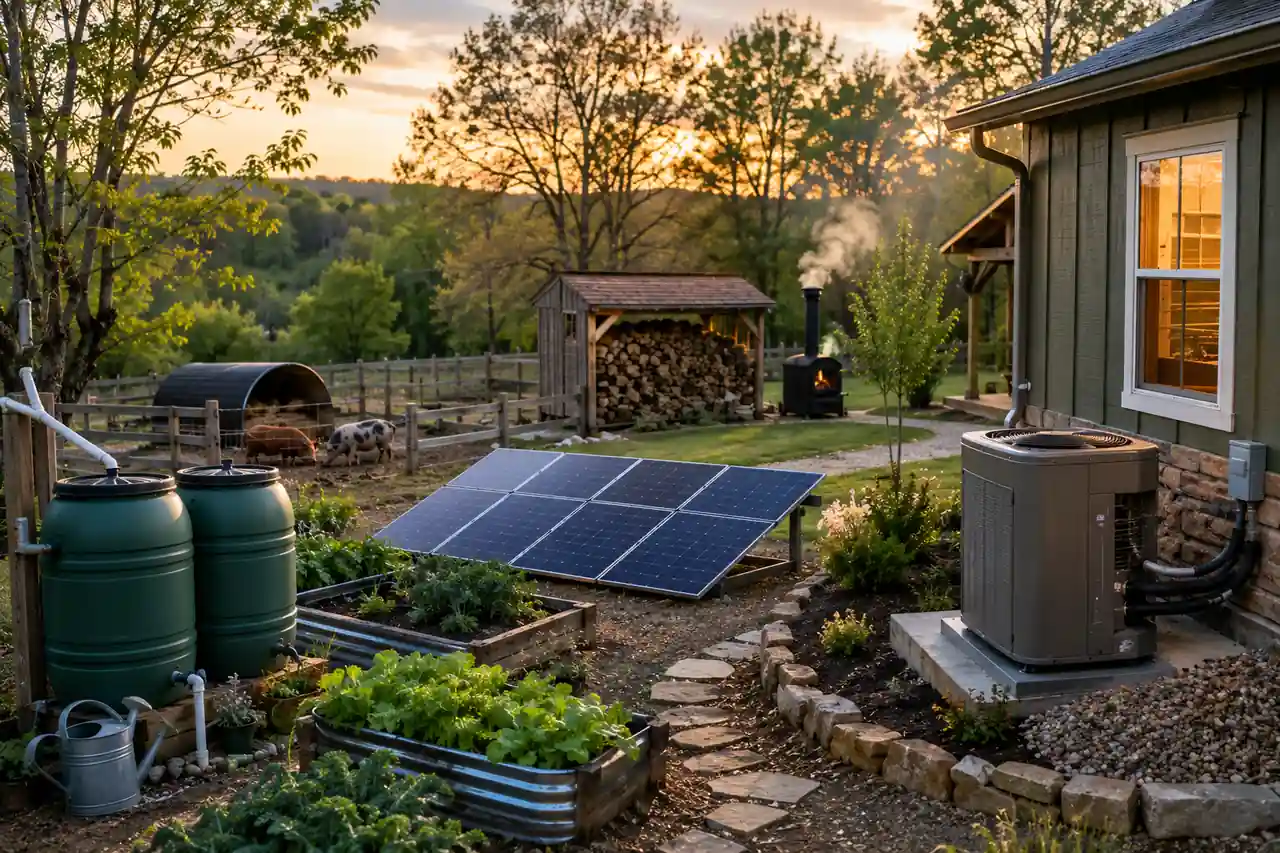
Off-grid-lite living is for people who want a more capable home without disappearing into the woods, building a bunker, and naming every battery bank like it is a family member. It is the practical middle ground: lower dependence, better backup systems, useful skills, and a household that can handle a power outage, water problem, winter storm, or tight month with more calm and less scrambling.
What Off-Grid-Lite Living Really Means
Going fully off-grid usually means a home is not connected to public utilities, or is designed to function independently from them most of the time. That can involve solar panels, batteries, wells, septic systems, wood heat, propane, water storage, alternative cooking, food preservation, livestock, gardens, and a lot of maintenance.
Off-grid-lite is different.
Off-grid-lite means you still may use regular utilities, grocery stores, internet, fuel, town water, or electric service, but you start adding backup systems and practical habits so the household is less fragile.
It might mean:
- a solar battery backup for essentials
- a generator for outages
- a well or backup water plan
- rain barrels for garden water
- wood heat or a secondary heat source
- geothermal heating and cooling for efficiency
- a stocked pantry
- freezer organization
- preserved food
- basic tools and repair supplies
- a way to cook if the power goes out
- livestock water plans
- better insulation and weatherization
- less waste
- more ability to handle daily disruptions
The point is not to win a purity contest. The point is to build a household that works better when conditions are not perfect.
BF Farm’s Honest Starting Point
BF Farm Kunekune Pigs is not fully off-grid. That is important to say plainly.
We have not “arrived” at some perfect independent homestead setup where every system runs on its own and nothing from town matters. Like a lot of working farms and homesteads, we are still connected to regular systems and still learning what makes sense to improve next.
But one meaningful step we do use is geothermal heating and cooling for our home. That fits the off-grid-lite mindset well because it is not flashy, but it is practical. Geothermal does not make a home independent by itself, and it still uses electricity, but it can make heating and cooling more efficient by using the steady temperature of the ground to help regulate the house.
That is the kind of step off-grid-lite living is built on: not dramatic, not performative, just useful.
Around a farm, the best systems are the ones that still make sense on ordinary chore days. If a system lowers stress, saves energy, improves comfort, protects food, keeps water available, or helps animals stay cared for during trouble, it belongs in the conversation.
Why Off-Grid-Lite Makes Sense for Modern Homesteads
Most people do not need to disconnect from everything. They need to reduce the number of things that can knock the household flat.
A power outage should not mean the freezers are immediately at risk. A dry spell should not mean the garden has no water plan. A winter storm should not leave the house with no heat options. A supply hiccup should not mean there is no food in the pantry. A broken water line should not leave animals without backup water.
Off-grid-lite living is really about resilience.
It asks:
- What happens if the power is out for a day?
- What happens if it is out for three days?
- Can we keep freezers cold?
- Can we water animals?
- Can we cook?
- Can we heat at least part of the house?
- Can we cool or ventilate safely in hot weather?
- Can we flush, wash hands, and clean basic things?
- Can we preserve food if the garden produces heavily?
- Can we avoid panic-buying every time weather turns ugly?
These are not extreme questions. They are practical household questions.
The “Lite” Part Matters
The word “lite” matters because full independence can get expensive, complicated, and unrealistic fast.
A full off-grid solar system with enough batteries to run a modern home can cost a lot. A well needs drilling, testing, pumps, maintenance, and backup power. Wood heat needs safe installation, dry wood, chimney cleaning, and physical labor. Rainwater systems need legal awareness, filtration decisions, mosquito control, and safe use boundaries. Food storage needs rotation. Livestock needs daily care whether the power is on or not.
Off-grid-lite lets you build in layers.
You do not have to do everything at once.
A household can start with:
- better pantry storage
- flashlights and rechargeable batteries
- a freezer thermometer
- a small power station
- water storage
- a rain barrel for garden use
- weather sealing
- basic cooking backup
- a generator plan
- a freezer inventory
- preserved food
- a firewood stack
- a better livestock water setup
Then, over time, bigger systems can be added if they make sense.
Start With the Most Likely Problems
Before buying equipment, identify the disruptions that are most likely where you live.
A good off-grid-lite plan in Missouri may look different from one in Arizona, Maine, Florida, or Montana. Weather, water, soil, grid reliability, fuel access, local rules, and household needs all matter.
Common issues to plan for include:
- power outages
- ice storms
- high heat
- winter cold
- heavy rain
- dry spells
- well pump problems
- frozen pipes
- spoiled freezer food
- internet outages
- fuel shortages
- grocery price spikes
- road closures
- livestock water problems
- medical or mobility limits in the household
A practical plan starts with likely problems, not dramatic movie scenes.
If your power flickers several times a year, backup power matters. If summer heat is hard on animals, shade and water matter. If winter storms make roads rough, pantry and heat matter. If your garden dries out every July, rain barrels and mulch may be more useful than another gadget.
Solar Backup: Start With Essentials
Solar power can mean many things. It might be a full roof-mounted system tied to the grid. It might be panels charging a battery bank. It might be a portable solar generator used during outages. It might be a small panel keeping a fence charger or water system going.
For off-grid-lite living, the first question is not, “Can we power everything?”
The better question is, “What are the essentials?”
Essential loads might include:
- refrigerator
- freezer
- well pump
- lights
- phone charging
- medical devices
- internet router
- fans
- small appliances
- livestock water equipment
- electric fencing
- sump pump
- security lights
Not all of those can be powered by a small system. That is why planning matters.
A small solar backup may handle phones, lights, a router, and a fan. A larger battery system may help with refrigeration or freezers. A full solar-plus-battery setup may support more of the home. Each step costs more and requires more planning.
Solar Backup Is Not Just Panels
People often think solar starts and ends with panels. The panels collect energy, but the whole system matters.
A solar backup setup may include:
- solar panels
- charge controller
- battery or power station
- inverter
- wiring
- transfer switch if connecting to home circuits
- mounting hardware
- fuses or breakers
- weather protection
- load planning
- safe installation
A portable power station can be a good starting point because it is simpler than wiring a whole-house system. It can charge phones, run small devices, power a router, operate lights, or help with small essentials depending on capacity.
But small systems have limits. A freezer, well pump, space heater, or large appliance can drain batteries quickly or require more starting power than expected.
Do not assume. Read wattage labels, learn surge loads, and size the system realistically.
Generator Backup Still Has a Place
Solar is useful, but generators still have a role in off-grid-lite living. A generator can run heavier loads, recharge batteries, power tools, or help during long cloudy outages.
Generator planning should include:
- fuel type
- fuel storage
- safe outdoor operation
- carbon monoxide safety
- proper extension cords
- transfer switch if feeding home circuits
- maintenance schedule
- oil changes
- test runs
- noise considerations
- security
- load limits
Never run a generator inside a house, basement, garage, porch, barn, or enclosed area. Carbon monoxide is dangerous and can kill quickly. Generators need proper outdoor placement away from windows, doors, and vents.
A generator is not a “buy it and forget it” item. It needs maintenance, fuel rotation, and occasional testing. The worst time to discover stale fuel or a dead generator is during a storm.
Battery Backup for Freezers
For farms and homesteads, freezer protection is a big deal.
A freezer may hold garden produce, meat, broth, freezer meals, home-raised pork, poultry, berries, and months of work. Losing that food during an outage can be expensive and discouraging.
A freezer backup plan may include:
- freezer thermometer
- alarm thermometer
- keeping freezers full or using water jugs to fill space
- organizing food by age
- having a generator plan
- knowing freezer run time
- minimizing door opening
- battery backup for shorter outages
- backup cooking or canning plan for longer emergencies
- insurance awareness if applicable
A full freezer stays cold longer than a half-empty freezer. Keeping frozen water jugs in empty space can help. During outages, avoid opening the freezer unless necessary.
For BF Farm-style food planning, this matters. When families raise or buy meat in bulk, freezer organization is not just a convenience. It protects the value of the animal, the money spent, and the work that went into getting that food home.
Wells: Independence With Responsibilities
A well can be a major self-reliance step, but it also comes with responsibilities.
A household well may provide independence from municipal water, but it still needs:
- drilling or installation
- pump system
- pressure tank
- electricity
- water testing
- maintenance
- protection from contamination
- freeze protection
- backup power plan
- knowledge of local regulations
A well does not help much during a power outage if the pump cannot run. That is why well owners often need generator capacity, solar-battery planning, hand pump options, water storage, or other backup systems.
For livestock owners, well planning becomes even more important. Animals need water every day. Pigs, chickens, goats, cattle, horses, dogs, and working animals cannot wait for the grid to come back on.
A practical water plan asks:
- How much water does the household need each day?
- How much do the animals need?
- Can we pump water during an outage?
- Do we have stored water?
- Can water lines freeze?
- Do we have hoses, tanks, buckets, and fittings ready?
- Is the water tested and safe for its intended use?
Water Storage: The Overlooked Backup
Water storage is often less exciting than solar panels, but it may matter more in the first 24 hours of a problem.
Stored water can support:
- drinking
- cooking
- hand washing
- animal care
- toilet flushing
- cleaning
- garden rescue
- emergency cooling
Households should think in categories. Drinking water needs food-safe storage and rotation. Animal water needs quantity. Garden water needs access and timing. Cleaning water can be stored differently than drinking water.
A simple water plan might include:
- bottled or stored drinking water
- larger containers for household backup
- rain barrels for garden use
- stock tanks or troughs for animals
- buckets and lids
- hoses and repair fittings
- a way to move water when needed
Water is heavy. A gallon weighs more than eight pounds. Store it where weight, freezing, heat, and leaks will not become problems.
Rain Barrels: Useful, But Know the Limits
Rain barrels are a good off-grid-lite tool for gardens, landscaping, and non-potable outdoor use. They collect rainwater from roofs and store it for later.
Rain barrels can help:
- water gardens
- reduce dependence on hoses
- provide backup water for plants
- slow runoff
- support container gardens
- teach water awareness
But rain barrels have limits.
They need:
- legal permission where required
- proper downspout connection
- overflow control
- mosquito protection
- secure lids
- stable bases
- winter care
- cleaning
- safe use boundaries
Rain barrel water should generally be treated as non-drinking water unless it has been properly collected, filtered, treated, and tested through a safe system designed for potable use. Roof runoff can contain dirt, bird droppings, roofing materials, chemicals, and other contaminants.
For most households, rain barrel water is best for gardens, trees, flowers, and outdoor chores, not drinking.
Garden Water Planning
A garden is only as strong as its water plan.
Off-grid-lite garden watering may include:
- rain barrels
- mulch
- drip irrigation
- soaker hoses
- watering early in the morning
- drought-tolerant crops
- shade cloth
- compost-rich soil
- wider spacing for airflow
- water storage near the garden
- hand watering for priority crops
Mulch is one of the cheapest water tools. Straw, leaves, grass clippings from untreated lawns, compost, or other suitable mulch can reduce evaporation, protect soil, and help plants handle hot days better.
A garden that needs constant rescue watering may need better soil, better mulch, better crop choices, or a smaller footprint. Bigger is not always better if the water plan cannot support it.
Wood Heat: Comfort, Backup, and Work
Wood heat is one of the oldest backup systems around, and it still has value. A good wood stove can heat a home, reduce reliance on electric heat, and provide comfort during winter outages.
But wood heat is serious business.
It requires:
- safe stove installation
- proper clearances
- chimney or flue maintenance
- dry seasoned firewood
- carbon monoxide detectors
- smoke detectors
- ash handling
- fireproof storage tools
- knowledge of draft and burn control
- regular cleaning
- safe children-and-pet rules
Wood heat is not just “free heat.” Even if the wood comes from your property, it costs time, labor, tools, storage space, and maintenance. Cutting, splitting, stacking, hauling, and feeding a stove are real chores.
A wood stove can be a wonderful off-grid-lite tool, but only when installed and used safely.
Firewood Planning
Good firewood starts long before cold weather.
A firewood system needs:
- a safe wood source
- cutting tools
- splitting tools
- stacking space
- airflow
- cover from rain
- time to season
- kindling
- indoor storage for daily use
- a backup plan if wood runs short
Wet wood burns poorly, creates more smoke, reduces heat, and can contribute to creosote buildup. Dry, seasoned wood is safer and more efficient.
Firewood should be stacked where air can move around it. Cover the top if needed, but do not seal the whole stack so tightly that it cannot dry.
The best time to plan winter heat is not during the first cold snap. It is months ahead.
Geothermal Heating and Cooling: BF Farm’s Practical Step
Geothermal heating and cooling is one of those systems that does not always get the attention solar panels do, but it can be very practical.
A geothermal system uses the relatively steady temperature underground to help heat and cool a home. Instead of fighting outdoor air temperature as directly as a conventional system, geothermal uses ground loops or water-source systems to exchange heat more efficiently.
For BF Farm, geothermal is part of our real-world off-grid-lite story. We are not fully off-grid, but we do use geothermal to heat and cool our home. That matters because it lowers the strain of everyday comfort and fits the kind of gradual self-reliance many homesteads can actually build.
Geothermal still needs electricity. It is not a stand-alone magic answer. But paired with good insulation, thoughtful home design, backup power planning, and efficient habits, it can be part of a more resilient home.
Why Efficiency Comes Before Independence
One of the most overlooked off-grid-lite lessons is this: the less energy your home wastes, the easier it is to back up.
Before spending big money on power systems, look for waste.
Efficiency improvements may include:
- sealing air leaks
- adding insulation
- weatherstripping doors
- improving attic ventilation
- using efficient appliances
- maintaining HVAC systems
- using LED lighting
- adding curtains or shades
- managing sun exposure
- reducing phantom loads
- using ceiling fans wisely
- keeping filters clean
A poorly insulated house needs a larger heating system, larger cooling system, larger generator, larger solar system, and larger budget. A tighter, more efficient house is easier to keep comfortable and easier to support during outages.
Geothermal fits this idea well because it improves the efficiency of a major home system. It is not as dramatic as a survival pantry or a shiny solar array, but comfort and efficiency matter every day.
Cooling Matters Too
People often talk about backup heat, but cooling can be just as important.
Hot weather can be dangerous for people and animals. A power outage during summer may mean no air conditioning, no fans, no well pump, and increased stress on livestock.
Off-grid-lite cooling strategies may include:
- shade trees
- porch shade
- window coverings
- reflective curtains
- cross ventilation
- ceiling fans
- battery fans
- screened windows
- attic ventilation
- light-colored roofing where practical
- geothermal cooling
- backup power for fans or limited cooling
- cool water access
- shaded livestock areas
For animals, cooling plans may include shade, wallows for pigs where appropriate, ventilation, clean water, frozen bottles for small animals, misters in some setups, and moving chores to cooler parts of the day.
A good homestead plan thinks about July as seriously as January.
Cooking When the Power Goes Out
A household can have pantry food and still struggle if there is no way to cook.
Off-grid-lite cooking options may include:
- propane camp stove
- grill
- wood stove cooking if appropriate
- rocket stove
- solar oven
- outdoor fire pit where safe and legal
- gas range if it can be safely lit and ventilated
- generator-powered appliances
- thermal cooker
- insulated food storage
- no-cook pantry meals
Safety matters. Outdoor cooking tools belong outdoors. Charcoal, propane camp stoves, and grills should not be used inside because of carbon monoxide risk and fire danger.
A practical outage menu might include:
- soup from canned broth and vegetables
- beans and rice
- canned meat with potatoes
- oatmeal
- eggs if refrigeration is stable
- peanut butter sandwiches
- canned fruit
- shelf-stable milk
- pasta with canned sauce
- freezer food cooked early if power will be out long
Cooking backup does not have to be fancy. It has to be safe and realistic.
Food Storage: The Quiet Backbone
Off-grid-lite living depends heavily on food storage.
A practical pantry may include:
- rice
- oats
- flour
- cornmeal
- beans
- pasta
- salt
- sugar
- oil
- vinegar
- canned tomatoes
- broth
- canned fruit
- canned vegetables
- peanut butter
- coffee or tea
- spices
- baking powder
- yeast
- shelf-stable milk
- home-canned foods
- dehydrated herbs
- freezer meals
The pantry should match actual meals. A shelf full of random emergency food does not help much if nobody eats it or knows how to cook it.
For farms, food storage also includes animal feed. Feed should be protected from moisture, rodents, insects, and waste. A feed shortage or ruined feed bin can become urgent quickly when animals depend on you.
Livestock Preparedness
Homesteads with animals need a deeper plan than households without livestock.
Animals need care even when the power is out, the road is icy, or town is closed.
A livestock off-grid-lite plan may include:
- backup water
- backup feed
- secure feed storage
- generator plan for well pumps
- winter bedding
- shade and summer cooling
- emergency fencing supplies
- extra gates or panels
- first-aid basics
- contact information for veterinary help
- safe lighting for chores
- mud management
- hay storage if applicable
- trailer access if needed
For Kunekune pigs, practical planning includes secure fencing, fresh water, shelter, appropriate feed, shade, pasture management, and daily observation. They may be manageable pigs compared with some larger hogs, but they are still livestock. Their care has to work in real weather and on busy days.
Off-grid-lite living is not just about the house. It is about keeping the whole farm functioning.
Septic and Waste Systems
Many rural homes already use septic systems. That is a form of self-contained infrastructure, but it needs care.
A septic system requires:
- water awareness
- proper maintenance
- no flushing inappropriate items
- avoiding harsh misuse of drains
- protecting the drain field
- pumping when needed
- watching for warning signs
During power outages, some septic systems may still work by gravity, while others rely on pumps. Know your system before trouble happens.
Waste systems also include trash, compost, manure, and household waste. A more self-reliant household should know what can be composted, what needs disposal, what can be reused, and what attracts pests.
Tools and Repair Supplies
Off-grid-lite living gets easier when basic repairs do not require an emergency trip to town.
Useful supplies may include:
- flashlights
- headlamps
- rechargeable batteries
- extension cords rated for the job
- tarps
- rope
- duct tape
- zip ties
- hose repair fittings
- pipe insulation
- basic plumbing parts
- screws and nails
- hand tools
- battery tools
- work gloves
- buckets
- lighters or matches stored safely
- fire extinguisher
- smoke detectors
- carbon monoxide detectors
- first-aid supplies
For farm use, add:
- fence repair tools
- extra insulators
- wire
- posts
- gate hardware
- hose washers
- buckets
- stock tank parts
- heat lamp alternatives where possible
- animal-safe bedding
- feed scoops
- secure storage bins
Preparedness is often boring until it saves the day. Then boring looks brilliant.
Internet and Communication Backup
Modern homesteads often depend on internet for work, weather, maps, banking, farm inquiries, livestock research, and communication. Losing internet may not be life-threatening, but it can cause problems.
Off-grid-lite communication planning may include:
- charged phones
- battery banks
- car chargers
- backup internet option
- printed contact list
- weather radio
- local emergency alerts
- two-way radios for farm use
- written directions for important systems
A printed list matters because phones fail, batteries die, and internet may be down. Keep important numbers somewhere visible: utility company, neighbors, family, veterinary contacts, feed store, repair services, and emergency contacts.
Security Without Paranoia
Self-reliance does not need to become fear-based. But practical security matters.
A farm or rural home may need:
- good lighting
- locked fuel storage
- secured tools
- secure feed storage
- gates that close properly
- clear driveway access
- neighbor communication
- visible house numbers
- dogs where appropriate
- cameras if useful
- safe firearm practices if firearms are part of the household
- storm-ready doors and windows
The goal is not to live scared. The goal is to reduce easy problems.
Good neighbors are one of the best security systems. In rural life, people noticing what is normal and what is not can matter a lot.
Budgeting for Off-Grid-Lite Improvements
Self-reliance projects can become expensive. The smart way is to prioritize.
Before buying anything, rank projects by:
- safety
- likelihood of use
- household impact
- livestock impact
- cost
- maintenance
- skill required
- legal or permit needs
- whether it solves a real problem
High-value first steps often include:
- pantry organization
- water storage
- freezer thermometer
- backup lighting
- generator maintenance
- basic tool kit
- weather sealing
- smoke and carbon monoxide detectors
- garden water improvements
- livestock water backup
- food preservation supplies
Larger investments may include:
- geothermal
- solar panels
- battery backup
- well improvements
- wood stove
- root cellar
- bigger freezer
- pressure canner
- greenhouse
- rainwater system
- upgraded insulation
A good system should be used and maintained. If it sits unused, it is not resilience. It is expensive clutter.
A Step-by-Step Off-Grid-Lite Plan
A gradual plan keeps the household from getting overwhelmed.
Phase 1: Know what you have.
- list utilities
- identify outage risks
- check water source
- inspect pantry
- inventory freezers
- review heating and cooling systems
- list animal needs
- gather important contacts
Phase 2: Cover short outages.
- flashlights and headlamps
- charged battery banks
- drinking water
- easy meals
- freezer thermometer
- basic first aid
- fuel for generator if used
- safe cooking option
Phase 3: Strengthen food and water.
- pantry meals
- rain barrels for garden use
- water storage
- food preservation
- garden planning
- freezer organization
- livestock water backup
Phase 4: Add energy backup.
- portable power station
- generator setup
- transfer switch if appropriate
- solar battery system
- backup for well pump if needed
- battery fans
- freezer backup plan
Phase 5: Improve comfort systems.
- insulation
- weather sealing
- geothermal where feasible
- wood heat if safe and legal
- shade and ventilation
- efficient appliances
- cooling plan
Phase 6: Build farm resilience.
- feed storage
- fencing supplies
- water tanks
- shade structures
- livestock shelter improvements
- compost and manure systems
- emergency chore lighting
- backup transportation plans
You do not have to do all of this. Pick the phases that match your household.
What Not to Do
Off-grid-lite living can go sideways when people rush into expensive systems without daily habits.
Avoid:
- buying solar before knowing your electrical loads
- buying a generator without a safe operating plan
- storing fuel carelessly
- installing wood heat unsafely
- using rain barrel water as drinking water without proper treatment and testing
- assuming a well works during outages
- filling a pantry with food nobody eats
- letting freezers become unlabeled chaos
- keeping livestock without backup water
- starting too many systems at once
- ignoring permits, codes, insurance, and safety rules
- copying someone else’s setup without understanding your own needs
The goal is capability, not cosplay.
And yes, “full bunker goblin” may make a funny phrase, but the real win is a household that is calm, useful, and prepared without becoming consumed by fear.
The Mindset: Practical, Not Panicked
A good off-grid-lite household does not panic every time the forecast looks ugly. It checks the list.
Are flashlights charged? Is water available? Are animals set up? Are freezers organized? Is the generator ready? Is there fuel? Are phones charged? Is there easy food? Are gates secure? Is the wood dry? Are buckets handy?
That kind of calm comes from preparation.
On a working farm, this mindset shows up naturally. Chores teach you that little failures become big failures when ignored. A loose latch matters. A cracked hose matters. A low feed bin matters. A weak fence matters. A freezer without labels matters.
Off-grid-lite living is mostly paying attention before something breaks.
How This Fits BF Farm Kunekune Pigs
BF Farm’s connection to off-grid-lite living is practical and honest.
We are not claiming to be fully off-grid. We are not pretending every system is finished. But we do understand the value of gradual self-reliance because livestock and farm life expose weak spots quickly.
When you care for Kunekune pigs, chickens, gardens, food storage, and a household, you start seeing how connected everything is. Water matters. Shade matters. Heat matters. Feed storage matters. Freezers matter. Fencing matters. The pantry matters. The home heating and cooling system matters.
Geothermal heating and cooling is one example of a step that fits our real situation. It supports the household every day and reflects the kind of steady improvement that makes more sense than chasing every trend.
For families interested in Kunekune breeder stock, meat production, or a more self-sufficient homestead, this mindset matters. The animal is only one part of the system. The farm around that animal has to function too.
Final Thoughts
Off-grid-lite living is not about disappearing from society or building the most extreme setup possible. It is about making your home and farm less fragile one practical step at a time.
Start with likely problems. Add backup lighting. Store water. Protect the freezer. Plan for heat and cold. Grow some food. Preserve what you can. Consider rain barrels for garden use. Learn your well system if you have one. Use wood heat safely if it fits. Improve efficiency. Build a pantry around meals you actually eat. Think about solar backup in stages. Keep animals in the plan if animals depend on you.
And if geothermal, solar, wood heat, water storage, or better food systems are part of your future, build toward them honestly.
You do not have to go full bunker goblin to become more self-reliant. You just need useful systems, steady habits, and the willingness to improve the weak spots before they become emergencies.