FarmLife at BF Farm Kunekune Pigs
Other Pig Breeds Worth Mentioning — and Why BF Farm Raises Kunekunes
May 30, 2026 · Farm Life
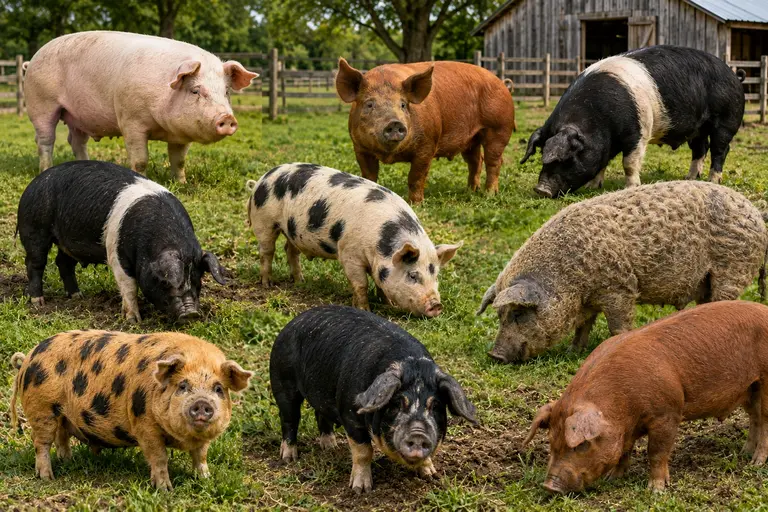
Before choosing a pig breed, it helps to decide what job that pig needs to do on your farm. Some breeds are built for fast pork production. Some are known for pasture ability. Some are large, powerful, and efficient in the right setup. Some are better suited to experienced hog owners. And then there are Kunekunes, which fill a very specific niche for small farms and homesteads that want manageable pigs, useful breeder stock, and a realistic path toward raising their own meat or building a small breeding program.
Why Talk About Other Pig Breeds at All?
BF Farm Kunekune Pigs raises Kunekunes on purpose, not because every other breed is wrong. That distinction matters.
There are many good pig breeds in the world. Some are excellent for commercial pork production. Some shine in wooded systems. Some are valued for heritage genetics, flavor, hardiness, litter size, mothering ability, growth rate, or carcass quality. The right breed depends on the farm, the fencing, the feed budget, the climate, the handler, the processing goals, and the amount of experience behind the daily chores.
A pig that works beautifully on one farm can be the wrong choice on another.
That is why breed conversations should not turn into a popularity contest. The better question is not, “Which pig is best?” The better question is, “Best for what?”
For BF Farm, the answer is clear: we raise Kunekunes for a specific niche — small farms and homesteads that want pigs with manageable size, good temperament, grazing ability, practical meat potential, and long-term usefulness as breeder stock.
The Job Comes Before the Breed
Pigs are not interchangeable. A feeder pig for fast meat production is not the same decision as a breeding gilt. A commercial-style hog is not the same management project as a small heritage pasture pig. A pet pig is not the same as a breeding boar. A pig for a wooded acreage may not be the same pig you want near a family garden and small pasture.
Before comparing breeds, ask what you actually need:
- Are you raising pigs for meat?
- Are you building a breeding herd?
- Do you want pigs suited to a small farm?
- Do you need a calmer temperament for family chores?
- How strong is your fencing?
- How much pasture do you have?
- What feed resources are available?
- Do you want fast growth or slower, smaller-scale production?
- Do you have a processor lined up?
- Can you handle full-size hogs safely?
- Are you prepared for breeding, farrowing, and piglet management?
- Are you choosing for cuteness, or for long-term usefulness?
That last question is a big one. Piglets can make almost any decision feel easy. Adult pigs, winter chores, feed bills, fencing pressure, breeding choices, and processing plans are where the real decision shows up.
Why BF Farm Focuses on Kunekunes
BF Farm Kunekune Pigs focuses on Kunekunes because they fit the kind of customers and homesteads we are trying to serve.
Our niche is not giant-scale pork production. It is not selling pigs as novelty pets. It is not chasing whatever breed is trendy this year.
Our niche is quality Kunekune breeder stock for people who want useful pigs for small farms, family homesteads, meat self-sufficiency, or responsible breeding programs.
Kunekunes make sense in that niche because they are generally smaller and more manageable than many full-size hog breeds. They are known for a more docile temperament, and they are often appreciated for grazing ability. They can fit well where people want pigs that are easier to handle, easier to observe, and better suited to a slower, more intentional homestead pace.
That does not mean Kunekunes require no work. They still need secure fencing, shelter, fresh water, proper nutrition, parasite management, social companionship, hoof and body-condition observation, breeding decisions, and daily care. But for many small farms, they are a more realistic pig to live with than a large, fast-growing hog breed.
Kunekunes Are a Niche Pig, Not a Universal Pig
Kunekunes are not the perfect pig for every situation.
They are not usually the breed someone chooses when the goal is the fastest possible pork production. They are not built like commercial confinement hogs. They mature more slowly. They can carry condition easily if overfed. Their smaller size and grazing nature are strengths for the right homestead, but they are not the answer to every pork-production goal.
That is exactly why BF Farm talks about fit.
A good Kunekune buyer should understand what the breed is good at and what it is not good at. If someone wants a pig that grows as fast as possible on a high-input meat program, a different breed may be a better fit. If someone wants a manageable pig for a small farm, a breeding pair with good temperament, or a slower-paced meat plan, Kunekunes deserve serious consideration.
The goal is not to sell every person a Kunekune. The goal is to help the right people choose the right pigs for the right reasons.
Commercial Meat Breeds: Fast, Efficient, and Larger-Scale
Some pig breeds and lines are commonly associated with commercial pork production. These pigs are often selected for growth rate, feed efficiency, carcass traits, litter size, and production performance.
Examples include:
- Yorkshire
- Landrace
- Duroc
- Hampshire
- commercial crossbred hogs
These pigs have an important place in pork production. They are not lesser pigs. They are simply bred and managed for a different type of system than most small homestead Kunekune setups.
For someone with strong facilities, experience, feed access, handling equipment, and a clear processing plan, commercial-style hogs can produce pork efficiently. They can grow quickly, reach large sizes, and fit structured meat-production systems.
But for a beginner homesteader with light fencing, small acreage, young children doing chores, limited handling experience, or a desire for long-term breeding stock with calmer daily management, these pigs may be more than they are ready for.
Big pigs are still pigs. They root, push, test fences, grow heavy, and can become difficult to manage without the right setup.
Yorkshire Pigs
Yorkshires are widely known as productive white pigs often used in commercial pork systems and crossbreeding programs. They are generally valued for maternal traits, litter performance, growth, and carcass usefulness.
For a farm focused on efficient pork production, Yorkshire genetics can make sense. They are often part of systems where productivity and consistency matter.
For a small homestead, the consideration is size and management. Yorkshires are not usually chosen because they stay small or because they are easy pasture pets. They are serious hogs that need serious fencing, feed, facilities, and handling expectations.
A Yorkshire may be a good pig in the right system. It is simply not the same niche as a Kunekune.
Landrace Pigs
Landrace pigs are another breed commonly associated with commercial production and maternal performance. They are often recognized by their long bodies and large, drooping ears.
Landrace genetics may be valued for mothering ability, litter size, and pork-production systems. In crossbreeding, they can contribute traits that matter to larger or more production-focused operations.
For a small farm or homestead, the same caution applies: these are full-size hogs. They require strong management and are not automatically the easiest choice for a family wanting a smaller, slower-paced pig.
They can be excellent for experienced operations. They are not the breed BF Farm focuses on because our goal is not high-volume commercial-style production.
Duroc Pigs
Durocs are red pigs often valued for growth, hardiness, and meat quality. They are frequently used in pork production and crossbreeding. Many people like Durocs because they have a reputation for practical growth and good carcass traits.
Durocs can be useful meat pigs in the right hands. They can also become large and strong, which matters when planning fencing, gates, shelters, loading, and daily handling.
A Duroc may make sense for a producer who wants a more traditional meat-hog path and has the setup to manage full-size pigs. But for the small farm that wants a more manageable pig with a grazing-oriented niche, Kunekunes usually fit the BF Farm customer better.
Hampshire Pigs
Hampshires are often recognized by their black bodies with a white belt around the shoulders and front legs. They are commonly associated with lean meat, muscling, and production usefulness.
They can be impressive pigs, and they have a real place in pork-production discussions. But again, they are not small homestead pigs in the same way Kunekunes are.
A Hampshire-type pig may fit a meat-production plan where size, growth, and carcass traits are the priority. It may not fit a family looking for pigs that are easier to manage on a smaller property or a breeding herd that feels realistic for a beginner homestead.
Berkshire Pigs
Berkshires are a heritage breed well known for pork quality. Many people who research flavorful pork come across Berkshires quickly. They are black pigs with white points and a long-standing reputation for meat quality.
Berkshires can be a strong choice for farms focused on high-quality pork, specialty meat markets, or heritage-breed production. They are worth mentioning because they often appeal to homesteaders who care about flavor and tradition.
But they are larger pigs than Kunekunes and require the infrastructure that comes with larger hogs. A Berkshire breeding program is a different commitment than a Kunekune breeding program.
For someone with the right setup and goals, Berkshires can make sense. For someone wanting smaller, more manageable breeder stock for a small farm, Kunekunes may be more practical.
Tamworth Pigs
Tamworth pigs are red heritage pigs often associated with foraging ability, active behavior, and outdoor systems. They are sometimes called a bacon-type pig because of their body style and traditional use.
Tamworths are worth mentioning because they appeal to people interested in heritage breeds, pasture systems, and old-style pork production. They can be hardy, active, and useful in the right environment.
The same active nature that makes them interesting can also make them challenging. They may need more space, better fencing, and more experienced handling than a beginner expects.
For a farm with woods, pasture, strong fencing, and a desire for active heritage hogs, Tamworths may be worth studying. For a smaller homestead wanting calmer, more compact pigs, Kunekunes fit a different lane.
Gloucestershire Old Spots
Gloucestershire Old Spots are a heritage breed often recognized by their white bodies with black spots. They are sometimes associated with traditional orchards, outdoor systems, and docile temperaments.
They are a beautiful breed and worth knowing about, especially for people who enjoy heritage livestock history. They may fit farms looking for larger heritage hogs with a traditional feel.
But they are still larger pigs. That means more feed, stronger facilities, larger shelters, more space, and a more serious handling plan.
A small farm may enjoy Gloucestershire Old Spots if prepared for full-size heritage hogs. BF Farm’s Kunekune niche is different: smaller, more manageable, and especially appealing for homesteads that want breeder stock without stepping straight into large-hog management.
Hereford Pigs
Hereford pigs are red pigs with white faces and markings, somewhat resembling Hereford cattle in color pattern. They are a heritage-style breed often appreciated by people who like distinctive looks and traditional farm animals.
They may be used for meat and small-farm production, and they can interest homesteaders who want something different from standard commercial hogs.
But appearance should not drive the decision. A Hereford pig still needs proper fencing, feed, shelter, water, and handling. Breed charm does not replace management.
Compared with Kunekunes, Herefords are generally a different size and production type. They may fit some farms well, but they are not the same small-homestead niche BF Farm is serving.
Large Black Pigs
Large Black pigs are a heritage breed known for their black color and large, lop ears. They are often associated with outdoor systems and docility, and they have strong heritage-breed appeal.
They are worth mentioning because some homesteaders specifically seek out heritage breeds suited to pasture or outdoor conditions.
The name tells part of the story, though: they are large pigs. That does not make them bad. It simply means the farm needs to be prepared for large-hog realities.
A Large Black may be a good fit for someone with space, infrastructure, and interest in larger heritage pigs. A Kunekune is usually more attractive to someone who wants a smaller pig that fits more comfortably into a compact homestead system.
Mangalitsa Pigs
Mangalitsas are famous for their curly coats and rich, fatty pork. They are a lard-type heritage breed that attracts attention because they look so different from most pigs.
They are worth mentioning because people often discover them while researching specialty pork, heritage breeds, or unique homestead animals.
Mangalitsas can produce very distinctive pork, but they are not a quick or low-input shortcut. They can be slower-growing and may need careful feeding, space, and management. Their value depends on the farm’s goals and market.
For someone focused on specialty pork and prepared for the management, they may be interesting. For someone wanting manageable small-farm breeder stock with a calmer homestead rhythm, Kunekunes may be a better fit.
American Guinea Hogs
American Guinea Hogs are often mentioned in the same small-farm conversations as Kunekunes because they are also smaller heritage pigs compared with many commercial breeds. They can appeal to homesteaders looking for manageable pigs, lard-type pork, and heritage livestock.
They are worth serious mention because they occupy a closer niche to Kunekunes than many large commercial breeds do.
The comparison comes down to goals, availability, temperament, body type, growth expectations, grazing behavior, breeding goals, and personal preference. Both breeds can interest small farms. Both still require real pig care. Neither should be treated as a no-work backyard novelty.
For BF Farm, Kunekunes remain the chosen focus because they match our experience, our breeding goals, and the type of homestead customer we serve.
Idaho Pasture Pigs
Idaho Pasture Pigs are another breed or composite often discussed by people interested in smaller pasture pork production. They were developed with pasture use and small-farm pork production in mind.
They are worth mentioning because many homesteaders compare them directly with Kunekunes when researching pigs that may be more manageable than full-size commercial hogs.
A person considering Idaho Pasture Pigs should research breeders carefully, ask about mature size, growth rate, temperament, feeding, registration or breed expectations, pasture needs, and processing goals. As with any breed, there can be variation from herd to herd.
Kunekunes and Idaho Pasture Pigs may both appeal to small farms, but they are not identical. BF Farm stays focused on Kunekunes because that is the breed we know, select for, and believe fits our specific niche.
Ossabaw Island Hogs
Ossabaw Island Hogs are a heritage breed with a unique history and strong conservation interest. They are often discussed by people interested in rare breeds, traditional genetics, and specialty meat.
They are not usually the first pig a beginner homestead should choose without careful research. They can be more specialized, and availability may be limited. Management, conservation context, and breeding responsibility matter.
They are worth mentioning because they remind us that pig breeds are not just production tools. Some carry history, adaptation, and genetic value that responsible breeders work hard to preserve.
For BF Farm’s customer base, Kunekunes tend to be a more approachable and practical fit.
Mulefoot Pigs
Mulefoot pigs are a rare heritage breed named for their distinctive solid hoof. They are often discussed in conservation and heritage-livestock circles.
Like Ossabaw hogs, they are worth knowing about because breed diversity matters. Rare breeds can hold important genetic history and agricultural value.
But rare does not automatically mean right for every farm. A rare breed may require more intentional breeding plans, careful sourcing, and a commitment to preservation beyond simple meat production.
Kunekunes, for BF Farm, offer a more direct fit for homesteaders who want practical breeder stock, manageable pigs, and a clear path into small-farm pig ownership.
Potbellied Pigs Are Different
Potbellied pigs deserve a separate mention because people sometimes confuse small pigs, pet pigs, and homestead pigs.
Potbellied pigs are not the same as Kunekunes. They are often kept as pets, and they have a very different role from meat or breeder-stock homestead pigs.
The problem is that “small pig” language can mislead people. Many pigs sold as tiny pets do not stay tiny. Pig ownership still requires fencing, shelter, diet management, hoof care, companionship, and long-term responsibility.
BF Farm does not position Kunekunes as novelty house pigs. Our focus is homestead usefulness, breeder-stock quality, meat self-sufficiency, and responsible outdoor pig management.
Why Size Matters
Size affects almost everything about pig ownership.
Larger pigs generally require:
- stronger fencing
- larger shelters
- more feed
- heavier gates
- more durable water systems
- more space
- more handling confidence
- stronger loading systems
- more careful planning around breeding and farrowing
- a clear processing plan
Smaller pigs are not automatically easy, but they can be more manageable for some families and homesteads.
Kunekunes are appealing because many small farms can realistically plan around them. Their size can make daily care less intimidating. Their temperament can make observation and handling more pleasant. Their grazing ability can fit well into a homestead where pasture, garden, orchard, and family life all overlap.
Still, manageable does not mean maintenance-free. Kunekunes deserve the same seriousness as any livestock.
Temperament Matters More Than People Think
Temperament is not just about whether a pig is friendly. It affects daily chores, breeding decisions, safety, stress, fencing pressure, and long-term herd quality.
A pig with good temperament is easier to observe, move, feed, and manage. A calmer sow may be easier to work around. A manageable boar is still a boar and must be respected, but temperament matters greatly in a breeding program.
BF Farm places real value on temperament because small farms often involve families, repeated daily contact, and closer spaces than large hog systems.
But temperament is not only breed. It is also:
- genetics
- handling
- environment
- social structure
- feed routine
- stress level
- age
- breeding status
- individual personality
A good breeder should pay attention to temperament over time, not just in a cute piglet pen.
Grazing Ability and Pasture Use
Kunekunes are often appreciated for grazing. This is one of the reasons they fit the small-farm niche so well.
A pig that can use pasture well may support a different homestead rhythm than a pig that relies almost entirely on higher-input feeding. That said, grazing ability does not eliminate the need for proper nutrition. Pasture quality changes with season, weather, stocking rate, soil, and plant growth.
Kunekunes still need:
- fresh water
- minerals as appropriate
- balanced feeding
- body-condition monitoring
- parasite management
- shelter
- shade
- secure fencing
- rotation planning
Pasture is not a magic feed bag. It is part of a whole management system.
Growth Rate and Meat Expectations
One honest difference between Kunekunes and many larger meat breeds is growth rate.
Kunekunes are generally slower and smaller than commercial-style hogs. That can be a drawback for someone who wants fast pork. It can be a benefit for someone who wants manageable pigs and a slower homestead pace.
Meat expectations should be realistic. A Kunekune meat plan is not the same as a commercial hog plan. Processing age, carcass size, fat cover, feeding, and use of cuts may all look different.
For many homesteaders, slower does not mean worse. It means the pig fits the system better. A slower-growing pig that a family can manage well may be more useful than a faster-growing pig that overwhelms their setup.
Breeder Stock Is a Different Decision Than Feeder Pigs
Buying breeder stock is not the same as buying feeder pigs.
Feeder pigs are usually raised for meat. Breeder stock is chosen for the future of a herd. That means the decision should include structure, health, temperament, genetics, body type, soundness, reproductive potential, and long-term suitability.
BF Farm focuses on quality Kunekune breeder stock because we want pigs that can serve a purpose beyond the first season. A breeding prospect should be evaluated with future herd goals in mind.
Important breeder-stock questions include:
- Is the pig structurally sound?
- Does the pig move well?
- Is the temperament suitable?
- Is the body type appropriate?
- Is the pig healthy and thriving?
- Does the breeder understand the bloodlines?
- Are the parents worth seeing or discussing?
- Is the pig suited to the buyer’s goals?
- Is the buyer prepared for breeding responsibilities?
- Is there a plan for piglets, culling, sales, and long-term herd management?
Breeding pigs should not be casual. Every breeding decision affects future animals and future buyers.
Why “Cute” Is Not Enough
Kunekune piglets are charming. So are many piglets from many breeds. Cuteness is not a breeding program.
A piglet can be adorable and still not be the right breeding prospect. A pig can be friendly and still not fit a farm’s goals. A buyer can fall in love with a color and overlook structure, temperament, maturity, or management needs.
This is why BF Farm tries to keep the conversation practical.
Color is nice. Personality matters. But long-term usefulness matters more.
The right pig should fit the farm’s purpose, not just the buyer’s first impression.
Fencing and Facilities Change the Breed Choice
Fencing is one of the most honest tests of whether a pig breed fits a farm.
Large, active, fast-growing pigs can put serious pressure on weak fencing. Smaller pigs can still test fences, especially if bored, hungry, stressed, or poorly contained. Boars, sows in heat, and animals separated from companions can all challenge a setup.
Before choosing a breed, think about:
- perimeter fencing
- electric fencing
- gates
- posts
- shelter placement
- water access
- shade
- mud management
- loading access
- farrowing areas
- quarantine space
- rotation areas
A pig breed should be chosen for the facilities you can actually build and maintain, not the facilities you wish you had.
Feed Costs and Breed Fit
Feed costs matter.
Fast-growing hogs may require a strong feed program to reach their potential. Heritage pigs may grow differently. Kunekunes may use pasture well, but still need proper nutrition. Smaller pigs may eat less overall than large commercial hogs, but the economics depend on growth rate, time to processing, pasture quality, breeding goals, and feed management.
A breed that looks cheaper at the start may not be cheaper over time. A pig that grows slowly may require more months of care. A pig that grows fast may need more feed and stronger facilities. A breeding herd requires year-round feeding, not just seasonal feeding.
The right question is not only, “What does this pig cost?” It is, “What does this pig require to do its job well?”
Climate and Land Matter
A pig breed should match the climate and land.
Some farms deal with heavy mud. Some deal with heat. Some deal with deep cold. Some have wooded lots. Some have open pasture. Some have clay. Some have rocky ground. Some have abundant shade. Some need to build every bit of shade from scratch.
Kunekunes can fit many small-farm setups, but they still need good management. Shade in summer, dry shelter in wet weather, wind protection in winter, and clean water are not optional.
Other breeds may need more space, more shade, stronger wallows, different shelter, or different feed strategies.
The land gets a vote. Good farmers listen to it.
Processing Plans Should Come Early
Anyone raising pigs for meat should think about processing before buying pigs.
That includes:
- local processor availability
- appointment timing
- transport
- expected hanging weight
- freezer space
- cut sheet decisions
- sausage options
- smoking or curing plans
- packaging
- cost
- home processing laws and skills where applicable
- humane handling
This is especially important for small farms because processor appointments can be limited. A pig can be ready before the calendar is.
Kunekunes may require different timing and expectations than larger hog breeds. That should be part of the plan from the beginning.
Which Breed Is Best for Beginners?
There is no single best pig breed for every beginner.
A beginner with strong fencing, a mentor, a processor, and a clear meat plan may do well with feeder pigs from a larger meat breed. A beginner with small acreage, family chores, and a desire for a manageable breeding pair may be better suited to Kunekunes. A beginner interested in heritage conservation may need a different level of research and commitment than someone who simply wants a few pigs for the freezer.
The best beginner breed is the one that fits the farm’s real limits. That includes the fence, the feed budget, the handler’s confidence, the land, the processing plan, and the household’s long-term goals.
For many small farms and homesteads, Kunekunes are appealing because they offer a more manageable path into pigs without stepping straight into large-hog systems. That is exactly where BF Farm’s niche sits.
Questions to Ask Before Choosing Any Pig Breed
Before buying any pig, ask practical questions.
- What is the mature size of this breed or line?
- How fast does it grow?
- What is its typical temperament?
- How much fencing does it require?
- What kind of feed program does it need?
- Does it fit pasture, dry lot, woods, or a mixed system?
- How much shelter does it need?
- How well does it handle local heat, cold, mud, and humidity?
- Is it mainly a meat pig, breeding pig, conservation breed, pet pig, or multipurpose pig?
- Are processors nearby familiar with pigs of this size?
- Do I have enough freezer space?
- Am I buying from a breeder who knows the animals well?
- Am I prepared for the adult pig, not just the piglet?
If those questions feel overwhelming, slow down. Pigs are not an impulse purchase. They are strong, intelligent livestock that deserve thoughtful planning.
What BF Farm Wants Buyers to Understand
BF Farm Kunekune Pigs wants buyers to understand the animal before they buy the animal.
That means talking honestly about strengths and limits. Kunekunes are wonderful pigs for the right small farm, but they still need real care. They can be manageable, but not neglected. They can fit homesteads well, but they still require fencing, water, shelter, feed, parasite management, and long-term planning.
We raise Kunekunes because they match our goals: practical breeder stock, useful homestead pigs, good temperament, and a breed that can help families move toward meat self-sufficiency or responsible small-scale breeding.
Other breeds deserve respect. Kunekunes deserve honest representation. Buyers deserve practical guidance.
Final Thoughts
There are many pig breeds worth mentioning, and many of them are excellent in the right situation. Yorkshires, Landrace, Durocs, Hampshires, Berkshires, Tamworths, Gloucestershire Old Spots, Herefords, Large Blacks, Mangalitsas, American Guinea Hogs, Idaho Pasture Pigs, Ossabaw Island Hogs, Mulefoots, and others all have histories, strengths, and farm systems where they may belong.
BF Farm raises Kunekunes because we are focused on a specific niche: small farms and homesteads that want manageable pigs, quality breeder stock, realistic meat potential, and a calmer path into pig ownership.
The right pig is not just the breed with the best reputation. It is the pig that fits your land, your goals, your experience, your facilities, and your willingness to care for it well.
Choose pigs for purpose, not just appearance. Choose breeder stock with the future in mind. And if your goal is a small-farm pig that fits homestead life without pushing you into full-size hog management, Kunekunes are worth a serious look.