FarmLife at BF Farm Kunekune Pigs
Piglets Learning Solid Food: How the Daily Routine Changes
May 26, 2026 · Farm Life
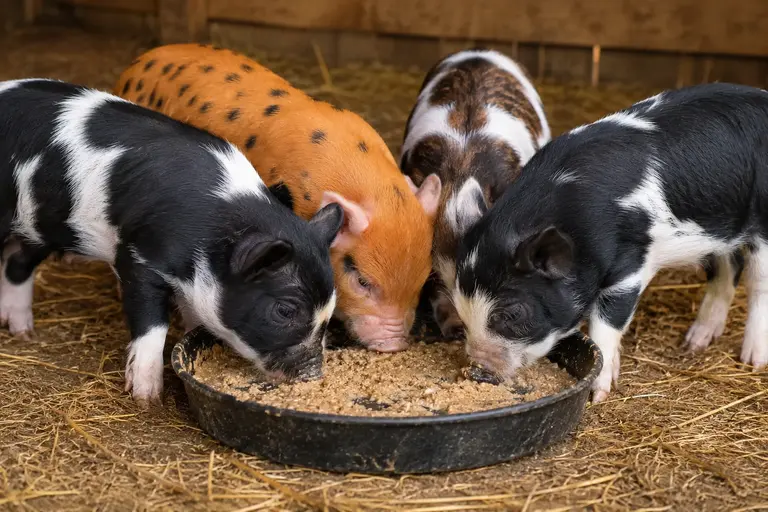
A month can change a lot in the barn. The piglets that were once tucked close to their moms all day are now curious, busy, and just old enough to start figuring out that food can come from more than one place.
That does not mean they are done needing their mothers. Far from it. At this age, the moms are still important, the secure barn space still matters, and the piglets are still learning one small thing at a time. But the daily routine begins to shift. Morning chores are no longer just about checking the moms and making sure everyone is settled. Now part of the job is giving the piglets a quiet chance to learn how to eat on their own.
The Barn Routine Changes as the Piglets Grow
When piglets are very young, the routine is mostly built around keeping the sow comfortable and making sure the litter is safe, warm, and tucked in where it needs to be. The first few weeks are a lot of watching, checking, and staying out of the way unless something needs attention.
By the time the piglets are around a month old, the rhythm changes.
They are stronger on their feet. They are more interested in what is happening around them. They are nosier, braver, and more willing to investigate anything that looks, smells, or sounds like it might be important. That is when feeding time starts to become part of their education.
Right now, my morning routine has adjusted around that stage.
Letting the Moms Take a Break
The moms and piglets are kept in a secure area in the barn. That gives the piglets a protected place to grow while still keeping the mothers close and settled.
In the morning, one of the first things I do is let the moms come out.
That gives them a break from the piglets for a little while. They can go eat with the other adults, stretch their legs, and have a few minutes where nobody is climbing on them, bumping them, or trying to nurse. Any mother with a litter deserves that kind of pause.
It also changes the energy in the piglet area.
When the moms are right there, the piglets naturally focus on them. That is what piglets are supposed to do. But when the moms step out for a short break, the piglets have a chance to look around and pay attention to something else. That little window is when I go back in and feed the piglets.
Giving the Piglets Their Own Feeding Time
The goal is not to rush the piglets. It is to teach them.
At this stage, they are learning that the feed pan is worth investigating. Some figure it out quickly. Some need more time. Some are bold enough to step right in and act like they have known about solid food forever. Others sniff, circle, taste a little, back up, and then come back when they decide it was their idea.
That is normal barn comedy.
The main thing is giving them a calm chance to explore feed without the moms immediately taking over. Adult pigs are efficient eaters. If the moms are standing right there, the piglets do not get the same opportunity to nose around, taste, and learn at their own speed.
So the routine becomes a little more choreographed: moms out, piglets settled, feed offered, and then time to watch who is figuring it out.
Why I Use Fermented Feed for This Stage
For the piglets, I use a fermented feed that I keep on hand.
Part of the reason is that it is softer and easier for them to work with as they are learning. They are not jumping straight into hard, dry feed and being expected to know what to do. The fermented feed has a texture and smell that encourages them to investigate it, and I like that it gives them a gentler start as they begin practicing with solid food.
This is not about making a big complicated system out of it. It is simply one of those farm routines that fits the stage the piglets are in right now.
They are curious. They are learning. Their mouths, habits, and confidence are all still developing. A softer feed gives them something they can nose into, taste, and come back to without needing to be pushed.
Learning to Eat Is a Process
Watching piglets learn to eat is a reminder that growth does not happen all at once.
One morning, a piglet may barely pay attention to the feed. The next morning, that same piglet may have its whole face in the pan like it has been doing this for years. Another may watch the bold ones first and then decide to try it after the crowd thins out.
There is usually some mess involved. Piglets are not tidy students. They step where they should not step, push each other around, wear some feed on their noses, and occasionally act surprised that the thing they were standing in was also the thing they were supposed to eat.
But that is part of the learning.
The point of this routine is not perfection. The point is repetition. Every morning, they get another chance to understand that feed is part of the day.
The Moms Still Matter
Even though the piglets are learning solid food, the moms are still a major part of their world.
This is not a hard separation or a sudden change. It is more like adding a new lesson into the morning. The piglets still have their mothers. They still have the comfort of the barn space. They still go back into the familiar rhythm of being with the sow.
But those short feeding windows help the piglets begin to build independence.
The moms get a break. The piglets get a chance to learn. The whole group keeps moving gradually toward the next stage instead of being forced into it all at once.
That kind of gradual change is a big part of working with animals. You pay attention to where they are today, not just where they will need to be later.
What I Watch During Piglet Feeding
During these morning feedings, I am not just dumping feed and walking away.
I am watching.
I watch which piglets come forward first. I watch who hangs back. I watch who is actually eating and who is mostly wearing breakfast. I notice whether they are curious, confident, sleepy, pushy, or unsure.
Those little observations help shape the next morning's routine.
Sometimes the main job is simply patience. Sometimes it is making sure the smaller or quieter piglets get room to investigate. Sometimes it is adjusting how the feed is offered so the piglets can get to it more easily.
Farm chores often look simple from the outside, but there is a lot of quiet decision-making built into them.
A New Stage in the Litter
The month-old stage is one of my favorite transitions because the piglets are becoming more themselves every day.
They are still babies, but they are not newborns anymore. Their personalities are easier to see. Their curiosity is stronger. Their little habits start to show up. You can see who is bold, who is thoughtful, who is dramatic, and who believes the best place to stand is directly in the middle of whatever you are trying to do.
This is also the stage where the barn routine starts to feel more active.
The early days are about close watching and letting the sow do her job. Now the routine includes more teaching, more feed practice, and more planning ahead. The piglets are preparing for the next step, even if they do not know that is what they are doing.
How the Morning Feels Different Now
Morning chores take a little more thought now.
Before, the main question was whether the moms and piglets were settled and comfortable. Now I am thinking about timing. I am thinking about letting the moms out long enough to eat and relax. I am thinking about when to offer feed to the piglets so they can focus. I am thinking about who is learning and who needs more time.
That is how farm routines change. Not always in big dramatic ways, but in small adjustments that match the animals in front of you.
The pigs grow, so the routine grows with them.
Why This Is Farm Life, Not Just Piglet Care
There are plenty of direct care topics that belong in a knowledge base article: when piglets start eating, what to feed, how to manage weaning, how to set up a creep area, and what to watch for as they grow.
This is a little different.
This is the daily-life side of it. It is the actual morning routine: opening the barn, letting the moms out, giving them time with the adults, going back to the piglets, putting down fermented feed, and watching them learn one small step at a time.
That is the part people do not always see from the outside. Raising pigs is not only made up of big milestones. It is made up of small daily adjustments that follow the animals as they grow.
Final Thoughts
Right now, the piglets are about a month old, and the morning routine has changed with them.
The moms still stay with them in a secure barn area, but each morning the mothers get to come out, take a break, and eat with the other adults. While the moms are out, the piglets get their own quiet feeding time with fermented feed so they can begin learning how solid food works.
It is a simple routine, but it says a lot about this stage.
The piglets are growing. The moms get a little breathing room. The barn chores take on a new rhythm. And every morning, those little pigs get one more chance to learn that the world is bigger than nursing, bedding, and following mom around.
That is farm life: noticing when the animals are ready for the next small step, then changing the routine to meet them there.