FarmLife at BF Farm Kunekune Pigs
Precision Livestock Tech: Better Animal Care One Animal at a Time
May 31, 2026 · Farm Life
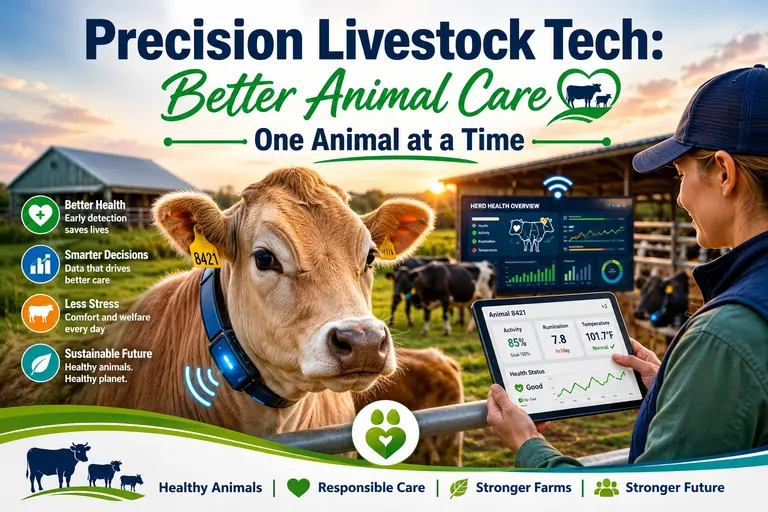
Good livestock care has always started with paying attention. A farmer who notices who came to feed slowly, who is standing off by themselves, who is losing condition, who is acting just a little different, or who did not come up to water already has one of the most important tools in husbandry: observation. Precision livestock technology does not replace that kind of stockmanship. Done right, it helps sharpen it.
The big change happening in livestock husbandry is not simply that farms can collect more information. The useful shift is that farmers can track individual animals more clearly. Instead of only asking, “How is the herd doing?” or “How is the group performing?” a producer can begin asking, “How is this animal doing today compared to yesterday, last week, or the rest of the group?”
That is where sensors, cameras, RFID tags, smart scales, automated feeding systems, and behavior-monitoring tools are gaining attention. The best tools are not flashy gadgets for the sake of technology. They are practical helpers that make it easier to catch small changes before they turn into larger problems.
From Herd Averages to Individual Animals
Traditional livestock management often leans on averages. Average weight gain. Average feed intake. Average production. Average birth weights. Average weaning weights. Average days to market. Those numbers matter, but they can also hide the animals that are struggling quietly in the middle of an otherwise decent group.
Averages can make a herd look steady while one animal is falling behind. A group may be gaining well overall while a few individuals are losing condition. A pen may appear calm during chores while one animal is eating less at night, getting pushed away from feed, or spending more time lying down than usual.
Precision livestock tools help bring those smaller changes to the surface. They can make patterns easier to see, especially on busy days when chores, weather, repairs, family life, and everything else on the farm are competing for attention.
Examples of individual-animal tracking include:
- RFID tags that identify each animal individually.
- Smart scales that record weights automatically.
- Cameras that monitor movement, posture, activity, or feed-area behavior.
- Sensors that track feeding, drinking, temperature, rumination, or location.
- Automated feeding systems that record which animal ate and how much.
- Software that flags unusual behavior patterns or sudden changes.
The goal is not to farm from a screen. The goal is to notice what matters sooner and make better decisions when an animal starts telling you something is off.
Why Individual Tracking Matters
Every herd has leaders, followers, easy keepers, hard keepers, calm animals, pushy animals, and animals that change behavior when weather, feed, breeding, or health pressure shifts. A good farmer learns those personalities over time, but technology can help keep the records from living only in memory.
Individual tracking is useful because livestock problems rarely start as big dramatic events. Many problems begin as small changes:
- An animal eats less for two days.
- A young animal stops gaining at the same pace.
- A sow or cow changes her movement pattern before farrowing or calving.
- A goat, sheep, pig, or calf starts spending more time away from the group.
- A bird, lamb, or piglet gets pushed away from feed by stronger animals.
- An animal drinks more or less than normal.
By the time a person sees the problem clearly, it may have been building for several days. That is the promise of precision livestock technology: not perfect answers, but earlier clues.
RFID: The Digital Name Tag
RFID stands for radio-frequency identification. In simple terms, it gives each animal a digital identity that can be scanned or read by equipment. Many producers already use visual ear tags, tattoos, notches, names, or written records. RFID adds a more reliable way to connect one animal to its record history.
RFID can be helpful for:
- Breeding records.
- Health notes and treatment dates.
- Vaccination and deworming records.
- Weight tracking.
- Sale and transfer records.
- Movement between pens or pastures.
- Farrowing, kidding, lambing, or calving notes.
- Feed trials and growth comparisons.
A visual tag tells you who the animal is when you are standing in front of it. RFID can connect that animal to years of information. That matters when selecting breeding stock, deciding which animals to retain, comparing litters or offspring, or sorting animals for a specific purpose.
For a small farm, RFID may not need to be complicated. Even a basic RFID reader paired with simple records can help reduce mistakes. The biggest benefit is consistency. The right record belongs to the right animal.
Smart Scales and Real Growth Data
Weight is one of the clearest ways to understand whether an animal is thriving, but many farms do not weigh often enough because it takes time, equipment, handling, and patience. Guessing by eye has its place, but it can fool even experienced people. Hair, frame, posture, pregnancy, fill, and breed type can all affect how an animal looks.
Smart scales and digital records make weight tracking more useful because they show patterns over time. One weight gives a snapshot. A series of weights tells a story.
Good weight records can help show:
- Which animals are growing steadily.
- Which animals have slowed down.
- Whether a feed change helped or hurt.
- Whether young animals are developing as expected.
- Whether a breeding animal is holding condition.
- Whether an animal needs closer observation.
- Whether certain bloodlines or pairings are performing better under your conditions.
For farms that raise animals for meat, growth records can also help with timing. For farms that keep breeding stock, weight and condition records can help identify animals that stay productive without needing constant extra support.
That does not mean every farm needs a high-end scale system. A basic scale, consistent dates, and honest records can still be powerful. The technology is only as useful as the habit behind it.
Cameras as Chore-Time Backup
Cameras are no longer just for security. In livestock husbandry, they can help watch barns, pens, shelters, feeding areas, water points, and birthing spaces when the farmer cannot be standing there.
For small farms, a simple camera can be useful during:
- Farrowing, lambing, kidding, or calving season.
- Cold nights when young animals need extra watching.
- Hot weather when heat stress is a concern.
- Introducing new animals.
- Monitoring animals after treatment.
- Watching feed-area behavior and bullying.
- Checking shelters during storms without disturbing the animals.
On larger farms, camera systems are being paired with artificial intelligence to help detect lameness, abnormal posture, reduced movement, crowding, heat stress behavior, or changes in activity. Those systems are still developing, but the direction is clear: cameras are becoming observation tools, not just recording devices.
Still, a camera is not the same as walking the pen. It cannot smell a problem, feel body condition, check hydration, hear breathing up close, notice every fence issue, or replace hands-on care. It can, however, give a farmer another set of eyes when timing matters.
Behavior Monitoring and Early Warning Signs
Animals often show subtle changes before they look clearly sick. They may move less, eat less, drink differently, isolate themselves, change posture, stop competing at the feeder, or spend more time lying down. These early changes can be easy to miss, especially when the animal is still upright and still blending in with the group.
Behavior-monitoring tools are designed to catch those changes earlier. Depending on the species and system, they may track:
- Activity level.
- Steps or movement patterns.
- Time spent lying down.
- Feeding visits.
- Drinking visits.
- Rumination or chewing activity in ruminants.
- Temperature changes.
- Location within a barn, pen, or pasture.
These clues can help farmers decide when to take a closer look. A drop in feed intake might point to illness, pain, stress, bullying, feed quality problems, or an environmental issue. The technology may raise the flag, but the farmer still has to read the situation.
Automated Feeding and Precision Nutrition
Feed is one of the biggest costs in livestock production, and feeding mistakes can show up in health, growth, reproduction, fertility, body condition, waste, and overall performance. Precision feeding is gaining attention because it helps match feed more closely to what animals actually need.
Different animals do not all need the same ration at the same time. A growing animal, a mature maintenance animal, a lactating mother, a breeding male, a finishing animal, and a recovering animal all have different needs. Even within the same group, animals may eat differently or compete differently.
Automated feeding systems may track:
- How much an animal eats.
- How often an animal visits the feeder.
- When feed intake drops.
- Which animals are being pushed away.
- How feed intake compares to weight gain.
- Whether a ration change is improving performance.
For small farms, precision feeding may be much simpler. It might mean keeping better feed notes, weighing feed more consistently, separating animals by life stage, using body condition scores, or tracking which animals need extra support. The technology can be advanced, but the principle is old-fashioned: feed the animal in front of you.
Water Monitoring Is Part of the Picture
Water is easy to overlook until there is a problem. A frozen line, dirty trough, stuck nipple, empty tank, broken float, or bullied animal can affect health quickly. Water intake can also be an early clue that something is changing.
Some livestock systems now use sensors to monitor water flow, tank levels, or drinking behavior. That can help catch problems before animals go too long without water. On small farms, even simple float checks, trough cameras, heated water monitoring, or daily water notes can make a difference.
Good husbandry still means physically checking water. Technology can help alert you, but it should not become an excuse to stop looking.
Heat Stress, Shelter, and Environmental Sensors
Weather has always shaped livestock care. Heat, humidity, cold, wind, mud, ice, and poor ventilation can all change animal behavior and performance. Environmental sensors are becoming more common because they help farmers understand the conditions animals are actually living in.
Useful environmental monitoring may include:
- Temperature sensors.
- Humidity sensors.
- Ventilation monitoring.
- Ammonia or air-quality monitoring in enclosed spaces.
- Water temperature checks.
- Shade and shelter temperature comparison.
Heat stress is a major concern across many livestock species. Animals may reduce feed intake, spend more time lying down, pant, crowd water sources, seek shade, or become less productive. Environmental monitoring can help a farmer adjust shade, airflow, water access, bedding, stocking density, or chore timing before animals are in real trouble.
Recordkeeping: The Quiet Technology That Matters Most
Not every precision livestock tool has to be expensive. One of the most valuable technologies on a farm is good recordkeeping. A fancy sensor system is not much help if records are messy, ignored, or impossible to understand. A simple spreadsheet, notebook, app, or farm-management program can be extremely useful when it is used consistently.
Good records help answer practical questions:
- Which animals stay healthy with the least intervention?
- Which mothers raise strong young?
- Which animals grow well on the farm's feed and forage?
- Which animals need repeated treatment?
- Which breeding pairs produce the kind of offspring the farm wants?
- Which management changes actually improved results?
For farms selling breeding stock, records matter even more. Buyers need honest information. A farmer needs to know more than an animal's appearance on sale day. Structure, temperament, growth, health history, mothering ability, fertility, manageability, and long-term usefulness all matter when selecting animals for a real breeding program.
What Precision Tech Can Do Well
Precision livestock technology is strongest when it helps with repeatable, measurable, easy-to-miss details. It can be especially helpful for spotting patterns that humans may overlook during routine chores.
Good uses include:
- Tracking growth over time.
- Reducing recordkeeping errors.
- Identifying animals that need closer attention.
- Comparing feed programs.
- Watching birthing areas without constant disturbance.
- Improving breeding and retention decisions.
- Helping new workers identify animals correctly.
- Finding small changes before they become obvious problems.
These are practical benefits. They support the kind of daily care that good farms already try to provide.
What Precision Tech Cannot Do
Technology has limits. It can make a farmer more informed, but it cannot make decisions by itself. It can show a change, but it cannot always explain the cause. It can flag an animal, but it cannot understand the whole farm context.
Precision tools cannot replace:
- Walking through animals.
- Checking body condition by eye and hand.
- Knowing normal behavior for your herd.
- Understanding weather and seasonal pressure.
- Maintaining fences, feeders, shelters, and water systems.
- Making responsible breeding and culling decisions.
- Calling a veterinarian when professional care is needed.
A data alert is not a diagnosis. A camera clip is not a full health exam. A scale reading is not the whole story. Good stockmanship still matters most.
Questions to Ask Before Buying Livestock Technology
Before investing in sensors, cameras, RFID systems, automated feeders, or farm software, it helps to be honest about the problem you are trying to solve. Technology should make a farm clearer, not more confusing.
Useful questions include:
- What problem will this tool solve?
- Will it save time, improve care, or reduce mistakes?
- Will I actually use the information it collects?
- Is the system practical in mud, dust, weather, and daily chores?
- Can it work with my current records?
- Does it require reliable internet or power?
- How hard is it to train family members or workers to use it?
- What happens if the system fails?
- Does the cost make sense for the size and purpose of my herd?
The right tool earns its place. It should help the farm make better decisions, not create another chore that produces data nobody reads.
Small-Farm Ways to Start
A farm does not need to jump straight into advanced artificial intelligence or expensive automated systems. Small steps can still improve husbandry.
Practical starting points include:
- Use a digital recordkeeping system or well-organized spreadsheet.
- Start weighing animals on a consistent schedule.
- Add RFID to breeding animals or sale animals first.
- Install a camera in the farrowing, kidding, lambing, or calving area.
- Track feed use by group and life stage.
- Keep notes on behavior changes, not just treatments.
- Use temperature monitoring in barns, shelters, or brood areas.
- Photograph animals regularly to compare condition and growth.
These steps may sound basic, but they build the foundation for better decisions. Advanced tools work best when the farm already has a habit of observing, recording, and reviewing information.
How This Fits Responsible Breeding
Precision livestock technology also has a place in responsible breeding. Breeding decisions should never be based on cuteness, convenience, or one good photo. Productive breeding stock should be evaluated over time.
For farms raising Kunekune pigs or other breeding animals, better records can support better choices. Growth, structure, temperament, mothering ability, health history, litter performance, feed efficiency, and manageability all matter. When those details are tracked consistently, a breeder can make decisions with more than memory and first impressions.
That matters for families and homesteads that want animals for a real purpose, whether they are building a responsible breeding program, raising their own meat, improving a herd, or choosing animals that fit a long-term plan. Good records support honest conversations with buyers and better stewardship of the animals.
Early Illness Detection May Be the Biggest Opportunity
One of the most valuable promises of precision livestock technology is early illness detection. Livestock are often good at hiding weakness. In a herd or flock, showing weakness can make an animal vulnerable, so subtle signs may come before obvious ones.
An early warning might be:
- Lower feed intake.
- Less movement.
- More time lying down.
- A change in drinking.
- Slower weight gain.
- Standing apart from the group.
- Different posture.
- Reduced activity during normal feeding times.
When a farmer catches those signs earlier, there is a better chance to separate the animal, check temperature, look for injury, review feed and water, reduce stress, contact a veterinarian if needed, and prevent a small problem from spreading or worsening.
That is not just about production. It is about animal welfare. Earlier attention can reduce suffering and improve outcomes.
Data Should Lead Back to the Barn
The best livestock data sends a farmer back to the animals with better questions. If a scale shows slow gain, walk the pen. If a camera shows bullying, adjust the feeder setup. If a sensor shows lower water use, check the water system. If an animal's behavior changes, look at the whole picture.
Good data should lead to action:
- Check the animal.
- Check the group.
- Check feed and water.
- Check shelter and footing.
- Check weather stress.
- Check social pressure and competition.
- Check whether the management plan still fits.
Technology is most useful when it strengthens the loop between observation, records, decisions, and hands-on care.
The Practical Takeaway
Precision livestock technology is not about turning farming into a computer job. It is about making animal care more accurate. The most useful trend is individual-animal tracking: knowing how each animal is eating, growing, moving, behaving, and changing over time.
That kind of information can help farmers catch illness sooner, improve feeding, reduce waste, make better breeding decisions, and provide more responsible care. It can help a small farm just as much as a large operation when the tool fits the farm's real needs.
The future of livestock husbandry will still depend on practical farmers who know their animals. Sensors, cameras, RFID, smart scales, and automated systems are only tools. The heart of good husbandry is still the same: pay attention, keep learning, respond early, and care for each animal like the details matter.