FarmLife at BF Farm Kunekune Pigs
Selecting the Right Tractor for Your Homestead
May 13, 2026 · Farm Life
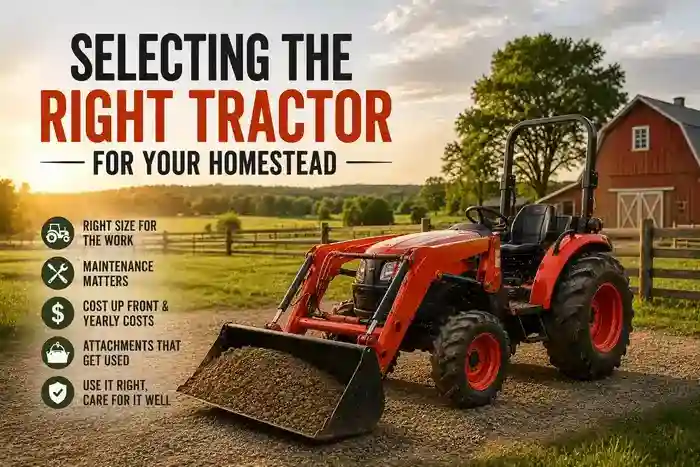
A tractor can be one of the most useful tools on a homestead, but it can also become one of the most expensive mistakes if you buy the wrong size, ignore maintenance, or expect it to do work it was never built to handle. The right tractor is not always the biggest one, the shiniest one, or the most famous brand on the lot. The right tractor is the one that fits your land, your chores, your budget, and your willingness to maintain it.
When I was looking at tractors for BF Farm Kunekune Pigs, Kubota was one of the obvious brands to consider, but it was not the only option. There are plenty of tractor manufacturers out there, and the best choice is not always the most familiar name. After comparing size, price, dealer support, and what I actually needed, I decided not to buy a Kubota. I went with a KIOTI tractor because it was the right size for our farm and came in at a much lower price than the bigger-name option.
That choice made sense for us, but it also came with lessons. A tractor is not just a purchase. It is a machine you have to care for, maintain, repair, and use with common sense.
Start With the Work, Not the Brand
The first mistake people make when shopping for a homestead tractor is starting with the brand instead of the work.
Before comparing paint colors, dealerships, horsepower, or financing, make a real list of what the tractor needs to do.
On a small farm or homestead, tractor jobs may include:
- Moving hay
- Cleaning manure or bedding
- Grading driveways
- Moving gravel, dirt, compost, or mulch
- Lifting and carrying materials
- Mowing pastures
- Pulling small implements
- Maintaining fence lines
- Clearing brush
- Moving logs or storm debris
- Helping with drainage or mud problems
- Handling odd jobs that seem to appear out of nowhere
Those jobs do not all require the same tractor. A machine that is fine for mowing may not be heavy enough for serious loader work. A tractor that can lift what you need may be too big for tight spaces around barns, pens, gates, or wooded areas.
The work should decide the tractor.
Bigger Is Not Always Better
It is easy to think a bigger tractor is automatically better. Sometimes it is. More weight, more horsepower, more lift capacity, and more stability can be useful.
But bigger tractors also cost more, take more room, use more fuel, need more storage space, and can be harder to maneuver. On a small homestead, a tractor that is too large can be frustrating around gates, barns, animal areas, and tight lanes.
A smaller tractor can be easier to use, but it has limits. If you overwork it, overload it, or ask it to do jobs outside its size class, you can damage the machine or create a safety problem.
The sweet spot is finding the smallest tractor that can safely and reliably do the work you actually need.
Why I Chose KIOTI Instead of Kubota
There are a lot of tractor manufacturers out there, and many of them make good machines. Kubota, John Deere, Mahindra, New Holland, Massey Ferguson, KIOTI, and others all have models that may fit different farms, budgets, and types of work. For us, the choice came down to what made the most sense for BF Farm Kunekune Pigs at the time: the right size, the right capability, dealer support, and a price that left room in the budget for the rest of the farm.
Kubota was tempting because it is a known brand with a long-standing reputation. For many people, Kubota may be the right choice. Dealer support, resale value, parts availability, and brand confidence all matter.
But price matters too.
For BF Farm Kunekune Pigs, the KIOTI tractor offered the size and capability I needed at a lower cost. That mattered because a homestead budget never has just one need. There are fences to build, animals to feed, shelters to maintain, gravel to move, equipment to repair, and a long list of projects waiting their turn.
Buying the bigger-name tractor would have used more money up front. I chose the tractor that fit the job and the budget better at the time.
That does not mean cheaper is always better. It means the value has to make sense for your farm.
Do Not Ignore Dealer Support
Price is important, but dealer support should be part of the decision.
Before buying any tractor, ask:
- Where is the nearest dealer?
- Can they service the tractor?
- Are parts easy to get?
- How long do repairs usually take?
- Do they pick up and deliver for service?
- Are there independent mechanics nearby who know the brand?
- Is warranty service realistic for your location?
A lower purchase price can lose some of its shine if parts are hard to find or service is inconvenient. A tractor that sits broken during the season you need it most is not saving you much.
A good dealer, a good mechanic, and good parts access matter more than people realize when they are standing on the lot looking at a clean machine.
Maintenance Costs Can Surprise You
One thing homestead owners should understand before buying a tractor is that yearly maintenance can be expensive.
Even when nothing major is broken, tractors need care. Depending on the machine and how much you use it, maintenance may include:
- Engine oil and filter changes
- Hydraulic fluid service
- Fuel filters
- Air filters
- Greasing fittings
- Coolant checks
- Tire pressure checks
- Battery care
- Belt inspections
- Loader pin and bushing checks
- Transmission or hydrostatic service
- General inspection for leaks, wear, and loose parts
Fluids and filters are not free. Service labor is not cheap. Skipping maintenance can cost even more.
A tractor is like any other farm tool: it will either be maintained on purpose or repaired under pressure. The second option usually costs more.
Most Tractor Problems Start Small
I have had several issues with my tractor, and to be fair, many of them were self-inflicted. That is probably true on a lot of farms. Tractors get asked to do hard things, and sometimes the operator is the problem.
Common self-inflicted tractor problems include:
- Lifting too much with the loader
- Pushing into piles too aggressively
- Using the wrong attachment for the job
- Forgetting to grease moving parts
- Ignoring fluid levels
- Running over hidden debris
- Working on slopes carelessly
- Pulling from the wrong point
- Letting mud, dust, or chaff build up
- Waiting too long to fix a small problem
A tractor is strong, but it is not indestructible. It will put up with a lot until it does not.
Loader Work Is Where People Get Into Trouble
A front-end loader may be the most-used attachment on a homestead tractor. Once you have one, you will wonder how you ever moved anything without it.
But loader work can also be hard on a tractor.
The loader tempts people to lift too much, drive too fast, carry weight too high, or use the bucket like a bulldozer. That can stress the machine and create safety risks.
A few loader habits help:
- Keep heavy loads low while moving
- Use proper ballast
- Avoid sudden turns with weight in the bucket
- Do not exceed lift capacity
- Watch for soft ground and slopes
- Grease loader pins regularly
- Use the right attachment when possible
- Do not ram piles like the tractor is a dozer
A loader is useful because it gives a small farm leverage. That same leverage can break things if you get careless.
Attachments Matter as Much as the Tractor
A tractor by itself is only part of the setup. Attachments are what turn it into a useful farm tool.
Common homestead tractor attachments include:
- Front-end loader
- Pallet forks
- Box blade
- Brush hog or rotary cutter
- Finish mower
- Rear blade
- Post-hole digger
- Grapple
- Carry-all
- Landscape rake
- Ballast box
The right attachment can save hours. The wrong attachment can make a simple job frustrating or unsafe.
When choosing a tractor, think about the attachments you will actually use. Make sure the tractor has enough hydraulic capacity, lift ability, horsepower, and weight for those tools.
Do not buy a tractor in isolation. Buy a tractor system.
Weight, Stability, and Ballast
Horsepower gets attention, but tractor weight matters.
A tractor that is too light can struggle with loader work, traction, and stability. This is especially important when moving hay, gravel, logs, manure, or dirt.
Ballast also matters. If you lift weight with the front loader, the back of the tractor needs enough counterweight. That may come from loaded tires, wheel weights, a ballast box, or a heavy rear implement.
Without ballast, a tractor can become unstable fast.
That is not just hard on the machine. It is dangerous.
Hydrostatic or Gear Drive?
Many homestead owners prefer hydrostatic tractors because they are easy to operate, especially for loader work, mowing, and back-and-forth chores. Gear-drive tractors can be strong and efficient, but they may take more attention depending on the job and operator experience.
For many small-farm users, ease of use matters. A tractor that is simple and comfortable to operate is more likely to be used safely and consistently.
The best choice depends on your work, your comfort level, and the kind of jobs you do most.
New or Used Tractor?
Used tractors can be a good value, but they come with risk. A used machine may have hidden wear, poor maintenance history, hydraulic problems, clutch issues, electrical problems, leaks, or attachment damage.
New tractors cost more but may come with warranty coverage, dealer support, financing, and a cleaner maintenance starting point.
Before buying used, check:
- Hours
- Maintenance records
- Leaks
- Tire condition
- Loader wear
- Hydraulic function
- PTO operation
- 3-point hitch operation
- Cold start behavior
- Transmission or hydrostatic response
- Evidence of abuse or rollover damage
A used tractor can save money. A bad used tractor can eat money.
Match the Tractor to the Land
A homestead tractor has to fit the land.
Think about:
- Acreage
- Slopes
- Mud
- Soil type
- Woods
- Gate widths
- Barn access
- Driveway length
- Pasture mowing needs
- Snow or ice if applicable
- Storage space
- Trailer access
A tractor that works beautifully on open ground may be annoying in tight wooded areas. A compact tractor that fits everywhere may not lift enough for bigger chores.
Walk your property before buying. Picture the tractor doing real jobs in real places, not just sitting clean at the dealership.
Do Not Overabuse the Machine
This is the lesson that comes with experience.
A tractor can make a person feel like they can do anything. Push harder. Lift more. Pull more. Dig more. Go faster. Get one more job done before dark.
That is when things break.
A homestead tractor is there to help you work smarter, not to replace judgment. If a job feels like too much for the machine, it probably is. If the tractor is straining, slipping, overheating, lifting unevenly, or making a new noise, stop and figure out why.
Repairs cost more than patience.
A Simple Tractor Buying Checklist
Before buying a homestead tractor, ask:
- What jobs will I use it for every week?
- What jobs will I use it for only once in a while?
- How much loader capacity do I need?
- What attachments will I actually own?
- Do I have enough tractor weight for the work?
- Is there good dealer support nearby?
- Can I afford yearly maintenance?
- Can I store it under cover?
- Will it fit through my gates and work areas?
- Am I buying enough tractor, or too much tractor?
- Am I choosing based on the farm, or just the brand?
That last question is worth sitting with.
What I Would Tell Another Homesteader
After using a tractor on a working farm, my advice is simple: buy carefully, maintain it seriously, and do not let the machine talk you into doing foolish things.
A tractor saves labor, but it also creates responsibility. Grease it. Check fluids. Watch the tires. Learn the sounds it normally makes. Pay attention when something changes. Use ballast. Respect slopes. Do not lift more than the tractor is designed to lift. Do not abuse the loader because you are tired and want one more job done.
The tractor is there to help the farm run better. It cannot do that if it is broken, unsafe, or neglected.
Final Thoughts
Selecting the right tractor for a homestead is a balance between size, cost, capability, support, and maintenance.
Kubota may be the right answer for some farms. A KIOTI tractor was the better fit for mine because it gave me the size I needed at a lower cost. But any tractor, no matter the brand, has to be maintained and respected.
Take care of the machine. Keep up with fluids, filters, grease, inspections, and repairs. Do not overload it just because it seems strong. Do not ignore small problems until they become expensive ones. And do not buy more tractor than your land, budget, or experience can handle.
A good tractor can change what is possible on a homestead. The right one saves labor, improves efficiency, and helps one person do work that would otherwise take several. But it only stays useful if you choose carefully and care for it well.