FarmLife at BF Farm Kunekune Pigs
The Pitfalls of Not Properly Planning for Placement of a Barn
May 13, 2026 · Farm Life
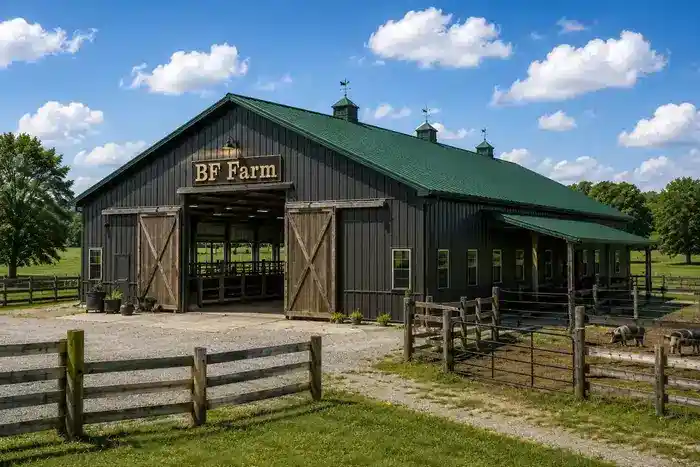
When we bought our farm back in 2016, the place did not come with a barn. Like a lot of new farm owners, we had to figure out where one should go, what made sense with the land, and how the barn would fit into the daily work of the farm. At the time, we thought we had picked a reasonable place.
Looking back, I did not fully realize that the spot we chose was sitting more in a low area than it appeared. It was not something that jumped out immediately. But once the barn was built and the Missouri rainy season showed up, the problem became obvious. In April and May especially, water had a way of finding that low spot.
That one decision taught us a lesson the hard way: barn placement is not just about convenience. It is about elevation, drainage, shade, airflow, weather, livestock safety, and how the building will perform on the worst days, not just the dry ones.
A Barn Changes How Water Moves
Before a barn is built, a piece of ground may look harmless. Grass covers the slope. Water may drain quietly during normal rains. A low spot may not seem like a problem because there is no structure there yet.
Then the barn goes up.
The roof catches water. Foot traffic increases. Equipment moves through. Animals gather. Soil gets compacted. Gutters, downspouts, driveways, gates, and pathways all change how water behaves. Suddenly, the same spot that looked fine during planning can become a place where water collects.
That is what happened to us.
The barn was useful, but the placement made rainy seasons harder than they needed to be. The problem was not just rain. It was rain plus low elevation plus daily farm use.
Missouri Rain Can Expose Bad Planning Fast
In Missouri, April and May can bring enough rain to test every weak spot on a farm. A barn that looks good in dry weather may show its flaws during spring storms.
Water does not care where you wanted it to go. It follows gravity.
If the barn is in a low area, water can pool around doors, runs, gates, stalls, or animal areas. Mud builds up. Chores get harder. Bedding gets damp. Moving feed, equipment, and animals becomes more frustrating. Areas that should be safe and usable can turn into sloppy, inconvenient messes.
The lesson is simple: plan for the wettest season before you build, not after.
Build Higher Than the Surrounding Ground
If I had to give one piece of advice to someone planning a new barn, it would be this:
Put the barn on higher ground than the surrounding area.
That does not mean it has to sit on a hilltop, but it should not be in a pocket where water naturally collects. Ideally, the barn pad should be raised, crowned, and sloped so water moves away from the building.
A good barn site should allow water to drain away from:
- Doorways
- Animal pens
- Feed storage areas
- Walkways
- Equipment entrances
- Piglet or birthing areas
- Gates and high-traffic spots
Dry ground is easier to manage. Wet ground makes everything harder.
Walk the Land During Rain Before You Build
Dry-weather planning can fool you. A place can look level, open, and convenient until heavy rain shows you the truth.
Before building a barn, watch the land during and after a rainstorm.
Look for:
- Where water naturally runs
- Where puddles stay longest
- Where soil gets soft
- Where runoff crosses paths or gates
- Where water from higher ground drains
- Where roof runoff would go
- Where animals and equipment will travel
- Whether the site dries quickly or stays damp
A few hours spent watching water can save years of frustration.
If we had paid closer attention to how that particular spot behaved in wet weather, we may have made a different decision.
Drainage Should Be Planned Before Construction
Drainage is much easier to build into a project than to fix later.
Once the barn is standing, solutions become more complicated. You may need gravel, grading, drains, gutters, downspout extensions, French drains, swales, or other water-control work. Those things can help, but they often cost more and take more effort after the fact.
Before building, think about:
- Raising the barn pad
- Sloping the ground away from the barn
- Installing gutters
- Directing downspouts away from animal areas
- Adding gravel in high-traffic spots
- Keeping water away from feed and bedding
- Planning dry access for equipment
- Building drainage routes before mud becomes a problem
A barn should make chores easier. Poor drainage can make the barn itself part of the chore list.
Shade Matters More Than We Realized
One other thing we overlooked was shade, especially with a metal barn.
We built our barn in an open field. That made sense in some ways because the area was open, accessible, and easy to build on. But once summer heat arrived, we realized how hot a metal roof and metal building can get when it sits in full sun all day.
The roof absorbed heat, the inside of the barn warmed up, and the building did not have the natural relief that trees can provide. We installed fans, and they helped. Air movement makes a difference, especially when animals are inside and the weather is hot and still.
But if I had to do it again, I would think much harder about shade before choosing the barn site.
A barn does not have to be hidden in the woods, and trees can bring their own concerns, such as falling limbs, roots, leaves in gutters, and access issues. But some shade nearby, especially during the hottest part of the day, can make a big difference in how the building feels and how well animals handle summer weather.
Metal Barns Need Airflow
A metal barn can be practical, durable, and useful, but it needs good airflow. Without it, the building can hold heat and feel uncomfortable during hot weather.
Fans helped us, but fans were a fix after the fact. Better planning would have included more thought about:
- Where the sun hits the barn during the day
- Whether nearby trees could provide afternoon shade
- How air moves through the site
- Door and window placement
- Ventilation near the roofline
- Whether fans would be needed from the beginning
- How animals would stay comfortable during summer heat
- Whether the barn would be used for vulnerable animals during hot weather
A barn is not just a roof. It becomes part of the animal environment. If it traps heat, holds moisture, or lacks airflow, the animals feel it and the chores get harder.
Barn Placement Affects Animal Care
Barn placement is not just a construction decision. It becomes an animal-care decision.
If the barn area stays wet, animals can be harder to keep clean and comfortable. Bedding may need to be changed more often. Mud can build up around gates and entrances. Feed and equipment storage can become more difficult. Routine chores take longer because every trip through the barn area becomes a fight with wet ground.
If the barn sits in full sun with poor airflow, hot weather becomes another problem. Fans may help, but it is better to plan shade and ventilation before the building is finished.
That matters even more when animals are young or vulnerable.
For us, raising Kunekune pigs made the barn setup especially important. Piglets need careful attention, and the weather does not always cooperate. Even in spring, cold snaps can still show up. A barn that is damp, chilly, overheated, or difficult to manage adds stress right when young animals need the most protection.
Think About Heat Before You Need It
If I had to redo our barn planning, I would also think harder about heat.
Kunekune piglets can be vulnerable to cold, especially when they are young. Even in early spring, and sometimes as far into May, temperatures can drop enough that extra warmth becomes important. We have used heat lamps during those periods, but heat lamps come with their own concerns and have to be handled carefully.
Looking back, I would seriously consider some kind of safer, planned heating system in the barn for the times when piglets are most vulnerable.
That does not mean every barn needs full heat all winter. But if your barn will be used for farrowing, young animals, bottle babies, sick animals, or other vulnerable livestock, heat should be part of the planning conversation before the building is finished.
Heat Lamps Are Useful, But They Need Respect
Heat lamps can help, but they are not something to treat casually.
They need to be secured properly, kept away from bedding and flammable materials, protected from animals knocking them down, and checked often. A heat lamp should never be hanging by wishful thinking.
If you plan to use heat lamps, think through:
- Secure mounting
- Proper height
- Distance from bedding
- Protection from curious animals
- Electrical safety
- Backup plans if a bulb burns out
- Whether a safer heating option would be better
Cold-weather animal care should not depend on a last-minute setup if you can plan better ahead of time.
Plan for Both Cold and Heat
One of the tricky parts of barn planning is that the building has to work in more than one season.
In spring, we may be thinking about cold rain, damp bedding, young piglets, and whether extra warmth is needed. By summer, the same barn may be dealing with full sun, a hot metal roof, still air, and animals trying to stay cool.
That means the best barn site should be judged for both problems:
- Will it stay dry during heavy rain?
- Will water drain away from the doors and animal areas?
- Will it get any shade during hot weather?
- Will the building have good airflow?
- Will fans be easy to install if needed?
- Will there be safe options for warming young animals?
- Will the barn still be usable during the worst weather of the year?
A barn that only works on mild days is not planned well enough.
A Better Barn Plan Starts With Questions
Before placing a barn, ask practical questions:
- Is this spot higher than the surrounding area?
- Where does water go during heavy rain?
- Will roof runoff create a problem?
- Can equipment reach the barn in wet weather?
- Will gates and walkways stay usable?
- Where will animals enter and exit?
- Where will feed, bedding, and tools be stored?
- Is there room to add gravel or drainage?
- Does the site have any natural shade?
- Will a metal barn sit in full sun all day?
- Can air move through the barn?
- Will fans be needed in hot weather?
- Will young animals need a warmer area?
- Do I need electricity, lighting, water, fans, or heat?
- Can this barn still work during the worst weather of the year?
The best time to ask those questions is before posts are set, concrete is poured, or materials are delivered.
Convenience Is Not the Same as Good Placement
It is tempting to put a barn where it is easy to access, close to the house, close to the driveway, or near existing fences. Those things matter, but they should not override drainage, elevation, shade, and airflow.
A convenient low spot can become inconvenient fast. An open field can seem like the easiest place to build, but if the barn bakes in the sun all summer, that choice has a cost too.
If you have to choose between a slightly less convenient high spot with better drainage and a low spot that collects water, think hard before choosing the low ground. If you have the option to use nearby trees for afternoon shade without creating safety or maintenance problems, think hard before ignoring that advantage.
Wet barns create work. Mud creates work. Flooding creates work. Hot barns create work. Damp or overheated animal areas create stress.
A few extra steps to a better-planned barn may be worth it for years.
What I Would Do Differently
If I were starting over, I would:
- Watch the property during heavy rain before choosing a barn site
- Avoid any low pocket where water naturally gathers
- Build the barn pad higher than the surrounding grade
- Plan drainage before construction
- Use gravel and grading from the beginning
- Think carefully about roof runoff
- Consider shade before placing a metal barn in an open field
- Pay attention to afternoon sun and summer heat
- Plan fans and ventilation from the start
- Make sure animal areas stay dry and usable
- Plan a better setup for vulnerable piglets
- Consider a safer heating option instead of relying only on temporary heat
- Build for April and May rain, spring cold snaps, and summer heat, not just fair-weather convenience
That is the kind of lesson you usually learn once and remember forever.
Final Thoughts
A barn is one of the most important buildings on a farm, and where you place it matters more than many people realize at first.
When we built ours, we did not fully understand how much that lower spot would affect rainy-season chores and animal care. Missouri spring rains made the problem plain. Water found the low area, and we had to deal with the consequences.
We also learned that shade matters. A metal barn in an open field can get hot, and while fans helped, I wish we had considered a site where trees could provide some natural shade during the hottest parts of the day.
The main lesson is simple: build high, plan drainage, think about shade, and consider vulnerable animals before the weather tests your setup.
A barn should protect animals, support daily chores, and make the farm easier to manage. Good placement helps it do that. Poor placement can turn a useful building into a recurring problem every time the rain comes or the heat settles in.
Plan the barn for the hard days. The sunny days will take care of themselves.