FarmLife at BF Farm Kunekune Pigs
Why Kiko Goats Work Better in Wet Climates
May 9, 2026 · Farm Life
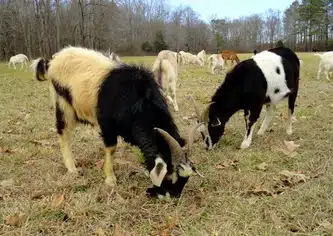
Goats can teach you some hard lessons, especially when you try to raise them in a wet, humid climate. We learned that the hard way at BF Farm Kunekune Pigs, first in Cave Spring, Georgia, and later here in Huggins, Missouri.
When we first got into goats, we did not fully understand how serious parasite load problems could become. Like many new livestock owners, we had to learn through experience. Unfortunately, some of those lessons came with real losses.
A Little Background on Goats and Climate
Domestic goats have a long history with people. They are among the older livestock species used by humans, with deep roots in the Near East and surrounding regions. Many goats developed in areas very different from the wet, humid pastures found in Missouri, Georgia, and much of the eastern United States.
That matters because climate changes the way you manage livestock.
In a drier climate, goats may face one set of challenges. In a warm, moist climate, the challenge can be very different. Wet grass, humid weather, and repeated exposure to internal parasites can make goat management much more difficult. A goat that looks hardy on paper can still struggle if the parasite load gets ahead of you.
That was one of the first major lessons we had to learn.
The Background and History of the Kiko Goat
The Kiko goat was developed in New Zealand as a meat goat, and even the name points to that purpose. “Kiko” comes from the Māori word for meat or flesh.
Garrick and Anne Batten of Nelson, New Zealand, developed the Kiko by starting with hardy feral goats and crossing selected does with dairy-type bucks, including Anglo-Nubian, Toggenburg, and Saanen lines. Those dairy breeds helped add size, growth, and milk production, while the feral goat base contributed toughness and survivability.
The important part is how the goats were selected. They were not simply bred for looks. They were selected for survival, growth, and performance in New Zealand hill-country conditions. After several generations of selection, the Kiko breed was established by the mid-1980s.
That background is one reason Kikos became so interesting to farmers like us. They were developed with function in mind. They were expected to raise kids, grow well, survive challenging conditions, and remain productive without being pampered every day.
The Problem with Goats and Parasite Load
Goats are tough animals in many ways, but they are not invincible.
In moist climates, parasite loads can build quickly. Wet grass, warm weather, and humid conditions can create a constant challenge for goat owners. If parasite load gets high enough, goats can go downhill fast.
That was one of the first big lessons we learned.
In the beginning, we lost a number of goats because we did not yet understand how much attention parasite management would require. It was frustrating, discouraging, and expensive. More than anything, it taught us that raising goats in the eastern United States is not the same as raising goats in a dry climate.
You cannot just put goats on pasture and assume everything will work itself out.
Why Climate Matters So Much
A lot of people fall in love with the idea of raising goats before they understand the environment they are asking those goats to live in.
Moist climates like Georgia, Missouri, and much of the eastern United States can be hard on goats. The land may grow plenty of forage, but it can also support the parasites that cause serious health problems.
That means the breed you choose matters.
Some goats may do fine in drier regions but struggle when they are kept in wetter conditions with heavier parasite loads. We eventually came to believe that if you are going to raise goats in a moist climate, you need goats that are better suited for that kind of environment.
For us, that meant Kiko goats.
Why We Came to Appreciate Kiko Goats
Kiko goats became a better fit for our farm because they were hardy, practical, and better suited to the conditions we were dealing with.
They were not magic. No goat is parasite-proof, and no breed removes the need for good management. But compared with some other goats, the Kikos made more sense for our situation.
They handled our climate better. They fit a meat-goat operation well. They were practical animals for pasture-based management. And once we improved our parasite program, we began to see better results.
That is why we came to appreciate them so much.
Learning to Manage Parasites
One of the tools that helped us was using a copper bolus as part of our herd-management program.
For our goats, the copper bolus seemed to make a real difference. Once we started using it properly, along with better overall management, we had more success keeping parasite problems under control.
That said, copper is not something to use carelessly. Goat owners should learn from experienced producers and work with a knowledgeable veterinarian when making decisions about copper, worming, minerals, and parasite control. Too little can be a problem, but too much can be dangerous too.
The real point is not that one product solves everything. The point is that goat owners in wet climates need a serious parasite-management plan.
That plan may include:
- Choosing a hardy breed
- Rotating pastures when possible
- Watching body condition closely
- Checking eyelid color and signs of anemia
- Avoiding overcrowding
- Providing proper minerals
- Using dewormers carefully and responsibly
- Learning from experienced goat producers
- Working with a veterinarian when problems appear
The goats taught us that management matters just as much as breed choice.
What We Learned the Hard Way
Looking back, we made mistakes like many new livestock owners do.
We underestimated parasites. We did not fully understand how fast goats could decline. We had to learn which animals held up better, which management practices mattered, and how much the local climate shaped everything.
Those early losses were hard, but they made us better farmers.
They taught us to pay attention. They taught us not to assume all livestock breeds perform the same in every region. They taught us that what works in one climate may not work in another.
That lesson carried over into the rest of BF Farm Kunekune Pigs, including how we looked at cattle, pigs, and eventually Kunekune breeder stock. The animal has to fit the land, the management style, and the person raising it.
Our Opinion on Kiko Goats
If someone wants to raise goats in Missouri, Georgia, or much of the eastern United States, our opinion is simple: Kiko goats are one of the best choices to consider.
They still require care. They still need parasite management. They still need good fencing, minerals, shelter, observation, and responsible handling.
But for a moist climate, we found them to be a practical and reliable choice.
That is why Kiko goats became an important part of BF Farm Kunekune Pigs’ early story. They were my partner’s passion, but they also became part of our education as farmers. They taught us lessons we never forgot.
Final Thoughts
Raising goats in a wet climate is not easy. Anyone who tells you otherwise probably has not had to fight parasite load problems through a long, humid season.
We learned through trial, loss, adjustment, and persistence. Kiko goats helped us find a better fit for the climate we were farming in, and the copper bolus became one helpful part of the management system that worked for us.
The biggest lesson was this: choose livestock that fit your land, then manage them with respect for the conditions they are living in.
For BF Farm Kunekune Pigs, Kiko goats were part of that learning journey. They helped teach us how serious livestock management really is — and how important it is to choose the right animal for the farm you actually have.