Kunekune Kitchen at BF Farm Kunekune Pigs
From Trim to Breakfast Links: A Kunekune Pork Sausage Guide for the Homestead Freezer
May 27, 2026 · Kunekune Pork Recipes
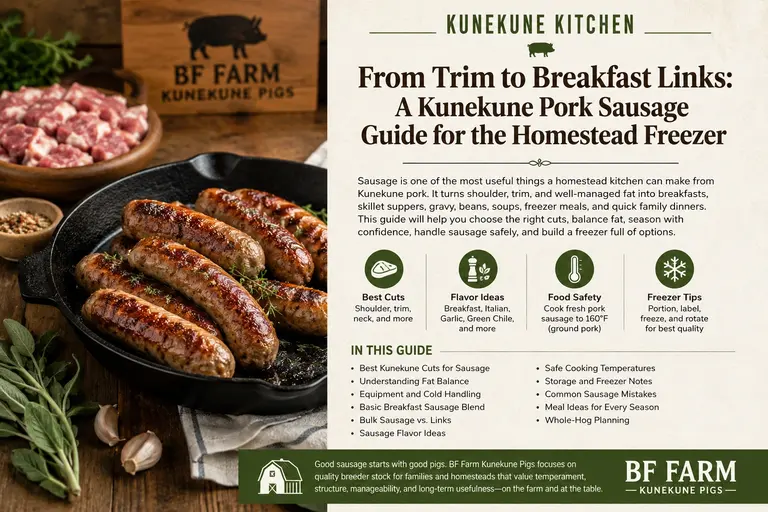
From Trim to Breakfast Links: A Kunekune Pork Sausage Guide for the Homestead Freezer
Sausage is one of the most useful things a homestead kitchen can make from Kunekune pork. It turns shoulder, trim, and well-managed fat into breakfasts, skillet suppers, gravy, beans, soups, freezer meals, and quick family dinners. For families raising or buying pork by the half or whole hog, sausage is not just a recipe — it is freezer planning.
Why Sausage Matters in a Kunekune Kitchen
A good sausage plan helps a family use the whole animal more wisely. Not every piece of pork needs to become a roast, chop, ham, or bacon. Some of the most valuable freezer packages come from the smaller pieces: shoulder trim, bits from breaking down roasts, meat around the neck and picnic area, and carefully selected fat.
Kunekune pork can work beautifully for sausage because it often brings strong pork flavor and useful fat. That fat matters. Sausage that is too lean can turn dry, crumbly, and disappointing. Sausage with too much soft fat can feel greasy. The goal is balance: enough fat for flavor and tenderness, enough lean meat for structure, and enough seasoning to make the sausage useful without covering up the pork itself.
This is also where homestead practicality shows up. A freezer with nothing but large roasts can feel intimidating on a busy weekday. A freezer with breakfast sausage, bulk Italian-style sausage, bratwurst-style links, and plain seasoned pork gives you options.
The Best Kunekune Cuts for Sausage
Sausage is usually best when it comes from hardworking, flavorful cuts. You are not trying to grind the most tender chops. You are trying to use cuts that have flavor, structure, and the right amount of fat.
Pork Shoulder
Pork shoulder is the classic sausage cut for a reason. It has a good mix of lean meat, connective tissue, and fat. In a Kunekune kitchen, shoulder can become breakfast sausage, loose bulk sausage, fresh links, meatballs, stuffing, gravy sausage, or skillet sausage.
Shoulder is also forgiving. It carries seasoning well and still tastes like pork after cooking.
Picnic Shoulder
The picnic portion can work well for sausage, especially if it has a good balance of meat and fat. It may need a little trimming depending on the animal and how it was cut.
Neck and Collar Trim
Trim from around the neck and collar area can be flavorful and useful. These pieces may not look fancy in a package, but they can make excellent sausage when cleaned up and balanced with the right amount of fat.
Belly Trim
A little belly trim can improve richness, but too much can make sausage greasy. Belly is valuable, so many families prefer saving whole belly for bacon, braising, burnt ends, or pork belly slices. Still, small pieces of belly trim can be folded into sausage if the lean meat needs help.
Ham Trim
Ham trim can be used, but it is usually leaner than shoulder. If using ham trim, blend it with shoulder or additional fat. On its own, it may make a firmer, drier sausage.
Loin Trim
Loin trim is lean and mild. It can be added in small amounts, but it should not be the backbone of a sausage batch unless extra fat is included. Loin is usually better saved for chops, roasts, cutlets, or quick meals.
Understanding Fat Balance
Fat is not the enemy in sausage. Fat is what makes sausage juicy, flavorful, and tender. The trouble comes from using the wrong amount, poor grinding technique, or cooking it too hot.
For many fresh pork sausages, a common target is somewhere around 70% lean meat and 30% fat, though homestead batches do not need to be measured like a commercial formula every time. The practical goal is simple: the mixture should look moist and speckled with fat, not pale and greasy, and not so lean that it resembles dry ground meat.
Kunekune pigs can carry generous fat, so sorting trim matters. Do not dump every piece of fat into the grinder just because it is there. Choose clean, firm fat and balance it with lean meat.
Good sausage fat should be:
- clean-smelling
- firm when chilled
- free from glands or questionable tissue
- trimmed of anything discolored
- cut into small pieces before grinding
If the fat is very soft or warm, chill it before grinding. Cold fat cuts cleanly. Warm fat smears, and smeared fat can make sausage dense or greasy.
Fresh Sausage vs. Cured Sausage
This article focuses on fresh sausage — sausage that is seasoned, stored cold or frozen, and fully cooked before eating.
Fresh sausage includes:
- breakfast patties
- bulk breakfast sausage
- fresh links
- bratwurst-style links
- Italian-style sausage
- loose sausage for soups and sauces
- sausage for gravy
- sausage for stuffing
Cured, smoked, fermented, or dried sausages are a different project. They require tested methods, proper curing ingredients, temperature control, sanitation, and careful storage. Those are not places for guessing. Fresh sausage is the better starting point for most homestead kitchens because it is straightforward and flexible.
Basic Equipment for Homemade Sausage
You can keep sausage-making simple. A beginner does not need a commercial setup.
Useful equipment includes:
- sharp knife
- large cutting board
- mixing bowls
- kitchen scale
- meat grinder or grinder attachment
- sheet pans
- freezer paper, vacuum bags, or freezer-safe bags
- permanent marker for labels
- instant-read thermometer
- sausage stuffer, if making links
For bulk sausage, a grinder is the main tool. For links, a stuffer makes the job much easier. Some grinder attachments can stuff sausage, but they can be slow and frustrating. Bulk sausage is a perfectly good place to begin.
Keep Everything Cold
Cold meat is easier to grind, easier to mix, and safer to handle. Before grinding, cut the meat and fat into grinder-sized chunks and chill them well. Some people place the grinder parts in the freezer for a short time before use. That helps keep the fat firm.
A good sausage rhythm looks like this:
- Trim the meat.
- Cut meat and fat into chunks.
- Chill the chunks.
- Grind while cold.
- Mix seasoning into cold ground pork.
- Package promptly.
- Refrigerate or freeze quickly.
Do not let ground pork sit around on the counter while you clean the barn, answer three texts, and decide to reorganize the pantry. Ground meat needs respect.
A Beginner Breakfast Sausage Blend
A simple breakfast sausage is one of the best first projects because it does not require casings. Make it as bulk sausage or patties.
Basic Breakfast Sausage Seasoning for 5 Pounds of Ground Kunekune Pork
- 5 pounds ground Kunekune pork
- 1 1/2 tablespoons kosher salt
- 1 tablespoon rubbed sage
- 2 teaspoons black pepper
- 2 teaspoons garlic powder
- 2 teaspoons onion powder
- 1 teaspoon dried thyme
- 1 teaspoon crushed red pepper, optional
- 1 tablespoon brown sugar or maple sugar, optional
- 1/4 cup cold water, optional, for mixing
Mix the seasoning with the cold ground pork until evenly combined. Cook a small test patty before packaging the whole batch. This matters because seasoning tastes different once cooked.
If it tastes flat, add a little salt. If it tastes too heavy, add more plain ground pork. If it tastes too sharp, add a little brown sugar or maple syrup when cooking.
Why the Test Patty Matters
The test patty is the humble little hero of sausage making. Before you package five, ten, or twenty pounds, cook one small patty and taste it.
Check for:
- salt level
- sage strength
- heat level
- sweetness
- texture
- juiciness
This is much easier to fix before everything is wrapped and frozen. Once sausage is packaged, it is still usable, but adjusting a whole batch becomes a chore.
Bulk Sausage or Links?
Both are useful, but they serve different purposes.
Bulk Sausage
Bulk sausage is the easiest and most flexible. Package it in 1-pound portions and use it for:
- sausage gravy
- breakfast patties
- scrambled eggs
- soups
- beans
- casseroles
- pasta sauce
- stuffing
- pizza topping
- skillet potatoes
Bulk sausage is also faster to make because there are no casings.
Sausage Links
Links are wonderful for breakfasts, grilling, and plate meals. They take more equipment and time, but they feel special on the table.
Fresh links work well for:
- breakfast links
- bratwurst-style sausage
- Italian sausage
- grill meals
- sheet pan dinners
- sausage with cabbage
- sausage with peppers and onions
If making links, do not overstuff the casings. A little give helps prevent splitting.
Sausage Flavor Ideas for the Freezer
A good freezer does not need twelve sausage flavors, but having a few options keeps meals from feeling repetitive.
Breakfast Sausage
Sage, black pepper, thyme, and a touch of sweetness. This is the classic choice for mornings, biscuits and gravy, eggs, and breakfast casseroles.
Italian-Style Sausage
Garlic, fennel seed, paprika, black pepper, oregano, and red pepper flakes. Use it for pasta, pizza, soups, meatballs, and stuffed peppers.
Farmhouse Garlic Sausage
Garlic, black pepper, parsley, onion, and a little paprika. This is a good all-purpose sausage for potatoes, cabbage, beans, and skillet meals.
Maple Pepper Sausage
Maple sugar or maple syrup, black pepper, sage, and thyme. Best for breakfast patties rather than long storage as fresh links with wet syrup mixed in.
Green Chile Sausage
Roasted green chiles, garlic, cumin, and a touch of oregano. Good for breakfast burritos, beans, and rice bowls.
Plain Salt-and-Pepper Sausage
This is underrated. A simple batch gives you flexibility later. You can turn it into Italian, breakfast, taco, or soup sausage when cooking.
How to Package Sausage for the Freezer
Good packaging makes sausage easier to use. Think in meals, not just pounds.
Useful package sizes:
- 1/2 pound for small breakfasts
- 1 pound for most family meals
- 1 1/2 pounds for casseroles or larger skillets
- 2 pounds for big batches of gravy, stuffing, or soup
Flatten bulk sausage in freezer bags so it stacks neatly and thaws faster. Label each package with:
- flavor
- weight
- date
- fresh sausage — cook fully
- any special notes, such as spicy or no sugar
A package labeled meat is an act of freezer chaos. Future-you deserves better.
Safe Cooking Temperatures
Fresh sausage made from ground pork should be cooked to 160°F. Ground pork and sausage need a higher final temperature than whole-muscle pork chops or roasts because grinding mixes the surface throughout the meat. Leftovers should be reheated until steaming hot throughout.
Use a thermometer, especially with links. A browned outside does not always mean the center is fully cooked. This is especially true with thicker links cooked over high heat.
For links, cook over moderate heat so the inside has time to reach temperature before the casing burns. For patties, press them evenly and cook until browned and fully done.
Storage Notes
Raw fresh sausage should be refrigerated only briefly before cooking or freezing, and cooked sausage should be cooled and stored promptly. For best quality in the freezer, wrap tightly, remove excess air, and use older packages first.
Freezer times are usually about quality when meat has been kept frozen continuously at 0°F or below. Sausage does not suddenly become useless the moment a guideline date passes, but flavor, texture, and freezer burn can get worse over time.
For best results:
- freeze sausage promptly
- remove as much air as possible
- keep packages flat and tight
- label everything
- rotate older packages forward
- thaw in the refrigerator when possible
Common Sausage Mistakes
Grinding Meat While Warm
Warm pork smears instead of grinding cleanly. Keep meat, fat, and equipment cold.
Using Too Much Fat
Kunekune pork can be rich. That is a gift, but do not turn every fat scrap into sausage. Balance is better than excess.
Making Every Package the Same Flavor
A whole freezer of one seasoning can get boring fast. Make at least one plain batch and one breakfast batch.
Forgetting the Test Patty
Never trust raw sausage seasoning by smell alone. Cook a small patty and taste it.
Packing in Huge Portions
A 5-pound frozen brick of sausage is technically food, but it is not friendly food. Smaller packages make weeknight meals easier.
Overcooking Links Too Hot
High heat can split casings and burn the outside before the middle is done. Moderate heat is kinder.
How Sausage Helps with Whole-Hog Planning
When families process a whole or half hog, they often think first about the impressive cuts: hams, bacon, chops, ribs, and roasts. Those are wonderful, but sausage is what helps the freezer work day after day.
Sausage uses the pieces that do not fit neatly anywhere else. It turns trim into meals. It gives busy families quick protein. It stretches into beans, rice, potatoes, cabbage, pasta, gravy, and eggs.
A practical freezer plan might include:
- pork chops for quick dinners
- roasts for Sunday meals
- bacon or belly for special breakfasts
- ribs for smoking or slow cooking
- bones for broth
- lard for cooking
- sausage for everyday meals
That is the kind of planning that respects the whole animal.
Meal Ideas for Kunekune Pork Sausage
A freezer full of sausage becomes more valuable when you know how to use it.
Try Kunekune pork sausage in:
- biscuits and gravy
- breakfast burritos
- sausage, egg, and potato skillets
- cabbage and sausage skillet
- sausage and white bean soup
- sausage gravy over fried potatoes
- pasta with sausage and tomatoes
- homemade pizza
- stuffed peppers
- cornbread dressing
- sausage and rice casserole
- beans with sausage and broth
- sheet pan sausage with onions and sweet potatoes
- sausage patties with fried apples
For families feeding kids, mild breakfast sausage and plain bulk sausage are often the most useful. Spicy sausage is fun, but plain sausage gets eaten more often.
Where BF Farm Fits In
Good sausage starts before the grinder. It starts with livestock that are healthy, manageable, well-structured, and useful for the kind of homestead a family is trying to build.
BF Farm Kunekune Pigs focuses on quality Kunekune breeder stock for families and homesteads that care about temperament, structure, manageability, and long-term usefulness. Those traits matter in the pasture, but they also matter in the kitchen. A pig that fits the farm well can help fill a freezer with pork that families know how to use.
Sausage is one of the best examples of that connection. It is humble, but it is valuable. It makes the freezer more practical, reduces waste, and helps families turn smaller cuts and trim into real meals.
Final Thoughts
Kunekune pork sausage is more than breakfast meat. It is one of the most practical tools in a homestead freezer. With pork shoulder, trim, clean fat, good seasoning, cold handling, and smart packaging, a family can turn one processing day into months of useful meals.
Start simple. Make a breakfast batch. Make a plain batch. Cook test patties. Label everything. Learn what your family reaches for first.
That is how sausage becomes part of a real farm kitchen: not fancy, not fussy, just useful, flavorful pork handled with care from pasture to plate.