Kunekune Kitchen at BF Farm Kunekune Pigs
Kunekune Pork Egg Roll Skillet with Garden Cabbage
May 22, 2026 · Kunekune Pork Recipes
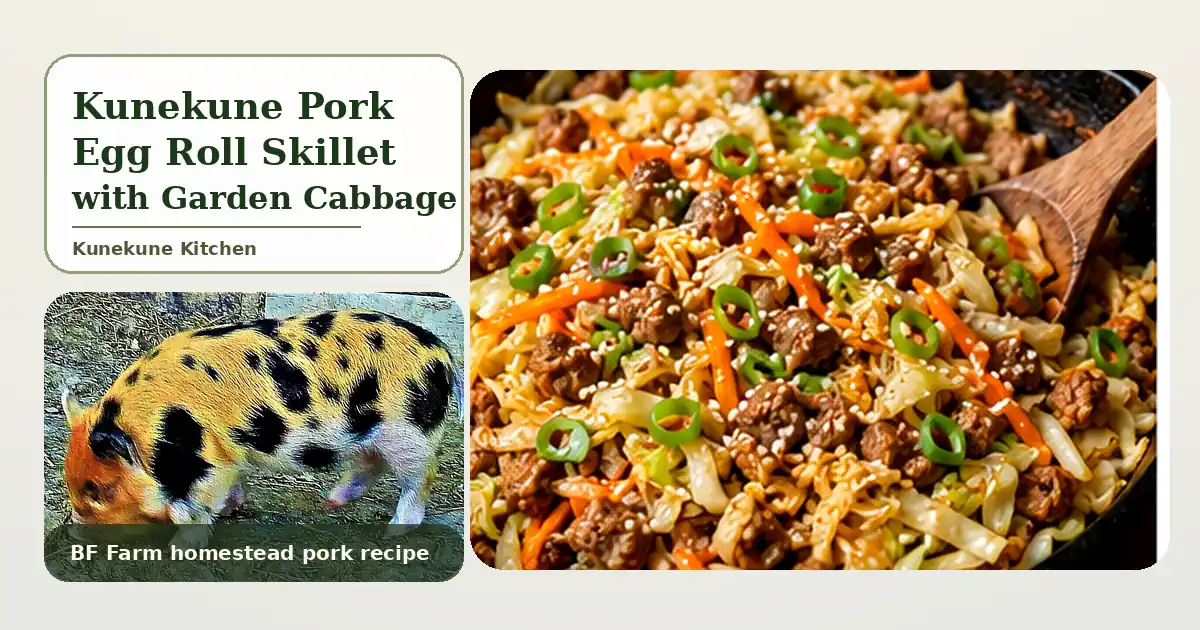
Kunekune Pork Egg Roll Skillet with Garden Cabbage is the kind of meal that earns a regular spot in a homestead kitchen: simple ingredients, one pan, quick cooking, and enough flavor to make a pound of ground pork feel like a full family supper. It uses the rich, savory character of Kunekune pork with shredded cabbage, garlic, ginger, onion, and a simple sauce for a meal that feels hearty without being heavy.
Why This Recipe Works So Well with Kunekune Pork
Ground Kunekune pork is a good fit for skillet meals because it usually has enough natural fat to cook up tender, flavorful, and satisfying without needing much help. In lean grocery pork, quick skillet recipes can sometimes turn dry or bland if they are not heavily sauced. Kunekune pork tends to bring more richness on its own, which means the cabbage, onion, garlic, and ginger pick up flavor right in the pan.
That is the real beauty of this recipe. It is not fussy. The pork seasons the vegetables as they cook, the cabbage softens without disappearing, and the sauce pulls everything together into a warm, practical bowl of food.
This is also a useful recipe for families raising their own pork. Ground pork is one of those freezer staples that can become breakfast sausage, burgers, meatballs, casseroles, soups, and quick skillet meals. Having several reliable ground-pork recipes makes it easier to use the whole animal well, especially when you are planning meals from a freezer instead of a grocery-store meat case.
Best Pork to Use
For this recipe, use:
- Ground Kunekune pork
- Ground pork with a medium fat content
- Fresh or thawed frozen ground pork
- Plain ground pork rather than heavily seasoned sausage
A little fat is helpful here. It keeps the pork tender, helps the cabbage cook, and carries the ginger, garlic, and soy-style flavors through the whole skillet. If your ground pork is very lean, add a small spoonful of lard, bacon fat, or neutral cooking oil before adding the cabbage.
Avoid using sweet breakfast sausage for this recipe unless you want a sweeter, more seasoned flavor. It can work in a pinch, but plain ground pork gives you better control.
Ingredients
For the skillet:
- 1 pound ground Kunekune pork
- 1 small onion, thinly sliced or diced
- 4 cups shredded cabbage
- 1 cup shredded carrots
- 3 cloves garlic, minced
- 1 tablespoon fresh grated ginger, or 1 teaspoon ground ginger
- 2 tablespoons soy sauce or tamari
- 1 tablespoon rice vinegar or apple cider vinegar
- 1 teaspoon toasted sesame oil
- 1 teaspoon honey or brown sugar, optional
- 1/4 teaspoon black pepper
- Pinch of red pepper flakes, optional
- 2 green onions, sliced
- Sesame seeds for serving, optional
Optional add-ins:
- Thinly sliced bell pepper
- Mushrooms
- Snap peas
- Chopped kale
- Cooked rice
- Fried or scrambled egg
- A drizzle of chili crisp or hot sauce
Equipment
You only need basic kitchen tools:
- Large cast iron skillet, stainless skillet, or deep saute pan
- Cutting board
- Sharp knife
- Wooden spoon or spatula
- Small bowl for mixing the sauce
A wide skillet works better than a small saucepan because it lets the pork brown instead of steam. Cabbage also needs room at first, even though it cooks down quickly.
Step-by-Step Instructions
Mix the Sauce
In a small bowl, stir together the soy sauce, vinegar, sesame oil, honey if using, black pepper, and red pepper flakes.
Set it aside before you start cooking. This recipe moves quickly once the pork is browned, and having the sauce ready keeps the cabbage from overcooking while you search for bottles in the pantry.
Brown the Pork
Warm a large skillet over medium-high heat. Add the ground Kunekune pork and break it apart with a spoon.
Cook until the pork is browned and cooked through, usually 6 to 8 minutes depending on your pan and heat. Let the pork sit for short stretches before stirring so it can brown instead of simply steaming.
If there is a lot of rendered fat in the pan, spoon off a little, but do not remove all of it. A small amount of pork fat helps flavor the vegetables.
Add Onion, Garlic, and Ginger
Add the onion to the browned pork and cook for 2 to 3 minutes, until it begins to soften.
Stir in the garlic and ginger. Cook for about 30 seconds to 1 minute, just until fragrant. Do not walk away at this stage. Garlic can go from golden to bitter in a hurry.
Add the Cabbage and Carrots
Add the shredded cabbage and carrots to the skillet. It may look like too much at first, but cabbage cooks down.
Stir everything together so the cabbage begins to pick up the pork flavor from the pan. Cook for 4 to 6 minutes, depending on how soft you like your cabbage.
For a little crunch, stop when the cabbage is softened but still has some bite. For a softer, more comfort-food texture, cook it a few minutes longer.
Add the Sauce
Pour the sauce over the pork and cabbage mixture. Stir well so everything is coated.
Cook for another 1 to 2 minutes, just long enough for the sauce to warm through and settle into the skillet. Taste and adjust as needed.
You may want:
- A splash more soy sauce for saltiness
- A little more vinegar for brightness
- A drizzle more sesame oil for deeper flavor
- More red pepper flakes for heat
Finish and Serve
Turn off the heat and sprinkle sliced green onions over the top. Add sesame seeds if you like.
Serve hot as-is, over rice, tucked into lettuce cups, or with a fried egg on top.
Cooking Cues to Watch For
This recipe is forgiving, but a few small cues make it better:
The pork should be browned, not gray. Browning builds flavor and gives the whole skillet a deeper taste.
The garlic should smell fragrant, not sharp or burnt. Add it after the onion has softened a bit.
The cabbage should soften but not turn watery. Medium-high heat and a wide skillet help with that.
The sauce should coat the mixture without pooling heavily in the bottom of the pan. If the skillet seems watery, cook uncovered for another minute or two.
Serving Ideas
This skillet can be served several ways, which makes it handy for families with different appetites.
For a full meal, serve it over steamed rice. White rice, brown rice, or jasmine rice all work.
For a lower-carb plate, serve it in a bowl by itself or in lettuce cups.
For a breakfast-for-supper version, top each bowl with a fried egg.
For a heartier farm-kitchen meal, serve it with roasted sweet potatoes, skillet potatoes, or a simple cucumber salad.
For leftovers, tuck the pork and cabbage mixture into a tortilla with a little hot sauce. It will not be a traditional egg roll, but it makes a good next-day lunch.
Garden and Homestead Notes
This recipe is especially useful during cabbage season. It can handle fresh garden cabbage, farmers market cabbage, or a bag of store-bought coleslaw mix when time is short.
If you grow your own vegetables, this is a good flexible recipe for using what you have. Cabbage is the main vegetable, but carrots, onions, kale, peppers, and snap peas all fit. The goal is not to make the fanciest dish in the kitchen. The goal is to turn ground pork and garden vegetables into a meal people will actually eat.
That is one of the best parts of homestead cooking. A good recipe should help you use what is already in the freezer, pantry, or garden.
Storage and Reheating
Store leftovers in a covered container in the refrigerator for up to 3 to 4 days.
Reheat in a skillet over medium heat until hot, or microwave in short intervals, stirring between each one.
If serving over rice, store the rice separately when possible. The cabbage mixture reheats better on its own, and the rice keeps a better texture when it is not soaking up extra moisture in the refrigerator.
Freezer Notes
This recipe can be frozen, but the cabbage will soften more after thawing. That is not necessarily bad, but it does change the texture.
For best results, freeze the cooked pork mixture without rice. Cool completely, pack into freezer-safe containers, label, and use within 2 to 3 months for best quality.
To reheat, thaw overnight in the refrigerator and warm in a skillet. Add a splash of water or broth if needed.
A better freezer strategy is to freeze plain ground Kunekune pork in one-pound packages, then make this skillet fresh when you have cabbage on hand. It cooks quickly enough that it works well as a last-minute supper.
Common Mistakes to Avoid
Do not overcrowd a small pan. If the skillet is too small, the pork and cabbage will steam instead of brown and soften properly.
Do not add the sauce too early. If the sauce goes in before the cabbage has cooked down, the vegetables can release too much water and make the dish soupy.
Do not overdo the sesame oil. Toasted sesame oil has a strong flavor. A little goes a long way.
Do not drain every bit of pork fat. With Kunekune pork, that rendered fat is part of the flavor. Remove excess if needed, but leave enough to cook the vegetables well.
Do not skip the vinegar. That small bit of acidity helps balance the richness of the pork.
Simple Variations
For a spicy version, add chili garlic sauce, sriracha, crushed red pepper, or chili crisp.
For a sweeter family-friendly version, add a little more honey or brown sugar.
For a ginger-forward version, double the fresh ginger.
For a noodle bowl, toss the finished pork and cabbage with cooked rice noodles or ramen-style noodles.
For a soup-inspired version, add broth after cooking and serve it as a quick pork-and-cabbage bowl.
For a breakfast version, serve leftovers with scrambled eggs.
Why Recipes Like This Matter
Families who raise pork or buy pork directly from a farm often need recipes that are practical, repeatable, and not too precious. Ground pork is one of the most useful cuts in the freezer, but it can become boring if every package turns into the same meal.
This Kunekune Pork Egg Roll Skillet gives ground pork a different direction. It is quick, colorful, and full of flavor, but it still feels like normal home cooking. No complicated equipment, no hard-to-find ingredients, and no long wait.
For BF Farm Kunekune Pigs, that kind of kitchen usefulness matters. Good breeder stock is not just about how a pig looks in the pasture. It is also about raising animals that can support real homestead goals: manageable size, good temperament, practical meat quality, and a freezer full of food your family knows how to use.
Final Thoughts
Kunekune Pork Egg Roll Skillet with Garden Cabbage is a simple recipe, but it does a lot of good work. It uses ground pork well, makes cabbage taste like supper instead of filler, and comes together in one pan on a busy night.
It is the kind of meal that fits the Kunekune Kitchen: practical, flavorful, flexible, and rooted in the everyday usefulness of homestead pork.