Kunekune Kitchen at BF Farm Kunekune Pigs
Kunekune Pork Freezer Meal Packs: Pulled Pork, Taco Meat, Bean Starters, and Quick Skillet Suppers
May 22, 2026 · Freezer Meal Ideas
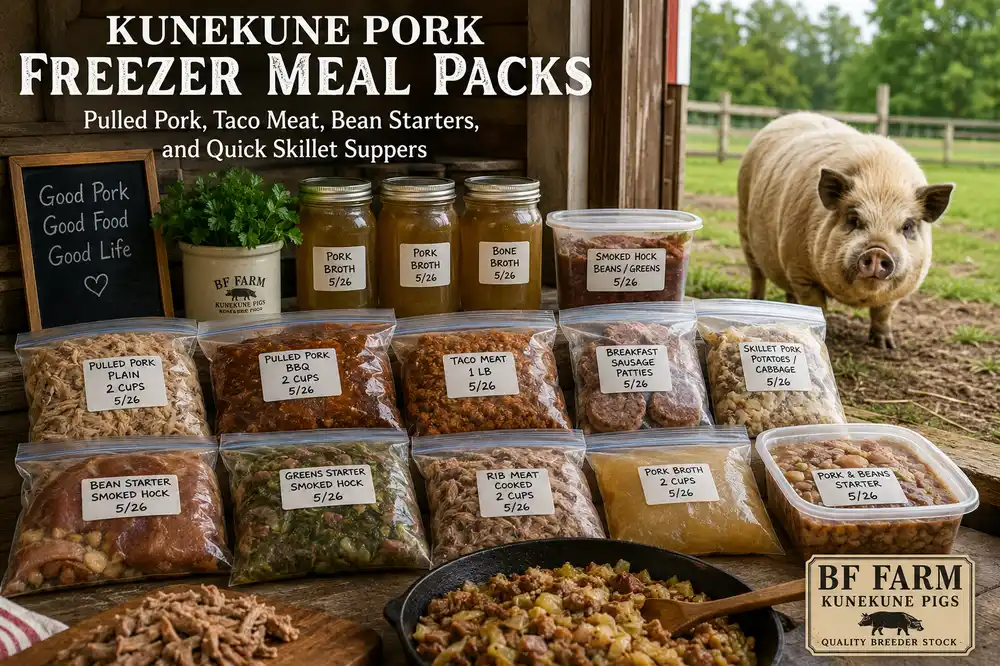
Kunekune Pork Freezer Meal Packs: Pulled Pork, Taco Meat, Bean Starters, and Quick Skillet Suppers
A freezer full of Kunekune pork is a blessing, but only if the packages turn into real meals. Without a plan, even good pork can become mystery meat hiding behind bags of vegetables and half-used broth containers. Freezer meal packs help solve that problem. By turning pork shoulder, ground pork, smoked hocks, broth, sausage, rib meat, bones, and trim into labeled meal starters, a homestead family can make weeknight cooking easier while still respecting the whole animal.
Why Freezer Meal Packs Matter
When people think about filling a freezer with pork, they often picture the exciting cuts first: bacon, pork chops, ribs, roasts, sausage, and maybe ham. Those are wonderful, but a real homestead freezer is more varied than that. It may include shoulder roasts, hocks, bones, trim, ground pork, stew meat, fat, odd packages, soup bones, rib tips, shanks, and small leftover portions from big cooks.
That variety is valuable, but it can also be overwhelming.
A freezer meal pack is not necessarily a full casserole or a finished dinner. Sometimes it is simply a prepared starter that makes supper easier later. A quart of pulled pork. A flat bag of seasoned taco meat. A smoked hock labeled “beans.” Two cups of pork broth. A package of sausage patties. A bag of cooked rib meat for fried rice. These are the kinds of freezer packs that turn “I forgot to plan supper” into “we can eat well in 20 minutes.”
For Kunekune pork, this kind of planning is especially useful because the meat is often raised by families who care about practical use, good animal care, and whole-animal respect. If you raise a pig or buy a half or whole hog, the freezer should not feel like a storage problem. It should feel like a pantry.
What Makes Kunekune Pork Good for Freezer Meal Planning
Kunekune pork can be rich, flavorful, and well-suited to homestead cooking. Cuts like shoulder, hocks, bones, trim, ribs, and ground pork are especially useful because they can be turned into meal starters that stretch across many dishes.
A pork chop is usually cooked as a single meal. A shoulder roast can become several. Ground pork can become breakfast patties, taco meat, meatballs, dumpling filling, or skillet suppers. Bones and hocks can become broth and bean starters. Trim can become sausage or seasoning meat.
That flexibility is what makes freezer planning worth the effort. You are not just freezing pork. You are freezing options.
The Freezer Meal Pack Mindset
The goal is not to spend an entire weekend making complicated recipes. The goal is to make future cooking easier.
A good freezer meal pack should be:
- Clearly labeled
- Packed in a useful portion
- Easy to thaw
- Easy to reheat or finish cooking
- Flexible enough for more than one meal
- Stored safely
- Used before it becomes forgotten
The best freezer packs are often simple. Plain pulled pork can become sandwiches, tacos, soup, fried rice, hash, nachos, beans, or baked potatoes. Over-seasoned pulled pork can only become one flavor of meal. Flexibility matters.
Start with a Freezer Inventory
Before making new freezer packs, look at what is already in the freezer. This step is not glamorous, but it saves money and prevents waste.
Write down what you have:
- Pork shoulder roasts
- Fresh hams
- Ground pork
- Sausage
- Bacon ends
- Smoked hocks
- Fresh hocks
- Bones
- Rib tips
- Ribs
- Chops
- Loin roasts
- Fat or leaf lard
- Trim
- Broth
- Cooked leftovers
Then mark which packages are easy weeknight meals and which ones need a plan. A pork shoulder roast is useful, but it is not a 15-minute dinner unless you already cooked it. A smoked hock is wonderful, but it needs beans, greens, soup, or broth. Ground pork is fast, but only if you know what flavor direction you want.
A freezer inventory turns random packages into a meal map.
Fresh Packs, Cooked Packs, and Starter Packs
It helps to divide freezer meals into three types.
Fresh packs
Fresh packs are raw pork packaged with a future meal in mind. For example, ground pork divided into one-pound bags, shoulder cut into stew cubes, or chops packaged two per pack.
Fresh packs are useful because they stay flexible, but they still require cooking from scratch later.
Cooked packs
Cooked packs are already cooked and only need thawing, reheating, or quick finishing. Pulled pork, taco meat, cooked sausage crumbles, cooked rib meat, and broth all fall into this group.
Cooked packs are the weeknight heroes.
Starter packs
Starter packs are not full meals, but they make meals easier. A smoked hock for beans, pork broth for soup, bacon ends for greens, or a bag of browned sausage for breakfast gravy are all starter packs.
Starter packs are especially good for using less flashy cuts.
Food-Safety Basics for Freezer Meal Packs
Freezer meal planning is useful only if the food is handled safely. Use clean hands, clean surfaces, and clean utensils. Keep raw pork separate from cooked food. Cool cooked food promptly before freezing. Label packages clearly.
FoodSafety.gov says whole-muscle pork cuts such as steaks, roasts, and chops should be cooked to 145°F with a 3-minute rest, while ground pork and sausage should be cooked to 160°F. Leftovers should be reheated to 165°F. Use a food thermometer instead of guessing by color.
For storage, FoodSafety.gov lists fresh pork steaks, chops, and roasts at 3 to 5 days in the refrigerator and 4 to 12 months in the freezer for quality. Ground pork is listed at 1 to 2 days refrigerated and 3 to 4 months frozen. Cooked meat leftovers are listed at 3 to 4 days refrigerated and 2 to 6 months frozen for quality. FoodSafety.gov also notes that freezer times are for quality only when food is kept continuously frozen at 0°F or below.
Cooling Cooked Pork Before Freezing
One of the easiest mistakes is putting a large hot container of pork directly into the refrigerator or freezer. Big masses of hot food cool slowly. Slow cooling is not what you want.
A better method:
- Shred, chop, or divide the pork.
- Spread it into shallow containers.
- Let steam escape briefly.
- Refrigerate promptly.
- Once chilled, package for the freezer.
- Freeze in flat bags or meal-size containers.
Flat freezer bags cool and thaw faster than deep tubs. They also stack better.
For pulled pork, add a little cooking juice or broth to each pack before freezing. That helps keep the meat moist when reheated.
Packaging Supplies That Actually Help
You do not need fancy tools, but good packaging makes a difference.
Helpful supplies include:
- Freezer bags
- Vacuum-seal bags
- Freezer-safe containers
- Pint and quart containers for broth
- Permanent marker
- Freezer tape
- Sheet pan for freezing flat bags
- Measuring cup
- Kitchen scale
- Labels
- Parchment paper for patties
- Ice cube trays or silicone trays for broth cubes
A vacuum sealer is useful, but it is not required. If using freezer bags, press out as much air as possible before sealing. Air is the enemy of freezer quality.
Label Every Pack Like Someone Else Will Cook It
A freezer label should not be a riddle. Write it so a tired person can understand it six months later.
A good label includes:
- What it is
- Date
- Amount
- Whether it is raw or cooked
- Suggested use
- Reheating or cooking note if helpful
Good labels might say:
- Cooked pulled Kunekune pork, 2 cups, May 2026, tacos/sandwiches
- Raw ground pork, 1 lb, cook to 160°F
- Smoked hock, beans or greens, May 2026
- Pork broth, 2 cups, soup/beans/rice
- Cooked taco meat, 1 lb, thaw and reheat
- Breakfast sausage patties, raw, cook from thawed
- Rib meat, cooked, fried rice or hash
A label that only says “pork” is how good meat gets ignored.
Freezer Pack 1: Plain Pulled Kunekune Pork
Pulled pork is one of the best freezer meal packs because it is flexible. Start with pork shoulder, fresh ham, picnic roast, or another slow-cooking cut.
Why it works
Shoulder and similar cuts have enough fat and connective tissue to stay useful after slow cooking. Kunekune pork richness can make pulled pork especially satisfying, but the trick is not to over-season the whole batch. Keep the base simple so it can go in several directions later.
Basic method
- Season the roast with salt, pepper, garlic, and onion.
- Cook low and slow until tender.
- Save the cooking juices.
- Shred the meat.
- Mix in enough juices to keep it moist.
- Cool in shallow containers.
- Pack in 1-cup, 2-cup, or meal-size portions.
- Freeze flat.
Best package sizes
For one or two people:
- 1-cup packs for quick lunches
- 2-cup packs for tacos, soup, or potatoes
For families:
- 3- to 4-cup packs for sandwiches, casseroles, or nachos
- Quart bags frozen flat
How to use it later
Plain pulled pork can become:
- BBQ sandwiches
- Pork tacos
- Breakfast hash
- Fried rice
- Pork nachos
- Soup
- Beans
- Baked potatoes
- Quesadillas
- Pork gravy over biscuits
- Rice bowls
- Enchiladas
- Skillet suppers
Plain pulled pork is the freezer version of a good pocketknife. It fits many jobs.
Freezer Pack 2: BBQ Pulled Pork Packs
Once you have some plain pulled pork saved, it is fine to make a few BBQ packs too.
When to sauce
It is usually better to freeze pulled pork with only a little sauce, then add more after reheating. Heavy sauce can overpower the pork and limit how you use the pack later.
Good BBQ pack ideas
Try:
- Pulled pork with a splash of vinegar sauce
- Pulled pork with light tomato BBQ sauce
- Pulled pork with mustard-style sauce
- Pulled pork with smoky broth and sauce added later
How to use it
BBQ packs are good for:
- Sandwiches
- Baked potatoes
- Mac and cheese topping
- Cornbread bowls
- Nachos
- Pizza
- Sliders
- Picnic meals
Keep a few BBQ packs, but do not turn the whole shoulder into one flavor unless your family eats that flavor often.
Freezer Pack 3: Kunekune Pork Taco Meat
Ground pork taco meat is one of the fastest freezer meals. Cook once, freeze flat, and supper is halfway done.
Why ground pork works
Ground pork cooks quickly, takes seasoning well, and works in tacos, burritos, rice bowls, eggs, nachos, and soups. Kunekune ground pork may have good richness, so it can carry bold seasonings without becoming dull.
Basic taco meat seasoning
For each pound of ground pork, use:
- Salt
- Chili powder
- Cumin
- Garlic powder
- Onion powder
- Paprika
- Oregano
- Black pepper
- Optional crushed red pepper
- Optional tomato paste
- Optional splash of broth
Cook the pork until it reaches the safe temperature for ground pork, then cool and freeze in flat bags. Ground pork and sausage should reach 160°F, according to FoodSafety.gov.
Package sizes
Good sizes include:
- 1/2-pound packs for two people
- 1-pound packs for family taco night
- 2-cup cooked packs for rice bowls or nachos
How to use taco meat later
Use it for:
- Tacos
- Burritos
- Quesadillas
- Nachos
- Taco salad
- Rice bowls
- Breakfast eggs
- Stuffed peppers
- Enchiladas
- Bean soup
- Skillet potatoes
A flat bag of cooked taco meat can thaw quickly and become supper fast.
Freezer Pack 4: Breakfast Sausage Patties
Breakfast sausage patties are easy to make ahead and freeze. They can be frozen raw or cooked.
Why make patties ahead
Ground pork in a plain one-pound pack is useful, but patties are faster. On busy mornings, it is easier to pull out four patties than to thaw a whole pack, season it, shape it, and cook it.
Simple seasoning direction
Use:
- Salt
- Black pepper
- Sage
- Thyme
- Garlic powder
- Onion powder
- A little maple sugar or brown sugar, optional
- Crushed red pepper, optional
Freezing raw patties
Shape patties, layer them with parchment, and freeze flat. Once firm, move them into a freezer bag or vacuum bag.
Freezing cooked patties
Cook patties fully, cool, and freeze in meal-size portions. Cooked patties are faster later, but raw patties may have a fresher texture.
How to use them
Use breakfast patties for:
- Eggs and toast
- Breakfast sandwiches
- Biscuits
- Gravy
- Breakfast bowls
- Hash
- Pancake breakfasts
- Quick protein with leftovers
Label raw and cooked patties clearly. Do not make future-you guess.
Freezer Pack 5: Bean Starter Packs
Bean starter packs are where ham hocks, bacon ends, rib tips, broth, and cooked pork scraps shine.
What goes in a bean starter pack
A bean starter pack might include:
- One smoked hock
- Bacon ends
- Rib tips
- Cooked pulled pork
- Pork broth
- Onion and garlic cooked in pork fat
- A small amount of smoked pork meat
You do not need all of those at once. The point is to package pork in a way that clearly says, “Use me for beans.”
Good labels
Use labels like:
- Bean starter: smoked hock
- Bean starter: bacon ends and broth
- Pinto bean pack: pork broth plus pulled pork
- White bean starter: hock meat plus broth
How to use later
Add dried beans, water or broth, onion, garlic, bay leaf, pepper, and the starter pack. Simmer until tender, then season near the end.
Do not oversalt early if using smoked or cured pork. Taste after the beans soften.
Freezer Pack 6: Greens Starter Packs
Greens starter packs are similar to bean starters, but they are aimed at collards, mustard greens, turnip greens, cabbage, kale, or garden greens.
What to freeze
Good greens starters include:
- Smoked hock
- Bacon ends
- Pork broth
- Cooked hock meat
- Small rib trimmings
- Rendered pork fat in small portions
How to use
Simmer the pork starter with water or broth until it begins to flavor the pot. Add washed chopped greens. Cook until tender. Finish with vinegar, pepper sauce, or a little extra seasoning.
Why this matters
A garden basket of greens can become a real meal when there is smoked pork or broth in the freezer. This is a practical way to connect the garden, the pig, and the kitchen.
Freezer Pack 7: Pork Broth Packs
Pork broth may be one of the most underrated freezer items. Bones, hocks, rib bones, shanks, trotters, and trimmings can all help make broth.
Why broth belongs in meal planning
Broth turns plain food into supper. Rice cooked in pork broth tastes richer. Beans cooked with broth need less help. Greens become heartier. Soup becomes easier.
Best sizes to freeze
Freeze broth in:
- 1-cup portions for sauces
- 2-cup portions for rice, beans, and soup
- Quart containers for big soup pots
- Ice cube trays for small flavor boosts
Once broth cubes are frozen, move them to a labeled freezer bag.
How to use pork broth
Use pork broth in:
- Beans
- Greens
- Rice
- Soup
- Ramen-style noodles
- Gravy
- Braised cabbage
- Potatoes
- Lentils
- Stew
- Cornbread dressing
Pork broth is not flashy, but it makes simple meals taste cared for.
Freezer Pack 8: Quick Skillet Supper Packs
A skillet supper pack is a cooked or partly cooked pork pack designed for fast weeknight meals.
Good pork bases
Use:
- Cooked ground pork
- Cooked sausage crumbles
- Pulled pork
- Cooked rib meat
- Diced cooked ham
- Cooked shoulder pieces
- Cooked pork and broth together
Skillet meal ideas
Try:
- Pork, potatoes, and onions
- Pork fried rice
- Pork and cabbage
- Pork with beans and greens
- Pork hash with eggs
- Pork and sweet potato skillet
- Pork and garden peppers
- Pork with noodles
- Pork and cornbread skillet
- Pork with squash and onions
Packing method
Freeze the pork separately from watery vegetables when possible. This gives better texture. You can add fresh or frozen vegetables during cooking.
Label the pack with a meal idea:
- Pork skillet base: potatoes/cabbage
- Fried rice pork
- Pork hash meat
- Pork and beans starter
- Sausage crumble for gravy
A suggestion on the label helps the food get used.
Freezer Pack 9: Meatball and Meatloaf Mix
Ground Kunekune pork can be shaped into meatballs or meatloaf mix before freezing.
Basic meatball mix
Use ground pork with:
- Breadcrumbs or crushed crackers
- Egg
- Salt
- Pepper
- Garlic
- Onion
- Parsley or herbs
- Optional parmesan
- Optional milk
Shape into meatballs and freeze on a sheet pan. Once firm, transfer to a freezer bag.
How to use later
Use meatballs for:
- Spaghetti
- Meatball sandwiches
- Soup
- Rice bowls
- Cream gravy
- Sweet-and-sour meatballs
- Appetizers
- Noodle bowls
Meatloaf packs
Freeze seasoned meatloaf mix in loaf shape or flat bags. Flat bags thaw faster, but loaf shapes are ready to bake.
Remember that ground pork mixtures should be cooked to 160°F.
Freezer Pack 10: Soup and Stew Kits
Soup kits are excellent for odd cuts and small portions.
What to include
A pork soup kit might include:
- Cooked pulled pork
- Pork broth
- Diced cooked ham
- Hock meat
- Rib meat
- Stew meat
- Sausage crumbles
- Beans or lentils stored separately
- Frozen vegetables stored separately
Better kit structure
Instead of freezing everything together, freeze the pork and broth together, then add pantry ingredients later. This keeps the pack flexible.
For example:
- Pork broth plus pulled pork equals soup starter
- Hock meat plus broth equals split pea soup starter
- Sausage crumbles equal potato soup starter
- Rib meat equals ramen or noodle soup starter
Good soup ideas
Try:
- Split pea with smoked hock
- White bean and pork
- Potato and sausage
- Cabbage and pork broth
- Lentil and ham
- Pork noodle soup
- Bean and greens soup
- Garden vegetable pork soup
Soup kits are one of the best ways to use small portions that are too good to waste but not large enough for a main dish.
Freezer Pack 11: Pork Fat and Flavor Cubes
Rendered lard and small portions of pork fat can be useful in the kitchen. This is not the same as saving random greasy leftovers. It means cleanly rendered fat stored for cooking.
How to freeze useful portions
Freeze rendered lard in:
- Small jars
- Ice cube trays
- Tablespoon portions
- Flat freezer bags
How to use
Use pork fat for:
- Frying potatoes
- Starting beans
- Cooking greens
- Sautéing onions
- Cornbread
- Refried beans
- Skillet cabbage
- Gravy
A small amount of good pork fat can carry flavor through a whole dish.
Freezer Pack 12: Leftover Rescue Packs
After a big pork meal, do not shove leftovers into the refrigerator and hope someone eats them. Turn them into freezer packs while they are still useful.
Good leftover packs
Save:
- 1 cup pulled pork for fried rice
- 2 cups chopped ribs for beans
- 1 cup diced pork for breakfast hash
- 2 cups pork and broth for soup
- Small bits for gravy
- Bones for broth
- Fatty pieces for beans or greens
Label the plan
Instead of “leftover pork,” write:
- Fried rice pork
- Hash pork
- Soup pork
- Beans pork
- Gravy pork
That tiny bit of labeling makes a big difference.
A One-Day Kunekune Pork Freezer Prep Plan
Here is a practical plan for one productive kitchen day.
Morning: Cook the shoulder
Start a pork shoulder or fresh ham early. Keep the seasoning simple: salt, pepper, garlic, onion, and maybe a little paprika.
Midday: Brown ground pork
Cook several pounds of ground pork. Divide it into:
- Plain cooked crumbles
- Taco meat
- Breakfast sausage patties
- Skillet supper base
Afternoon: Make broth
Simmer bones, hocks, or trimmings into broth. Strain and cool.
Late afternoon: Portion everything
Pack:
- Pulled pork in 2-cup bags
- Taco meat in 1-pound bags
- Broth in 2-cup containers
- Sausage patties in family-size packs
- Bean starters with hock or broth
- Greens starters with smoked pork or fat
Evening: Label and freeze flat
Lay bags on a sheet pan so they freeze flat. Once frozen, stand them upright like books.
This kind of day can give you weeks of easier meals.
A Smaller Two-Hour Freezer Prep Plan
Not every family has a full day. A small prep session still helps.
In two hours, you can:
- Brown 3 pounds of ground pork
- Make 1 pound taco meat
- Make 1 pound breakfast sausage crumbles
- Leave 1 pound plain for skillet meals
- Portion cooked pork into flat bags
- Label everything
- Freeze
That is not a huge project, but it might give you six future meals.
Thawing Freezer Meal Packs
The safest and easiest thawing method is usually the refrigerator. Move a pack from the freezer to the fridge the night before you need it.
For faster thawing, use cold water with the food sealed in a leakproof bag, changing the water regularly, and cook or reheat promptly. Avoid thawing pork on the counter for hours.
Flat bags thaw faster than round tubs. This is one reason freezer bags are useful for cooked meal starters.
Reheating Without Drying Out Pork
Cooked pork can dry out if reheated too hard. Reheat gently and add moisture.
For pulled pork
Add a splash of broth, cooking juices, apple cider, or sauce. Warm covered over low heat.
For taco meat
Add a spoonful of water or broth to the skillet. Warm gently and stir.
For sausage crumbles
Warm in a skillet with a little fat or broth, depending on the dish.
For broth packs
Thaw and bring to a simmer before adding other ingredients.
For leftovers
FoodSafety.gov lists leftovers at 165°F for reheating.
What Not to Freeze Together
Some foods do not improve when frozen in the same bag as cooked pork.
Be careful with:
- Lettuce
- Fresh tomatoes
- Cream sauces
- Mayonnaise-based sauces
- Crispy toppings
- Raw potatoes in some preparations
- Delicate herbs
- Fried coatings
- Noodles already cooked soft
It is often better to freeze the pork base and add fresh ingredients later.
For example, freeze taco meat, but add fresh lettuce, tomato, cheese, and tortillas at serving time. Freeze pork broth, but cook noodles fresh. Freeze pulled pork, but add slaw after reheating.
How Many Packs Should You Make?
Start with the meals your family actually eats.
A good first freezer plan might be:
- 4 pulled pork packs
- 4 taco meat packs
- 2 bean starter packs
- 2 greens starter packs
- 4 broth containers
- 2 sausage patty packs
- 2 skillet supper packs
That gives variety without filling the freezer with one flavor.
If your family loves tacos, make more taco meat. If you eat beans every week, make more bean starters. If you prefer breakfast-for-supper, make sausage patties. Freezer planning should fit real life, not someone else’s meal plan.
Freezer Organization Tips
A freezer works better when similar items stay together.
Try bins or sections for:
- Raw pork
- Cooked pork packs
- Broth
- Breakfast meats
- Bones and hocks
- Quick meals
- Soup starters
- Oldest items to use first
Use a simple inventory sheet taped near the freezer or kept on your phone. Cross items off as you use them.
Put older packages in front. New packages go behind or underneath. This prevents the sad discovery of a beautiful roast from three years ago buried under ice packs.
Sample Weeknight Meals from Freezer Packs
Here are realistic meals built from freezer starters.
Monday: Pulled pork baked potatoes
Thaw pulled pork. Warm with broth. Serve over baked potatoes with butter, green onions, and a little sauce.
Tuesday: Taco rice bowls
Warm taco meat. Serve over rice with beans, cheese, salsa, and garden vegetables.
Wednesday: Beans and cornbread
Use a bean starter pack with dried beans. Simmer until tender and serve with cornbread.
Thursday: Pork fried rice
Use leftover rice and a cooked pork pack. Add eggs, vegetables, and soy-style seasoning.
Friday: Sausage breakfast supper
Cook sausage patties with eggs, biscuits, and fruit.
Saturday: Soup from broth
Use pork broth, pulled pork, vegetables, and noodles or beans.
Sunday: Greens and smoked pork
Use a greens starter pack with collards, mustard greens, cabbage, or kale.
That is a week of meals from freezer planning, not a week of starting from zero.
Common Freezer Meal Mistakes
Mistake 1: Freezing huge portions
A gallon bag of pulled pork may be too much for one meal. Smaller packs get used more often.
Mistake 2: Forgetting to label
No label means no plan. No plan means the package gets ignored.
Mistake 3: Over-seasoning everything
A strongly seasoned pack is less flexible. Keep some plain.
Mistake 4: Freezing too much sauce
Sauces can limit future uses. Freeze meat lightly moistened, then finish later.
Mistake 5: Not adding moisture to cooked pork
Cooked pork reheats better with broth or cooking juices.
Mistake 6: Saving bones without a plan
Bones are useful, but label them: broth bones, smoked bones, rib bones, hock bones.
Mistake 7: Letting the freezer become a graveyard
Use the food. Freezer meal packs are meant to feed people, not become a museum.
How This Fits Whole-Hog Cooking
Freezer meal packs are one of the best ways to use the whole pig well.
Chops and bacon are easy to love. The real test is whether the family uses the hocks, bones, trim, fat, shoulder, odd bits, broth, and leftovers. Meal packs make those cuts less intimidating.
A small pack of smoked hock meat can season greens. A broth container can start soup. A cup of rib meat can make fried rice. A spoonful of lard can start potatoes. A bag of pulled pork can rescue a busy evening.
That is whole-animal respect in everyday form.
BF Farm Kitchen Connection
BF Farm Kunekune Pigs focuses on quality Kunekune breeder stock for families and homesteads that care about useful animals, manageable size, temperament, structure, and long-term value. The kitchen side matters because a good homestead pig should become more than a few exciting meals.
Freezer planning helps families enjoy the full value of the pork they raise or buy. It teaches practical use. It reduces waste. It makes weeknight meals easier. It also helps people see the connection between good livestock decisions and good food on the table.
The better the freezer plan, the more useful the pig becomes.
Quick Freezer Meal Pack Cheat Sheet
Best pack for fast dinners
Cooked taco meat or pulled pork.
Best pack for winter meals
Pork broth, smoked hocks, bean starters, and soup packs.
Best pack for breakfast
Sausage patties or cooked sausage crumbles.
Best pack for stretching meals
Broth, pulled pork, rib meat, and beans.
Best pack for garden season
Greens starters, sausage crumbles, and skillet pork.
Best label habit
Write the meal idea directly on the package.
Best beginner rule
Freeze in smaller portions than you think you need.
Final Thoughts
Kunekune pork freezer meal packs turn a full freezer into a working kitchen tool. They make good pork easier to use on busy nights, help less familiar cuts find a purpose, and keep the whole animal from being reduced to only the obvious cuts.
Start simple. Cook a shoulder and freeze pulled pork. Brown ground pork for taco meat. Save broth in two-cup containers. Label smoked hocks for beans and greens. Make a few sausage patties. Freeze flat, write clear labels, and keep a simple inventory.
A freezer full of pork should feel like comfort, not confusion. With a little planning, Kunekune pork can become quick tacos, hearty beans, rich broth, breakfast patties, skillet suppers, soups, greens, and family meals that are ready when life gets busy.