Kunekune Kitchen at BF Farm Kunekune Pigs
Whole-Hog Kunekune Soup Starters: Bones, Hocks, Trim, Broth, and Leftover Pork
May 22, 2026 · Whole Hog Cooking
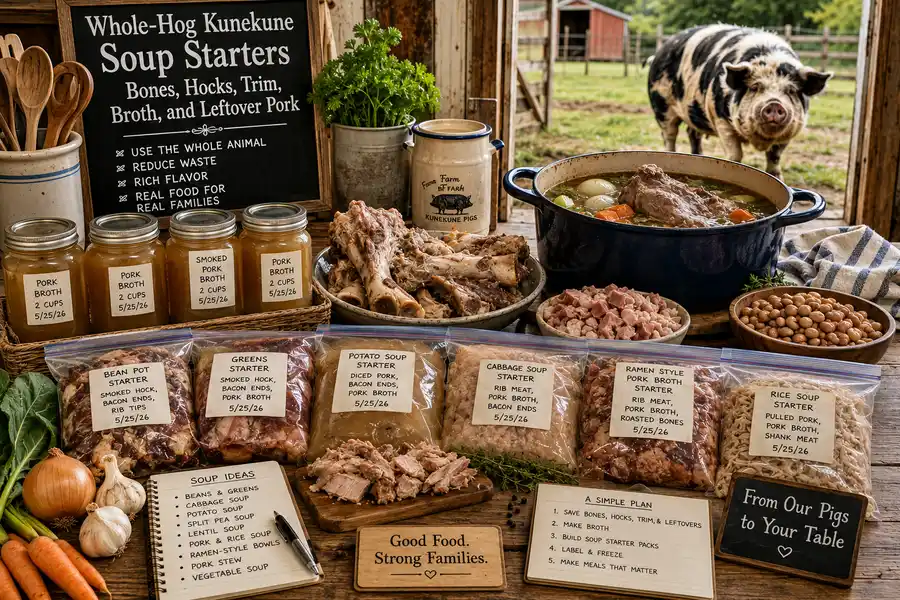
Whole-Hog Kunekune Soup Starters: Bones, Hocks, Trim, Broth, and Leftover Pork
A whole pig gives far more than chops, bacon, ribs, and roasts. It gives bones for broth, hocks for beans, trim for sausage or soup, rib bones for stock, leftover roast pork for quick meals, and small bits that can season an entire pot. Soup starters are one of the best ways to make those humble pieces useful. With Kunekune pork, a good soup starter can turn pantry beans, garden greens, cabbage, potatoes, noodles, or rice into a meal that feels rich, practical, and respectful of the whole animal.
Why Soup Starters Belong in a Whole-Hog Kitchen
Whole-hog cooking is not about making every meal complicated. It is about learning what each part of the animal can do.
Some cuts are obvious. Pork chops go in the skillet. Bacon goes with breakfast. Ribs go on the smoker. Roasts go low and slow. But then there are the quieter packages: bones, hocks, shanks, rib tips, broth bones, trim, odd chunks, leftover pulled pork, a little diced ham, and the last cup of pork broth in the refrigerator.
Those pieces are easy to overlook, but they are often the difference between plain food and a satisfying homestead meal.
A soup starter is simply a planned beginning for a future pot of soup, beans, greens, stew, or broth. It might be a smoked hock, two cups of pork broth, a bag of cooked pork and juices, roasted bones, bacon ends, rib meat, or a labeled freezer pack that says “beans and greens.” It does not have to be fancy. It just has to be useful.
Soup starters matter because they help families use the whole pig without waste. They also make real-life cooking easier. A pot of beans cooks better with a smoked hock. Cabbage soup tastes fuller with pork broth. Potato soup becomes heartier with diced pork. Greens become supper when they simmer with hock meat. A ramen-style bowl feels like a treat when the broth has bones and pork richness behind it.
Why Kunekune Pork Works So Well for Soup Starters
Kunekune pork can bring rich flavor and useful fat to the kitchen. That matters in soup because broth and simmered dishes are built on depth. A lean, bland broth needs a lot of help. A pork broth made with good bones, hocks, trim, and roasted bits already has character.
Kunekune pigs are often raised by homestead families who care about manageable size, temperament, pasture use, and practical meat. That makes whole-animal use even more important. If a family raises or buys Kunekune pork, the value is not only in the premium cuts. It is also in the bones, fat, broth, hocks, trim, and leftovers that can feed people again and again.
A good soup starter lets one pig keep showing up at the table in different ways:
- White beans with smoked hock
- Collard greens with pork broth
- Potato soup with diced pork
- Cabbage soup with bones and trim
- Noodle bowls with rich broth
- Lentils with sausage crumbles
- Rice soup with pulled pork
- Vegetable soup with ham scraps
- Beans and greens with rib meat
That is the beauty of soup starters. They stretch flavor without making the meal feel stretched thin.
What Counts as a Soup Starter?
A soup starter can be raw, cooked, smoked, roasted, or frozen. The important thing is that it has a clear purpose.
Good Kunekune pork soup starters include:
- Fresh bones
- Roasted bones
- Neck bones
- Rib bones
- Ham hocks
- Shanks
- Trotters
- Rib tips
- Bacon ends
- Jowl pieces
- Sausage crumbles
- Ground pork
- Diced ham
- Pulled pork
- Leftover roast pork
- Pork broth
- Smoked pork broth
- Rendered lard or pork fat
- Trim for sausage or soup
- Cooking juices from roasts
- Bean starter packs
- Greens starter packs
Not every soup starter needs meat. A jar of pork broth is a soup starter. A bag of bones is a soup starter. A small container of roast juices is a soup starter. A few tablespoons of rendered lard can start onions and garlic for a soup that tastes deeper than it looks.
Fresh Bones, Roasted Bones, and Smoked Bones
Bones are one of the foundations of whole-hog soup cooking. They bring flavor, body, minerals, and richness to broth. They also help a family use more of the animal.
Fresh bones
Fresh bones are raw bones that have not been roasted or smoked. They make a lighter broth. This can be useful when you want a clean pork flavor that does not dominate the dish.
Use fresh bones for:
- Light pork broth
- Noodle bowls
- Rice soup
- Vegetable soup
- Mild bean soup
- Dumpling soup
- Brothy greens
Fresh bones are a good choice when you want flexibility.
Roasted bones
Roasted bones make a darker, richer broth. Roasting adds browned flavor, which can make soup feel hearty before you add much else.
Use roasted bones for:
- Potato soup
- Bean soup
- Cabbage soup
- Brown gravy
- Pork stew
- Rich ramen-style broth
- Winter vegetable soup
To roast bones, place them on a sheet pan and roast until browned. Do not burn them. Burned bones can make broth bitter.
Smoked bones
Smoked bones bring a strong flavor. They are wonderful in beans, greens, cabbage, and hearty soups, but they can overpower delicate dishes.
Use smoked bones for:
- Pinto beans
- Collards
- Split pea soup
- Lentils
- Cabbage
- Sauerkraut soup
- Black-eyed peas
- Smoked pork broth
If the bones are from smoked ribs or hocks, label them clearly. A smoked broth is a gift when you want that flavor, but it may not be what you want in every soup.
Ham Hocks and Shanks
Ham hocks and shanks are some of the best soup starters on the pig.
A hock is bony, connective, and flavorful. A shank is usually meatier. Both can season a pot beautifully. Fresh hocks, smoked hocks, fresh shanks, and smoked shanks all have uses.
Fresh hocks
Fresh hocks are good when you want pork richness without smoke. They can be simmered into broth, braised, or cooked with beans.
Use fresh hocks for:
- Mild pork broth
- Bean soup
- Noodle soup
- Potato soup
- Pork and rice soup
- Greens when you do not want smoke
Smoked hocks
Smoked hocks are classic for beans and greens. They bring smoke, salt if cured, pork flavor, and body to the pot.
Use smoked hocks for:
- Collard greens
- Mustard greens
- Pinto beans
- White beans
- Split pea soup
- Lentils
- Cabbage
- Black-eyed peas
Be careful with salt when using smoked or cured hocks. Taste near the end before adding more.
Shanks
Shanks often have more meat and can be used as both soup starter and main ingredient. A fresh shank can be braised until tender, then the meat can go back into soup or stew.
Use shanks for:
- Pork stew
- Noodle soup
- Tomato pork soup
- Beans
- Greens
- Braised pork and broth
- Potato soup
Trim: The Package That Needs a Plan
Trim is one of the most misunderstood parts of the freezer. It can be a treasure or a headache depending on how it is packaged and labeled.
Trim may include small meat pieces, fat, odd chunks, or pieces cut from other areas. It can become sausage, ground pork, broth flavor, beans, stew, or soup starter.
Good uses for trim
Use trim for:
- Sausage
- Ground pork
- Soup meat
- Broth
- Beans
- Greens
- Fried rice
- Hash
- Pork gravy
- Stew
Label trim honestly
Do not label every mystery bag “trim” and expect it to be helpful later. More specific labels are better:
- Lean pork trim
- Fatty pork trim
- Sausage trim
- Soup trim
- Broth trim
- Smoked trim
- Cooked pork bits
A bag labeled “soup trim” is far more likely to become supper than a bag labeled “misc pork.”
Fatty trim versus lean trim
Fatty trim is useful, but it needs balance. A little fat can start onions, flavor beans, or enrich broth. Too much fat can make soup greasy.
Lean trim can become diced soup meat, stew meat, or ground pork. If it is too small or uneven for neat meals, that is fine. Soup does not care if every piece is shaped the same.
Leftover Pork as a Soup Starter
Leftovers are one of the easiest soup starters because the pork is already cooked.
A little leftover pork may not look like enough for another meal, but it can become the flavor base for soup.
Good leftover soup starters include:
- Pulled pork
- Roast pork
- Rib meat
- Diced ham
- Bacon ends
- Sausage crumbles
- Pork chop pieces
- Hock meat
- Shank meat
- Meat picked from broth bones
How much leftover pork do you need?
Not as much as you think.
One cup of chopped pork can help make a pot of soup. Two cups can make it hearty. Even half a cup of smoky rib meat can season beans or greens.
How to store leftover pork for soup
Cool leftovers promptly, pack them in small containers, and label the intended use:
- Pork for potato soup
- Rib meat for beans
- Pulled pork for rice soup
- Ham bits for greens
- Pork broth plus meat
FoodSafety.gov lists cooked meat leftovers at 3 to 4 days in the refrigerator and 2 to 6 months in the freezer for quality; it also notes that freezer storage times are quality guidelines when food remains continuously frozen at 0°F or below.
Pork Broth: The Quiet Workhorse
Pork broth is one of the most useful things you can keep in the freezer. It can be mild, smoky, rich, light, clear, or hearty depending on what you use.
What to use for pork broth
Good broth pieces include:
- Bones
- Hocks
- Shanks
- Rib bones
- Neck bones
- Trotters
- Roasted bones
- Trim
- Cartilage-rich pieces
- Leftover roast juices
Basic pork broth method
- Place bones, hocks, or trim in a large pot.
- Add onion, celery, garlic, bay leaf, and peppercorns.
- Cover with cold water.
- Bring slowly to a gentle simmer.
- Skim if needed.
- Simmer gently until the broth tastes rich.
- Strain.
- Cool promptly.
- Chill and skim fat if desired.
- Freeze in useful portions.
Do not boil broth hard for hours. A gentle simmer usually gives cleaner flavor.
What size containers to freeze
Freeze broth in:
- 1-cup portions for sauces
- 2-cup portions for beans, greens, and rice
- Quart containers for soup
- Ice cube trays for small flavor boosts
Two-cup portions may be the most useful size for everyday cooking.
The Safety Side of Soup Starters
Whole-hog cooking often means handling bones, leftovers, broth, cooked meat, and raw pork. Keep raw and cooked foods separate, use clean utensils, and cool cooked food promptly in shallow containers. FoodSafety.gov recommends using a food thermometer to verify safe internal temperatures; for pork steaks, roasts, and chops the safe minimum is 145°F with a 3-minute rest, ground pork and sausage should reach 160°F, and leftovers should be reheated to 165°F.
Cold storage matters too. FoodSafety.gov’s cold storage chart lists fresh pork steaks, chops, and roasts at 3 to 5 days in the refrigerator and 4 to 12 months in the freezer for quality, while soups and stews with meat are listed at 3 to 4 days refrigerated and 2 to 3 months frozen for quality.
Cooling Broth and Soup Safely
A big pot of hot broth can take a long time to cool if you put it in the refrigerator all at once. That is not ideal.
A better cooling plan:
- Strain the broth.
- Divide it into shallow containers.
- Let steam escape briefly.
- Refrigerate promptly.
- Chill completely.
- Skim fat if desired.
- Freeze in labeled portions.
For large batches, use smaller containers. They cool faster and stack better.
Do not leave soup or broth sitting out all afternoon. A homestead kitchen can be practical and careful at the same time.
Soup Starter Pack 1: Bean Pot Starter
A bean pot starter is one of the most useful pork freezer packs.
What to include
Use one of these:
- Smoked hock
- Fresh hock
- Rib tips
- Bacon ends
- Pork broth
- Hock meat
- Smoked bones
- Pulled pork plus broth
How to label
Good labels include:
- Pinto bean starter
- White bean starter
- Black-eyed pea starter
- Beans: smoked hock
- Beans: pork broth and rib meat
How to use
Add dried beans, onion, garlic, bay leaf, pepper, and water or broth. Simmer gently until the beans are tender. Remove bones or hocks, pull usable meat, return the meat to the pot, and season near the end.
If the starter is smoked or cured, wait before adding salt.
Soup Starter Pack 2: Greens Starter
A greens starter turns a pile of garden greens into supper.
What to include
Use:
- Smoked hock
- Bacon ends
- Pork broth
- Hock meat
- Rib meat
- Rendered lard
- Smoked trim
Best greens
Use greens starters with:
- Collards
- Mustard greens
- Turnip greens
- Kale
- Swiss chard
- Beet greens
- Cabbage
- Mixed garden greens
How to use
Simmer the starter with water or broth until the flavor begins to build. Add washed chopped greens. Cook until tender. Finish with vinegar, pepper sauce, or a little salt if needed.
The pot liquor is part of the meal. Save it, sip it, freeze it, or use it in soup.
Soup Starter Pack 3: Potato Soup Starter
Potato soup is a good place for diced pork, broth, bacon ends, ham scraps, or sausage crumbles.
What to include
Use:
- Pork broth
- Diced ham
- Bacon ends
- Sausage crumbles
- Pulled pork
- Rendered pork fat
- Leftover roast pork
How to use
Start onions in pork fat or butter. Add potatoes and pork broth. Simmer until tender. Add cooked pork near the end. Mash some potatoes to thicken the soup. Finish with milk, cream, cheese, herbs, or black pepper if desired.
Why it works
Potatoes are mild. Pork gives them depth. Even a small amount of pork can make potato soup feel like a full meal.
Soup Starter Pack 4: Cabbage Soup Starter
Cabbage and pork are old friends. A cabbage soup starter is simple, affordable, and deeply useful.
What to include
Use:
- Pork broth
- Smoked bones
- Ham hock meat
- Sausage crumbles
- Bacon ends
- Pulled pork
- Fresh or smoked shank meat
Add later
Add:
- Cabbage
- Onion
- Carrots
- Potatoes
- Garlic
- Bay leaf
- Pepper
- A splash of vinegar
- Optional beans
Cabbage soup can be light or hearty depending on how much pork and potato you add.
Soup Starter Pack 5: Ramen-Style Pork Broth
This is not traditional ramen in the strict sense. It is a homestead-style noodle bowl using pork broth, leftover meat, vegetables, and noodles.
What to include
Use:
- Rich pork broth
- Rib meat
- Pulled pork
- Shank meat
- Hock meat
- Roasted bones for broth
- A little rendered fat
Add later
Add:
- Noodles
- Soft-cooked eggs
- Greens
- Mushrooms
- Green onions
- Chili oil
- Soy-style seasoning
- Garlic
- Ginger
This is a good use for small amounts of leftover pork because the broth does most of the work.
Soup Starter Pack 6: Split Pea or Lentil Starter
Split peas and lentils are perfect for smoked pork, hocks, broth, and ham scraps.
What to include
Use:
- Smoked hock
- Ham scraps
- Pork broth
- Bacon ends
- Diced pork
- Smoked bones
How to use
Simmer split peas or lentils with the starter, onion, carrots, celery, bay leaf, and water or broth. Cook until soft. Pull meat from the hock if using one. Taste before salting.
Split pea soup is one of the best examples of a humble soup starter becoming a complete meal.
Soup Starter Pack 7: Rice Soup Starter
Rice soup is gentle, filling, and good for using small portions.
What to include
Use:
- Pork broth
- Pulled pork
- Diced pork
- Shredded rib meat
- Hock meat
- Sausage crumbles
Add later
Add:
- Rice
- Carrots
- Celery
- Onion
- Garlic
- Greens
- Herbs
- Lemon or vinegar at the end
Rice absorbs flavor. A good pork broth can make a simple rice soup taste much richer than the ingredient list suggests.
Soup Starter Pack 8: Stew Starter
Some pork pieces want more than soup. They want stew.
What to include
Use:
- Shoulder trim
- Shank meat
- Stew meat
- Fresh ham pieces
- Pork broth
- Roasted bones
- Fatty trim in small amounts
Add later
Add:
- Potatoes
- Carrots
- Onions
- Celery
- Turnips
- Beans
- Tomatoes
- Cabbage
- Herbs
Stew starters are good for cold weather, busy weekends, and days when the house needs to smell like supper.
How to Build a Soup Starter Freezer Shelf
A soup starter shelf or bin keeps these pieces from getting lost.
Try organizing by purpose:
- Broth jars
- Bean starters
- Greens starters
- Soup bones
- Smoked pieces
- Cooked pork bits
- Stew meat
- Leftover packs
Use clear labels and dates. Put older packs in front. Keep a simple inventory nearby.
A freezer bin labeled “Soup Starters” can change how you cook. Instead of digging through mystery packages, you know exactly where to look when you want beans, broth, greens, or soup.
Labeling Soup Starters
Good labels should include:
- What it is
- Date
- Raw or cooked
- Smoked or fresh
- Suggested use
- Amount if known
Examples:
- Smoked hock, beans or greens, cooked
- Pork broth, 2 cups, mild
- Rib bones, smoked, broth
- Pulled pork and juices, 2 cups, soup
- Lean trim, stew or soup
- Bacon ends, cabbage or greens
- Hock meat, 1 cup, lentils
The more specific the label, the more likely the food gets used.
A Whole-Hog Soup Starter Day
Here is a practical way to turn a collection of odds and ends into future meals.
Morning: Roast bones
Roast fresh bones until browned. Start a broth pot with onion, celery, garlic, bay leaf, and peppercorns.
Midday: Sort cooked pork
Pull leftover meat from bones, ribs, roasts, or hocks. Divide it into small packs by purpose.
Afternoon: Strain broth
Strain broth, cool it in shallow containers, and decide whether to skim the fat.
Late afternoon: Build packs
Make:
- Bean starter packs
- Greens starter packs
- Pork broth containers
- Rice soup packs
- Potato soup packs
- Stew starter packs
Evening: Label and freeze
Write clear labels and freeze flat when possible.
This is not fancy cooking. It is practical stewardship.
A Simple Bean Soup Pattern
This is a flexible pattern, not a strict recipe.
Ingredients
- 1 pork soup starter, such as smoked hock, pork broth, rib meat, or ham scraps
- 1 pound dried beans
- 1 onion, chopped
- 2 cloves garlic
- 1 bay leaf
- Black pepper
- Water or pork broth
- Salt near the end
- Vinegar or hot sauce for serving
Method
- Sort and rinse beans.
- Add beans, pork starter, onion, garlic, bay leaf, pepper, and liquid to a pot.
- Simmer gently until beans are tender.
- Remove bones or hock if present.
- Pull usable meat and return it to the pot.
- Taste before adding salt.
- Finish with vinegar or hot sauce if desired.
Serve with cornbread, rice, greens, or sliced onions.
A Simple Greens and Pork Broth Pattern
Ingredients
- 1 greens starter, such as smoked hock, bacon ends, or pork broth
- Washed chopped greens
- Onion
- Garlic
- Pepper
- Water or broth
- Vinegar for serving
Method
- Simmer the pork starter with onion, garlic, and liquid.
- Add greens.
- Cook until tender.
- Pull meat from bones if needed.
- Taste before salting.
- Serve with cornbread.
This meal is simple, but it uses the pig, the garden, and the pantry together.
A Simple Potato Pork Soup Pattern
Ingredients
- 2 cups pork broth
- 1 to 2 cups diced or shredded cooked pork
- Potatoes
- Onion
- Garlic
- Milk, cream, or extra broth
- Pepper
- Salt as needed
- Optional cheese, herbs, or green onion
Method
- Cook onion and garlic in a little fat.
- Add potatoes and broth.
- Simmer until potatoes are tender.
- Mash some potatoes to thicken.
- Add cooked pork.
- Add milk, cream, or more broth if desired.
- Taste and season.
This is one of the easiest ways to turn leftover pork into family supper.
Common Soup Starter Mistakes
Mistake 1: Saving everything without labeling
A freezer full of unlabeled bones and scraps is not helpful. Label the purpose.
Mistake 2: Using too much smoke
Smoked pork is wonderful, but not every soup should taste smoked. Keep mild broth too.
Mistake 3: Oversalting early
Smoked hocks, ham, bacon ends, and cured pieces may already be salty. Taste near the end.
Mistake 4: Boiling broth too hard
A hard boil can make broth cloudy and harsh. Simmer gently.
Mistake 5: Freezing broth in huge containers
Freeze some broth in small portions. Two cups is often more useful than a gallon.
Mistake 6: Forgetting the fat
Fat can be useful, but too much can make soup greasy. Skim and save if needed.
Mistake 7: Treating odd cuts like waste
Odd cuts often carry the most flavor. They just need the right job.
How Soup Starters Reduce Waste
A whole-hog kitchen asks a simple question: what can this become?
Bones become broth. Hocks become beans. Rib bones become soup. Trim becomes sausage or stew. Leftover roast becomes potato soup. Bacon ends become greens. Cooking juices become gravy or rice. Fat starts onions. Small bits season a pot.
That mindset reduces waste because it gives every piece a purpose.
It also changes how a family sees the freezer. Instead of only looking for premium cuts, they start seeing ingredients. A bag of bones is not a burden. It is broth. A hock is not awkward. It is beans. A cup of pork scraps is not too small. It is soup.
BF Farm Kitchen Connection
BF Farm Kunekune Pigs focuses on quality Kunekune breeder stock for families and homesteads that care about useful animals, manageable size, temperament, structure, and long-term value. That usefulness continues into the kitchen.
Good livestock decisions matter, but so does learning to cook the whole animal. A family that knows how to use bones, hocks, trim, broth, and leftovers gets more value from each pig and wastes less. Soup starters are one of the most practical ways to make that happen.
They are humble. They are simple. They are not flashy. But they feed people well.
Quick Soup Starter Cheat Sheet
Best starter for beans
Smoked hock, rib tips, bacon ends, or pork broth.
Best starter for greens
Smoked hock, bacon ends, hock meat, or pork broth.
Best starter for potato soup
Diced pork, sausage crumbles, bacon ends, or pork broth.
Best starter for mild soup
Fresh bones, light pork broth, or leftover roast pork.
Best starter for smoky soup
Smoked bones, smoked hock, rib bones, or bacon ends.
Best freezer size
Two-cup broth containers and one-meal meat packs.
Best label habit
Write the intended meal on the package.
Final Thoughts
Whole-hog cooking becomes much easier when every package has a purpose. Soup starters give purpose to bones, hocks, trim, rib pieces, broth, fat, and leftovers. They turn the quiet cuts into beans, greens, soups, stews, rice bowls, noodle bowls, and family meals.
Kunekune pork is too useful to think only in terms of chops and bacon. The whole pig has value. A good broth jar, a smoked hock, a bag of rib bones, or a cup of leftover roast pork can become the start of something warm and satisfying.
A freezer full of soup starters is a freezer full of future meals. It is practical, respectful, and exactly the kind of cooking that makes a homestead kitchen work.